

In the rich tapestry of biblical literature, the concept of strongholds emerges as a profound metaphor, inviting deep contemplation. Strongholds are not entirely physical; they transcend the tangible and delve into the intricacies of human emotion, thought, and belief. As we embark on this exploration, we will unravel the multifaceted meaning of strongholds in the Bible and their relevance in contemporary life.
To commence, we must understand that strongholds are often depicted as fortified places, constructed for protection and security. In the biblical context, the term can be viewed through both military and metaphorical lenses. In ancient Israel, cities strategically built atop lofty hills were often referred to as strongholds, serving as bastions against invasions. However, metaphorically, strongholds represent the strong mental and emotional barriers that individuals erect in their lives, often due to fear, doubt, or sin.
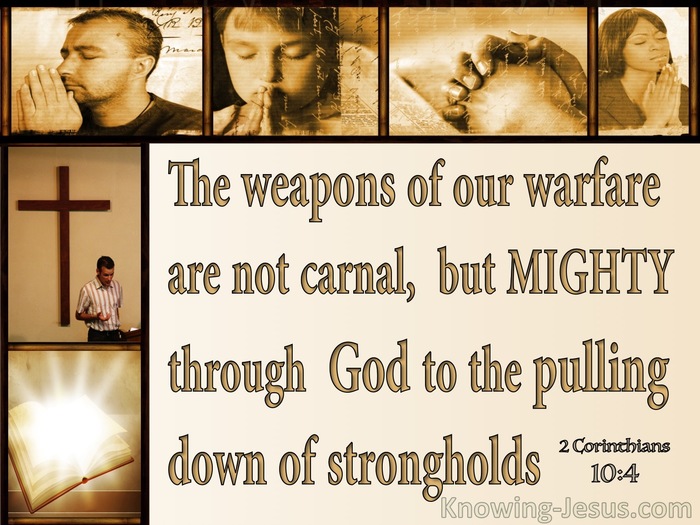
One of the pivotal scriptures that elucidates this concept is found in 2 Corinthians 10:4-5, where Paul asserts, “The weapons we fight with are not the weapons of the world. On the contrary, they have divine power to demolish strongholds.” This verse captivates the reader with its duality; it seamlessly intertwines the physical and the spiritual realms. Here, strongholds are not simply brick-and-mortar structures; they embody the negative thought patterns and emotional struggles that ensnare individuals, hindering their spiritual journey.
As we delve deeper, it becomes evident that strongholds can take myriad forms. For some, they manifest as deeply ingrained fear — an overwhelming trepidation that stifles one’s aspirations. Fear can become a formidable stronghold, an invisible wall that renders progress nearly impossible. Others may grapple with anger, resentment, or despair, erecting emotional barricades that prevent reconciliation and healing. These psychological fortifications can ensconce individuals, creating a detrimental cycle of negativity that appears insurmountable.
However, the narrative does not end with recognition of these strongholds. The Bible provides us with tools and divine guidance to dismantle these intricate architectures of despair. Philippians 4:8 invites believers to focus on whatever is true, noble, right, pure, lovely, and admirable. This practice of uplifting meditation serves as a countermeasure, enabling individuals to confront and conquer their strongholds. By redirecting one’s thought processes, the ground beneath these strongholds begins to shift. Suddenly, the once impenetrable walls become susceptible to erosion.
Moreover, strongholds often thrive in isolation. The act of sharing burdens is an antidote to the solitary confinement that fear and sin impose. Belonging to a community, like a church or supportive group, can illuminate the pathways toward liberation. James 5:16 encourages confession and prayer among believers, emphasizing the power inherent in communal support. This communion transforms the landscape of one’s existence, enabling individuals to find strength in unity, thus dismantling the strongholds that isolate and bind them.
Another poignant illustration comes from the life of David, who faced numerous strongholds throughout his journey. From the moment he stood before Goliath, David exemplified the courage required to confront overwhelming odds. His unwavering faith served as a powerful weapon; he did not merely see the giant before him but recognized the stronghold of fear that paralyzed many. This historical narrative transcends time, offering a blueprint for confronting our giants today. David’s eventual ascension to the throne signifies triumph over strongholds, underscoring the notion that faith grants us the fortitude necessary to dismantle even the most formidable barriers.
However, it would be remiss not to acknowledge that dismantling strongholds is not an instantaneous process. It is a continual struggle, an ongoing wrestle between faith and doubt. Consider the biblical figure of Moses, who, despite divine reassurance, hesitated to lead the Israelites out of bondage. His hesitation can be perceived as a stronghold of self-doubt, yet through divine intervention, he ultimately transcended those limitations. Here, the narrative reinforces that strongholds may stem from misperceptions or insecurities, and the journey to liberation is often fraught with challenges.
This leads us to an intriguing paradox: the very strongholds that seek to deter us can eventually serve as catalysts for growth. Often, confronting the strongholds we battle can lead to an unparalleled deepening of faith. The metaphorical journey through the valley of strongholds reveals profound truths about human resilience, tenacity, and the transformative power of faith. The shadows of despair can become the very backdrop against which one’s faith shines the brightest.
As we contemplate the intricate dynamics of strongholds, we must also acknowledge the role of divine grace. The Bible assures us that no stronghold is beyond God’s reach. The narrative of transformation is not solely for the valiant; it is also extended to those who are weary and burdened. Matthew 11:28 beckons, “Come to me, all you who are weary and burdened, and I will give you rest.” In this light, strongholds can be seen as catalysts that lead individuals to the source of divine strength and unwavering support.
In conclusion, strongholds in the Bible evoke a rich metaphorical understanding that transcends mere physicality. They compel individuals to confront their fears, seek community, and delve deep into their spiritual journey. The battle against strongholds is not one fought in solitude but in communion with the divine and each other. Through faith, prayer, and community, what once seemed insurmountable can yield to transformation, ultimately enlightening our paths and reshaping our destinies. As we navigate our own strongholds, may we find courage, strength, and a deeper faith that guides us onward to liberation.

