

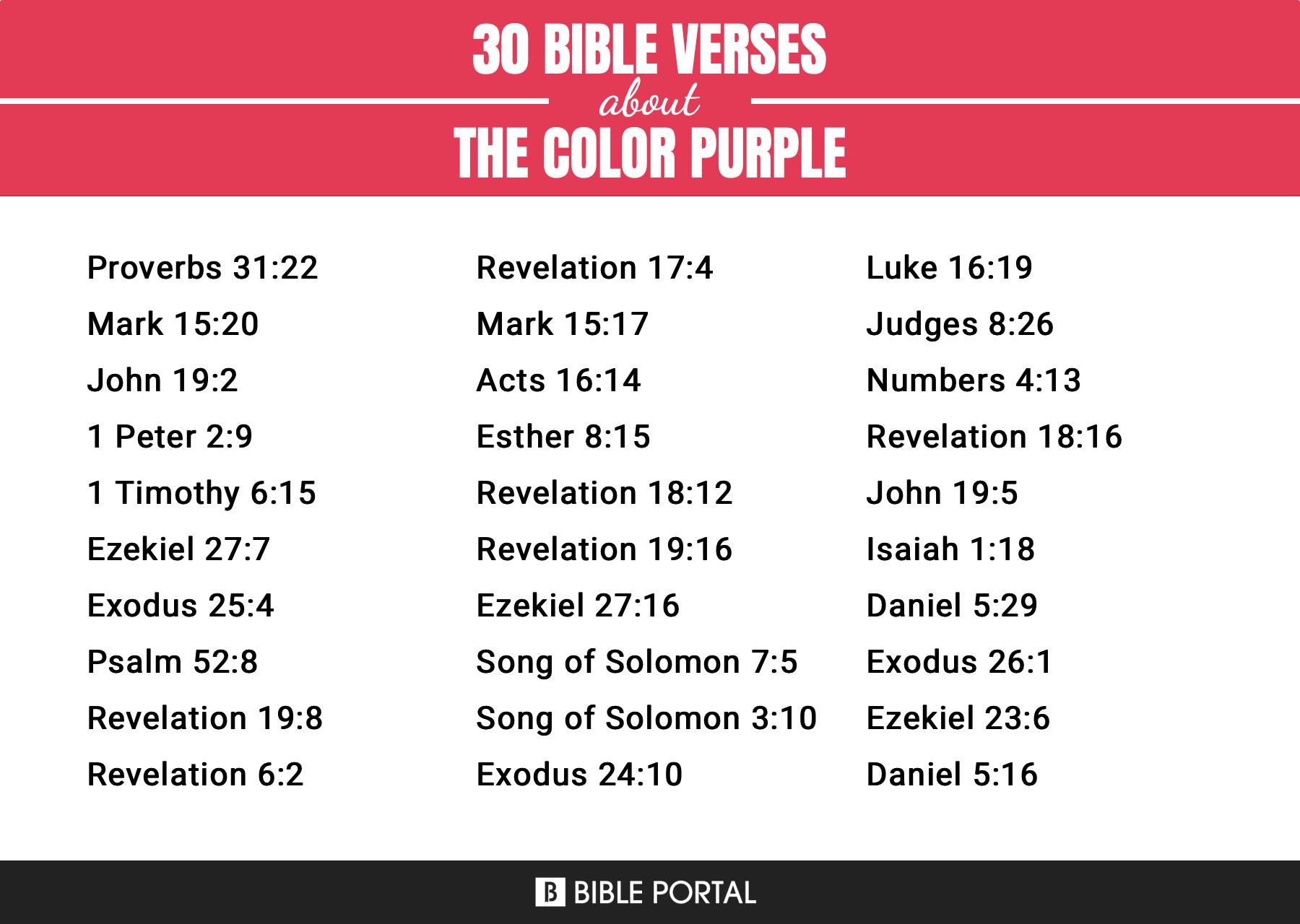
In the realm of biblical symbolism, colors play a pivotal role in enriching narratives and conveying deeper meanings. Among these hues, purple emerges not merely as a pigment, but rather an emblem of profound significance. Its inclusion in various contexts within Scripture invites contemplation on its multifaceted representation, from royalty and divinity to suffering and redemption.
To understand the role of purple in the biblical narrative, one must first acknowledge the historical backdrop against which these stories unfolded. In ancient times, purple dye was an opulent commodity, extracted from the murex snail. The labor-intensive process required extensive resources and skill, rendering purple garments a mark of status and wealth. This exclusivity granted the color an intrinsic association with nobility, making it a fitting symbol for royal lineage and divine authority.
Throughout the scriptures, purple is often intertwined with kings and the divine. In the Old Testament, we encounter the grand vestments of the High Priest, adorned with intricate tapestries of purple fabric. The very presence of purple on the priestly garments serves as a reminder of the intersection between the earthly and the celestial. The High Priest, acting as an intermediary between God and humanity, dons this regal hue, suggesting a divine endorsement, a configuration of heaven’s glory manifesting in human affairs.
The allure of purple extends beyond the priestly realm to royal figures, epitomized in the character of King Solomon, whose reign is replete with opulence and splendor. His kingdom, often depicted as a zenith of wealth, mirrors the extravagant appeal of purple. Solomon’s use of purple establishes a thematic correlation with wisdom and divine favor. In this manner, purple transcends mere color; it symbolizes a sanctified bond between earthly rulers and heavenly decree, inviting reflection on the responsibilities that accompany power.
However, the symbolism of purple is not exclusively tethered to grandeur. It also embodies the complexities of suffering and sacrifice. Referenced in the narrative of Christ’s passion, the soldiers draped Jesus in a purple robe, mocking His claim to kingship. This act juxtaposes the sacred and the profane—a poignant reminder of the duality of the human experience. While purple is synonymous with honor, its association within this context evokes feelings of anguish, humiliation, and ultimate redemption. It presents a striking metaphor for the paradox of glory intertwined with suffering—a concept central to the Christian faith.
Conversely, purple can also represent the theme of mourning and lamentation. In ancient Israel, the color was a common choice for funerary garments, echoing the depths of sorrow experienced by those left behind. This application of purple serves as a visual manifestation of grief, a tapestry woven from the threads of loss and remembrance. It stands as a testament to the human condition, fraught with tribulation yet poised for resurgence and hope, illuminating the profound necessity of resilience in the face of despair.
Within this rich tapestry of meanings, purple also transcends individual experiences, calling humanity to a unified spiritual awakening. Its vibrancy encourages collective enlightenment and an urgent plea for social justice. The melding of majesty and mourning strains ever toward an awakening within the human spirit—an aspirational journey towards understanding the inherent dignity of all individuals, each one deserving of honor and respect, as ordained in the communal love epitomized within Scripture.
In the prophetic books, purple serves as a harbinger of incarnation and divinity. The prophetic visions often allude to a coming kingdom marked by peace and righteousness, where the colors of the tapestry of creation unite under the banner of the Divine. In this prophetic lens, purple signifies hope—a future where suffering transforms into joy, and where every fragment of human experience is reconciled within God’s grand design. The eschatological implications of purple thus invoke the anticipation of a new dawn, beckoning believers toward a promised fulfillment.
As one reflects upon the manifold meanings evoked by the color purple in the sacred texts, it becomes increasingly clear that it encapsulates the dichotomy of human existence. It is both a color of glory and of suffering; a representation of authority and continuity, bridging the divine with the mundane. Each narrative thread woven through the Scriptures reaffirms its complexity, beckoning thus each believer to approach the color with openness and reverence.
In conclusion, the color purple in the Bible serves as a rich symbol laden with connotations that permeate the very core of spiritual understanding. From the glittering robes of royalty, through the solemnity of suffering, to the visions of hope and glory, purple resonates within the heart of those who seek to understand the divine mysteries. Its significance challenges individuals to embrace their richness—their own vibrant hues—while acknowledging the sorrow intertwined within the quest for truth and justice. In essence, purple remains an evocative metaphor, urging humanity forward in their collective narrative while celebrating the glorious tapestry of creation.

