

In an era where gender and identity are often discussed through the lenses of social constructs, the term “eunuch” might evoke curiosity, even amusement. However, what did it truly mean to be a eunuch in the biblical context? Let’s explore this intriguing subject that stretches across socio-political, religious, and philosophical realms. Prepare to journey through scripture, culture, and history as we unravel the complexity of eunuchs.
First, let’s consider the etymology of the word “eunuch.” Derived from the Greek word “eunoukhos,” it denotes a man who has been castrated, typically early in life, often for specific social roles. In ancient societies, particularly within the biblical context, eunuchs were commonly employed in royal courts, serving as guards and attendants to royals, often safeguarding the harem of kings. Their inability to father children rendered them perceived as loyal servants, free from familial distractions that could interfere with their duties. The question arises: how does this role translate into spiritual and moral dimensions within biblical narratives?
In the Old Testament, eunuchs appear occasionally in narratives that shed light on their roles. One notable mention is found in Isaiah 56:4-5, where God addresses eunuchs. Remarkably, this passage declares a promise of inclusion and rewards for eunuchs who observe God’s Sabbaths and hold fast to His covenant. This assertion is groundbreaking; it echoes a theme of divine acceptance and inclusion that counteracts the prevailing societal norms of exclusion. Thus, the text introduces a challenge: can we draw parallels between the acceptance of eunuchs and the broader notion of inclusivity in contemporary religious discourse?
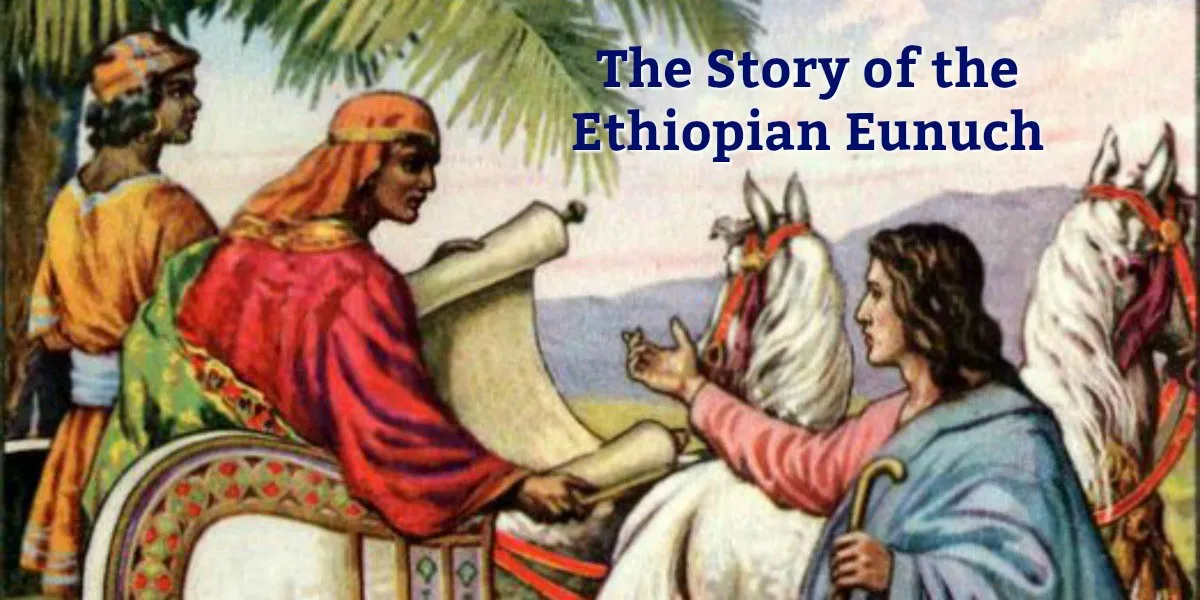
Transitioning to the New Testament, the figure of the eunuch takes on a more profound and reflective meaning. A particularly striking story involves Philip and the Ethiopian eunuch in the Book of Acts (Acts 8:26-40). This narrative depicts a divine encounter where Philip meets an Ethiopian eunuch who is both a high-ranking official and a seeker of spiritual truths. While reading the Book of Isaiah, he struggles with understanding its meaning. Philip, guided by the Holy Spirit, approaches him and answers the eunuch’s questions, consequently leading him to baptism. This narrative illuminates several intriguing themes: the intersection of faith and understanding, the breaking down of societal barriers, and the transformative power of spiritual revelation.
Let’s ponder the implications: was the eunuch’s identity as a castrated male significant in shaping his spiritual journey? Or was it his earnest quest for understanding and connection with the divine that elevated his encounter? Furthermore, this episode invites contemplation on the multifaceted roles that individuals play in their spiritual odysseys, regardless of their societal labels. In a sense, it compels the audience to introspect on their own spiritual journeys and the complexities of their identities.
Expanding on the notion of identity, the eunuch symbolizes more than his physicality. He also embodies the essence of transformation and the search for belonging. Theologically, this invites discussions around one’s intrinsic worth, irrespective of societal norms or the status bestowed by birth. In the context of biblical teachings, eunuchs illuminate the paradox of human experience: what does it mean to be marginalized yet exalted in the eyes of God? This challenge resonates with believers today who may feel ostracized or unworthy yet yearn for connection.
As we traverse deeper into this exploration, it becomes essential to acknowledge the variances in interpretations of eunuchs throughout different cultures and eras. Some have viewed them as pathologized beings created for servitude; others have recognized their potential as spiritual figures embodying fidelity. Such dichotomies prompt us to scrutinize how societal prejudices color our understanding of others, particularly those whose lives do not fit conventional narratives. How does this perspective influence contemporary discussions about gender identity, sexuality, and inclusivity within modern religious practices?
Moreover, prophetically, eunuchs carry the mantle of prophetic identity. In biblical literature, such figures possess an understanding that transcends their corporeal limitations. They serve as vessels for divine revelation. Consider, for instance, the implications of how the eunuch’s status might correlate with the broader theological concept of limitation and divine potential. Is it possible, as history suggests, that the very limitations experienced by the eunuchs catalyzed their unique relationships with the divine, inviting deeper insights and revelations?
In reflecting on the place of eunuchs in the biblical spectrum, one must confront the stark reality that their voices were often silenced amid their complex narratives. The eunuch’s struggle for acceptance, understanding, and belonging persists in modern interpretations of faith. Their narratives invite a soulful inquiry into the nature of acceptance, not just within religious spheres, but also in societal contexts that continue to marginalize various identities.
As we conclude this exploration, it is essential to transmute our historical understanding of the eunuch in biblical texts into a contemporary challenge. How can today’s spiritual communities embody the core principles of inclusion found in scripture? As we reflect on inclusivity, are we empowered to extend a welcoming hand to all who seek spiritual connection, irrespective of their identity or societal status? Just as the eunuch found hope and belonging through Philip, may we endeavor to cultivate spaces that honor the diverse tapestries of human experience, ultimately creating a more robust and loving community.

