

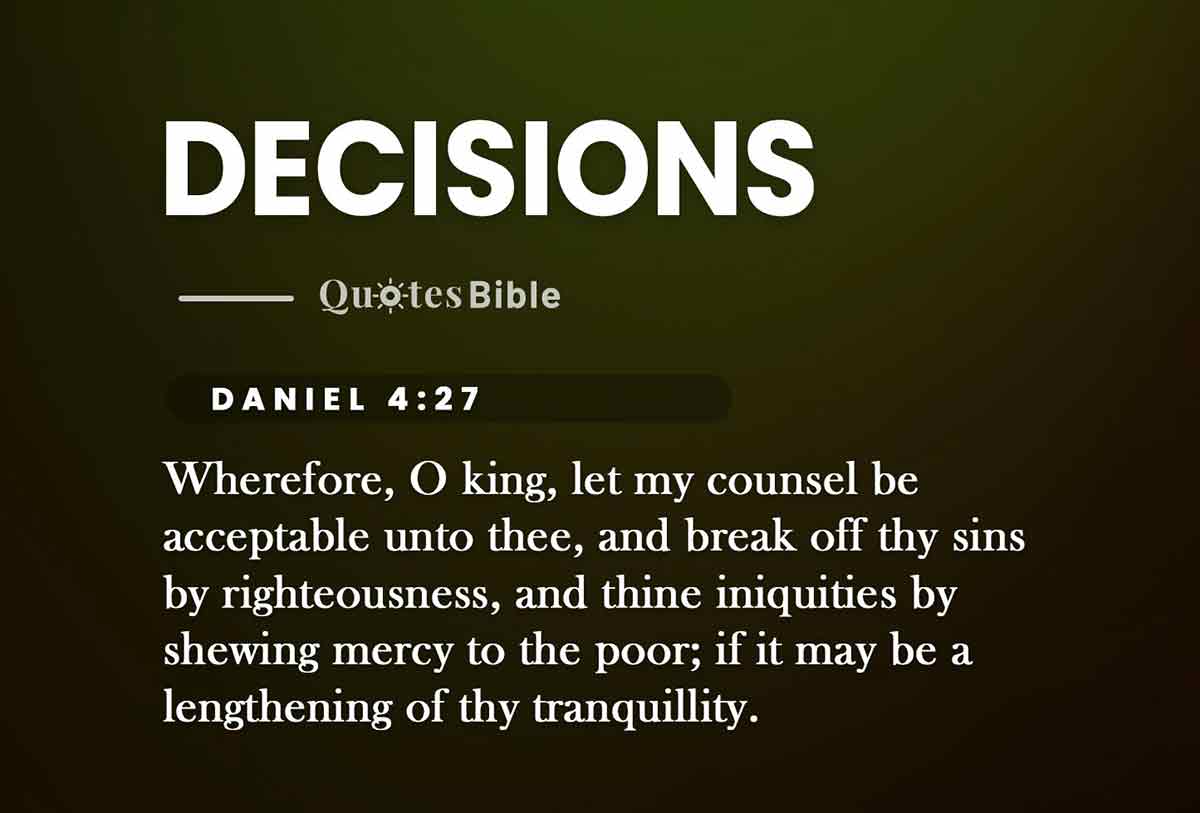
Making decisions is an undeniable aspect of human existence, a skill we hone and refine throughout our lives. In times of uncertainty, many seek solace and guidance in the sacred texts that underpin their beliefs. The Bible, revered by millions around the globe, offers profound insights on how to navigate the labyrinth of choices we face. Its wisdom covers various aspects of decision-making, from seeking divine counsel to the importance of aligning one’s decisions with ethical and moral foundations. In exploring what the Bible says about making decisions, one can glean a multifaceted approach, informed by spirituality, wisdom, and communal values.
The Foundation of Faith in Decision-Making
At the heart of biblical decision-making lies an unwavering faith. In Proverbs 3:5-6, believers are encouraged to “trust in the Lord with all your heart, and lean not on your own understanding.” This passage highlights a pivotal principle: the necessity of surrendering personal wisdom in favor of divine guidance. Trust becomes the bedrock for navigating choices, with the understanding that a higher power possesses an omniscient perspective on life’s complexities.
The emphasis on faith signifies that decision-making is not merely a logical exercise; it is also a spiritual journey. For many, prayer serves as a conduit for expressing one’s hopes, fears, and desires. When faced with a crossroads, the act of prayer can illuminate the path ahead, fostering a deeper connection with the divine and opening avenues for heavenly wisdom to descend upon the heart.
The Role of Wisdom and Counsel
The Bible consistently advocates for seeking wisdom and counsel when faced with significant decisions. Biblical wisdom literature, particularly the Book of Proverbs, offers an abundance of maxims that elevate the importance of listening to others. Proverbs 15:22 asserts, “Without counsel plans fail, but with many advisers they succeed.” This wisdom underscores not only the value of insight gleaned from diverse perspectives but also the importance of community in the decision-making process.
Timely advice can be instrumental in unveiling blind spots and providing clarity. When gathering counsel, it is paramount to consider the character and spiritual maturity of the advisors. Seeking guidance from those who exemplify ethical living can lead to sounder decisions, cultivating a fortified sense of confidence in the chosen path.
Discernment and the Spirit’s Guidance
In the realm of spiritual decision-making, discernment emerges as a crucial skill. The Bible encourages believers to develop an acute awareness of the Holy Spirit’s leading. Galatians 5:22-23 speaks of the “fruit of the Spirit,” outlining attributes such as love, joy, peace, and self-control. These characteristics form a vital part of the decision-making process, signaling which options align with God’s will.
Discernment requires an honest examination of one’s motives, intentions, and the potential consequences of each choice. Believers are challenged to reflect on whether their decisions foster love and peace, both personally and within the broader community. Moreover, an attitude of openness and sensitivity to the Spirit’s whispers can lead to transformative revelations, often when least anticipated.
Ethics and Moral Considerations
No discussion on decision-making in a biblical context can overlook the ethical implications inherent in one’s choices. The Bible is rife with narratives that instruct on righteousness and ethical behavior. When faced with a decision, one must consider not only personal gain but also the impact on others and the moral ramifications of each option.
In Philippians 4:8, believers are urged to focus on whatsoever things are true, honest, just, pure, lovely, and of good report. The application of this principle during decision-making encourages individuals to elevate their considerations beyond the self, striving for choices that reflect integrity and promote communal well-being. This commitment to ethics can often provide a compass guiding one through murky waters.
The Importance of Patience and Timing
In our fast-paced world, the urgency for immediate decisions can lead to regrettable choices. The Bible frequently counsels patience, emphasizing that not every moment requires an instantaneous verdict. Ecclesiastes 3:1 states, “To everything, there is a season.” Recognizing that some decisions are best made after careful deliberation and in alignment with the right timing is a crucial takeaway from biblical wisdom.
Patience involves allowing space for reflection and prayer, for trusting that clarity will emerge in due time. By resisting the pressure to rush, individuals may discover more profound insights, allowing decisions to unfold naturally rather than forcefully.
Conclusion: A Holistic Approach to Decision-Making
The biblical perspective on decision-making is expansive. It intertwines faith, wisdom, discernment, ethics, and patience into a holistic framework. Embracing this multifaceted approach can lead to more sound choices and a more profound sense of peace, knowing that one is aligned with a greater purpose. As believers engage in the ongoing journey of their faith, may they find inspiration within these sacred texts, aiding them in forging paths that reflect not only their aspirations but also the calling of their higher selves.

