

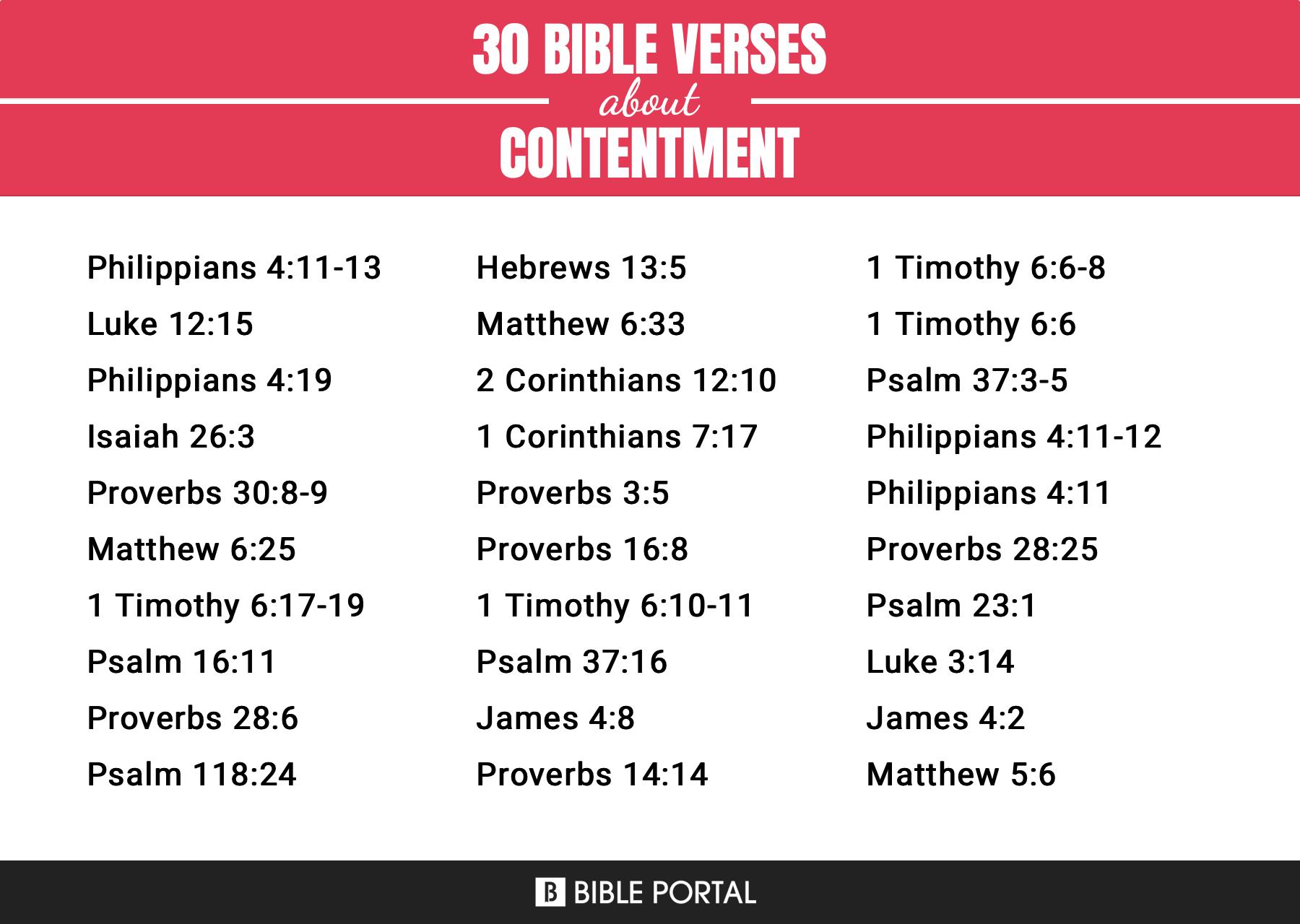
Contentment, often viewed as a simple state of satisfaction and peace, holds profound significance within biblical scripture. It is a quality that transcends mere gratification, offering a transformative perspective amidst life’s vicissitudes. The Bible invites readers to explore this virtue, revealing intricate layers of meaning and insight.
Initially, one may ponder the source of true contentment. In Philippians 4:11-13, the Apostle Paul articulates a remarkable shift in perspective. He asserts that contentment is not contingent upon external circumstances, stating, “I have learned to be content whatever the circumstances.” This passage suggests that contentment is cultivated internally rather than derived from material possessions or worldly success. It beckons individuals to reflect on their inner fortitude, encouraging a reliance on faith and spiritual resilience.
Furthermore, the notion of contentment intertwines with gratitude. The Psalms frequently celebrate thanksgiving, recognizing that an attitude of thankfulness creates fertile ground for contentment to flourish. In Psalm 37:4, it is emphasized, “Delight yourself in the Lord, and He will give you the desires of your heart.” This scriptural promise illustrates that a profound relationship with the divine can realign one’s desires, leading to a deeper, more satisfying contentment.
However, the biblical narrative does not overlook the complexities of human emotion. The tension between desire and satisfaction is poignantly expressed in Ecclesiastes 5:10, where it is warned, “Whoever loves money never has enough; whoever loves wealth is never satisfied.” Here, the scripture elucidates the futility of seeking contentment through wealth, presenting a cautionary tale against the seductive allure of materialism. It urges individuals to discern the elusive nature of fulfillment derived from possessions that ultimately lead to discontent.
As the exploration of contentment deepens, it becomes imperative to consider the role of community. In 1 Timothy 6:6-8, the text asserts, “But godliness with contentment is great gain. For we brought nothing into the world, and we can take nothing out of it.” This profound acknowledgment of life’s transience cultivates a sense of unity among believers. Sharing life’s journey with others fosters a supportive environment where mutual encouragement can elevate collective contentment.
A pivotal discourse on contentment emerges from Hebrews 13:5, where the assurance “Never will I leave you; never will I forsake you” serves as a remarkable promise from the divine. This reassurance envelops believers in a protective cocoon of trust, instilling confidence that transcends daunting circumstances. Such reliance on divine providence fortifies individuals, allowing them to embrace contentment amid uncertainty.
Additionally, the practice of reflection on one’s blessings can significantly enhance the experience of contentment. Engaging in regular self-assessment, akin to the practice of journaling, enables individuals to recognize their achievements and strengths. This reflective exercise grants clarity, allowing the individual to appreciate their unique journey in accordance with divine timing.
Ultimately, the biblical teachings on contentment provoke introspection and invite readers to reevaluate their own lives. What defines personal satisfaction? How often do we allow external variables to dictate our internal peace? The quest for contentment is an enduring journey — one that fosters resilience, gratitude, and a profound appreciation for life’s simplest treasures. As individuals navigate the complex tapestry of existence, embracing the biblical principles surrounding contentment can lead to an enriched, fulfilling life.

