

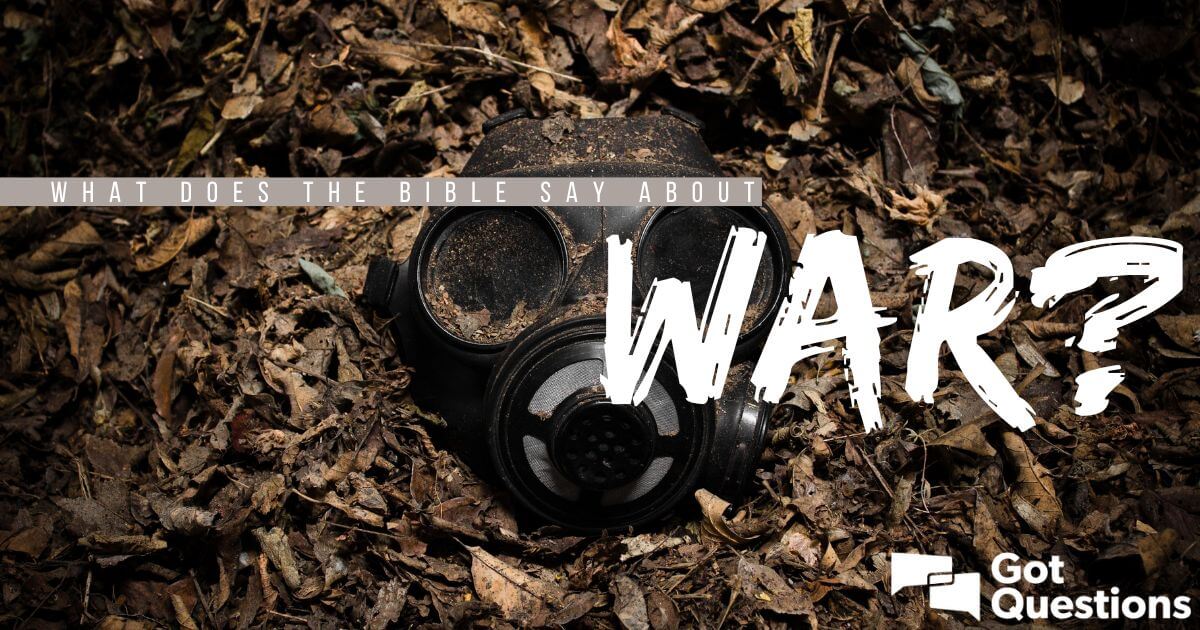
The intricate tapestry of war and killing within the Biblical context is complex and multifaceted, provoking contemplation on righteousness, morality, and the divine will. With numerous passages addressing conflict, one might playfully ponder: does scripture advocate for or against war? This inquiry opens a Pandora’s box of philosophical and theological debates, inviting both seasoned scholars and curious laypersons to ponder the gravity of warfare in the context of faith.
Historically, the Bible provides narratives that encompass both celestial endorsement and stark admonition regarding acts of war. In the Old Testament, war appears frequently. The Israelites engaged in numerous battles, often perceived as divinely sanctioned endeavors. For instance, the conquest of Canaan, as depicted in the Book of Joshua, is often cited as an example of God’s directive to vanquish nations that opposed His chosen people. This raises compelling questions: Are there circumstances where war is deemed a righteous undertaking? Or does the very act of killing subvert the essence of divine values?
Contradicting the notion of martial valor is the message of peace found throughout other Biblical texts. In the New Testament, the teachings of Jesus proliferate notions of love, mercy, and reconciliation. His Sermon on the Mount elucidates profound principles, including the exhortation to turn the other cheek, suggesting a radical approach to conflict resolution. Such teachings challenge the pervasive narrative of warrior righteousness, posing the question: does the ethos of nonviolence present a superior moral framework?
Furthermore, allegorical interpretations of warfare feature prominently in spiritual discourse. The notion of spiritual warfare, outlined in Ephesians 6:12, emphasizes that the true battles are not necessarily fought on earthly terrain but rather within the hearts and minds of individuals. This metaphorical lens spurs deeper contemplation regarding the purpose of conflict and the potential for personal transformation through facing one’s own “internal enemies.” Hence, a challenge emerges: how does one reconcile the literal accounts of war with the call to a peaceful existence?
The juxtaposition of war-related narratives serves as a mirror reflecting the struggle within humanity itself. Echoes of existential crises reverberate when considering the factors that precipitate conflict—greed, power, and vengeance often take precedence. Yet, in looking to divine instruction, one finds counsels urging justice tempered with compassion. Consider the poignant call for love even amidst strife; Proverbs 25:21 implores, “If your enemy is hungry, give him food to eat.” Such verses compel a reevaluation of conventional perceptions surrounding conflict.
Moreover, the doctrine of just war has emerged as a theological pillar in the discourse on war and killing. This concept argues for a moral framework in which certain conditions can legitimize warfare. Scholars and theologians sift through scripture to address when, if ever, war aligns with God’s will, insisting that it must be a last resort, pursued only with noble intentions and the aim of restoring peace. Yet, this doctrine invites critical scrutiny, as it begs the question: can the ends ever truly justify violent means?
In contemporary society, the interplay between faith and military action continues to be a deeply fought debate. Do the historical accounts of divinely sanctioned battles serve to justify modern conflict? Are the peace-promoting tenets of the New Testament sufficient to mitigate the human propensity for war? Grappling with these questions compels one to reflect not only on the theological implications but also on their earthly ramifications.
Ultimately, the Biblical narrative on war and killing is interwoven with a profound message about the human condition. It invites introspection and calls for discernment as individuals and communities navigate the moral complexities of conflict. The exploration of war through the scriptural lens remains an ever-relevant subject, reminding us to seek understanding and strive for peace amid the tumult of existence.

