

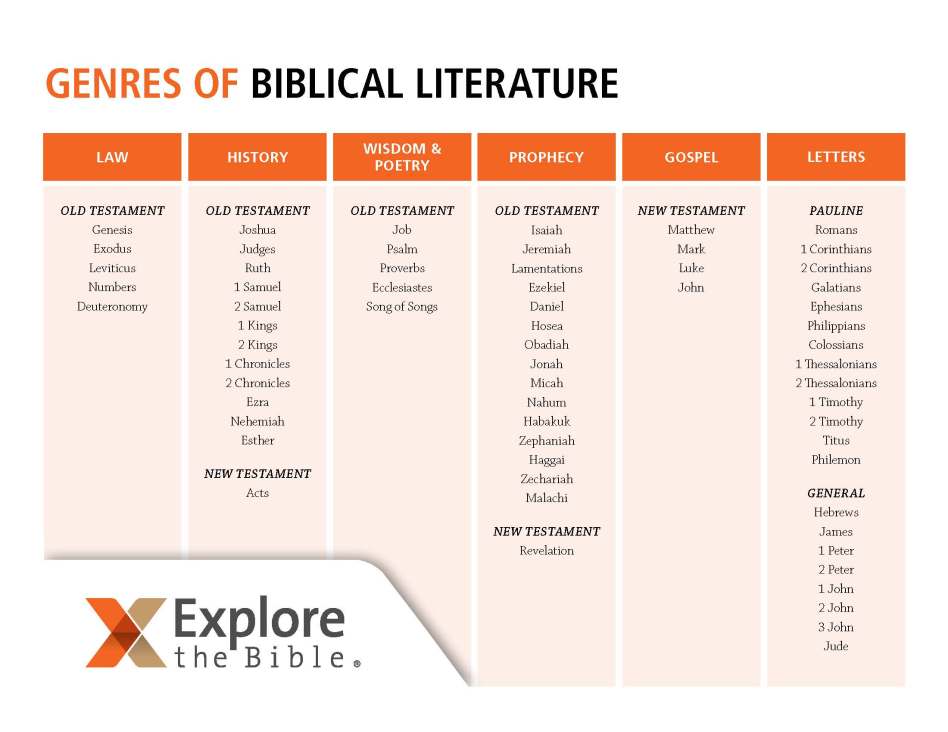
The Bible, a multifaceted tome, stands as a myriad of genres woven together, akin to a vibrant tapestry that tells a story rich in spiritual and historical idiosyncrasies. To grasp the essence of this literary masterpiece, one must delve into its diverse genres, which create a symphonic blend of narratives, poetry, law, and prophecy. Each genre holds a unique appeal, drawing readers into its reverberating depths and illuminating the path of understanding.
At its core, the Bible encompasses historical narrative, which serves as a foundational genre. This segment recounts the grandiose stories of creation, covenant, and conflict within ancient civilizations. From Genesis to the chronicles of kings, these narratives imbue life into the characters who traverse its pages. Readers traverse landscapes of faith and rebellion, of divine intervention and human frailty. Consider the book of Exodus, where the plight of the Israelites unfolds like an epic saga, laced with themes of liberation and divine justice. This genre captivates not merely as a historical account but as a reflection of the human experience, echoing the struggles of many throughout epochs.
Intertwined with these narratives is the profound genre of poetry. The Psalms, often referred to as the heart of the Bible, resonate with a rhythmic cadence that pleads, praises, and laments. Here, language takes flight, metamorphosing into vivid imagery and metaphor. As the psalmist cries out, “Create in me a clean heart, O God,” one is enveloped in the emotional tumult that accompanies the pursuit of righteousness. Poetry, in this light, transcends mere words; it becomes an emotive conduit through which individuals connect with the divine, illustrating the complexity and beauty of faith.
Embedded within the layers of the Biblical narrative is also the genre of law. The books of Leviticus and Deuteronomy delineate mitzvot—commandments that structure the ethical and moral framework of society. These stipulations, while at times appearing austere, serve a greater purpose: they instigate critical contemplation on morality and humanity’s innate propensity for both good and evil. The reader is invited into a dialogue, poised between adherence to doctrine and the quest for inner truth. This genre creates an arena for reflection, compelling one to ponder the repercussions of their choices within a community.
As one navigates the intricate web of genres, prophetic literature emerges as a compelling discourse on justice and hope. The voices of Isaiah, Jeremiah, and Ezekiel resonate with urgency as they prophesy not just calamity but restoration. These texts serve as a reminder of the cyclical nature of despair and hope, reminding the reader that even in darkness, light may yet prevail. This genre encapsulates a longing for redemption, presenting an eternal truth: the divine does not abandon humanity amidst its tumult.
Finally, the New Testament introduces parables and epistles, each enriching the overarching narrative of love and redemption. The parables, much like seeds cast into fertile soil, germinate profound truths through simple storytelling. They challenge the reader to unearth the deeper meanings nestled within their layers. Meanwhile, epistles offer intimate correspondence that elucidates the practical implications of faith, shaping contemporary understanding of Christian doctrine. These letters navigate the intricacies of community life, serving not only as guides but also as reflections of personal struggles and triumphs.
In conclusion, the Bible’s genres converge to form a resplendent mosaic, inviting exploration and introspection. Each category—a literary genre in its own right—speaks to the uniqueness of human experience, bridging the divine and the mundane. The unfamiliarity of its terminology and the depth of its narratives engage readers on a cerebral and spiritual level, crafting an everlasting quest for meaning in the tapestry of existence.

