

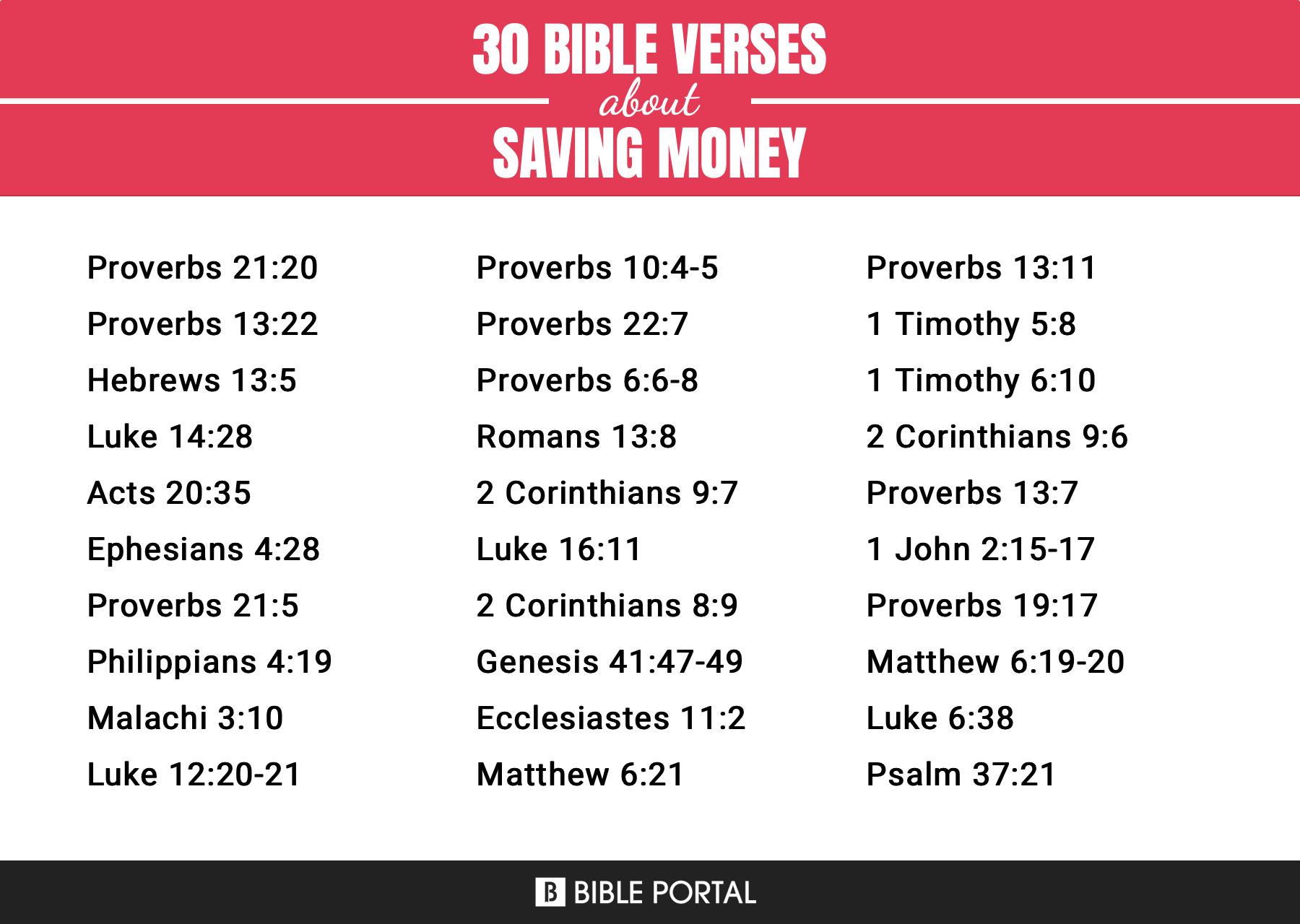
When pondering the concept of saving money, one might whimsically ask: Are we the stewards of our wealth or mere spendthrifts caught in a relentless cycle of consumerism? The Bible provides profound insights that resonate deeply with the modern-day quest for financial prudence. Within its sacred texts, there lies a plethora of wisdom addressing the virtues of saving money, emphasizing responsible stewardship, and ultimately cultivating a mindset of abundance rather than scarcity.
The biblical foundation for saving money can be traced to various verses that extol the benefits of foresight and preparation. Proverbs 21:20, for example, declares, “The wise store up choice food and olive oil, but fools gulp theirs down.” This metaphor not only underscores the merit of saving for future needs but also highlights the folly of impulsive consumption. As one reflects upon this notion, the challenge arises: why do we often equate spending with satisfaction, when wisdom beckons us towards savings and sustainability?
In addition, the Bible introduces the parable of the Ant. In Proverbs 6:6-8, we find an exhortation to observe the industrious ant, which diligently collects provisions during harvest time. This industriousness serves as an allegory for fiscal responsibility. It compels readers to ponder: are we prepared for our proverbial winter? Delving deeper into this text reveals a call to action—one that encourages us to consider our financial landscape and take actionable steps toward cultivating a reserve for emergencies or future opportunities.
Moreover, the principles of saving are deeply intertwined with the concept of contentment. Philippians 4:11-12 offers a salient reminder from the Apostle Paul, who asserts that he has learned to be content in all circumstances, whether in plenty or in want. This scripture challenges the reader to confront the societal pressures of consumerism and reassess what it means to live a fulfilled life. Could it be that our endless pursuit of material wealth clouds our ability to appreciate the very essence of what we already possess? The journey towards financial well-being begins with gratefulness and an understanding of one’s priorities.
Another dimension worth exploring is the biblical concept of generosity as it relates to saving. Luke 6:38 states, “Give, and it will be given to you.” The balance of saving and sharing is crucial; while one is encouraged to set aside resources for the future, the call to generosity cannot be dismissed. Embracing this principle creates a holistic approach to finances, ensuring that one does not hoard wealth but rather uses it as a means to bless others. This begs another intriguing question: how can we effectively balance our inclinations to save while also contributing to the greater good?
Moreover, the overall theme of stewardship resonated throughout the scriptures emphasizes the profound belief that all possessions are, in fact, gifts from God. In Luke 16:10-11, we are reminded, “Whoever can be trusted with very little can also be trusted with much.” Managing small financial resources with integrity can lead to greater opportunities. Thus, saving money transforms into a spiritual discipline—one that fosters accountability and trustworthiness in handling one’s finances.
Finally, a thoughtful engagement with these biblical insights poses a challenge to the modern believer: How do we allow these age-old wisdoms to inform our contemporary financial practices? Instead of succumbing to the pressures of immediate gratification, one can embrace the enriching process of saving, thereby cultivating a more profound peace in one’s financial journey. As we ponder the Perennial wisdom regarding saving money, let us ask ourselves: are we ready to embark on a path that not only promotes personal financial well-being but also enriches our communal responsibility? The answer lies not just in our wallets, but in our hearts and minds, as we learn to navigate the intricate dance of saving and spending with intentionality and grace.

