

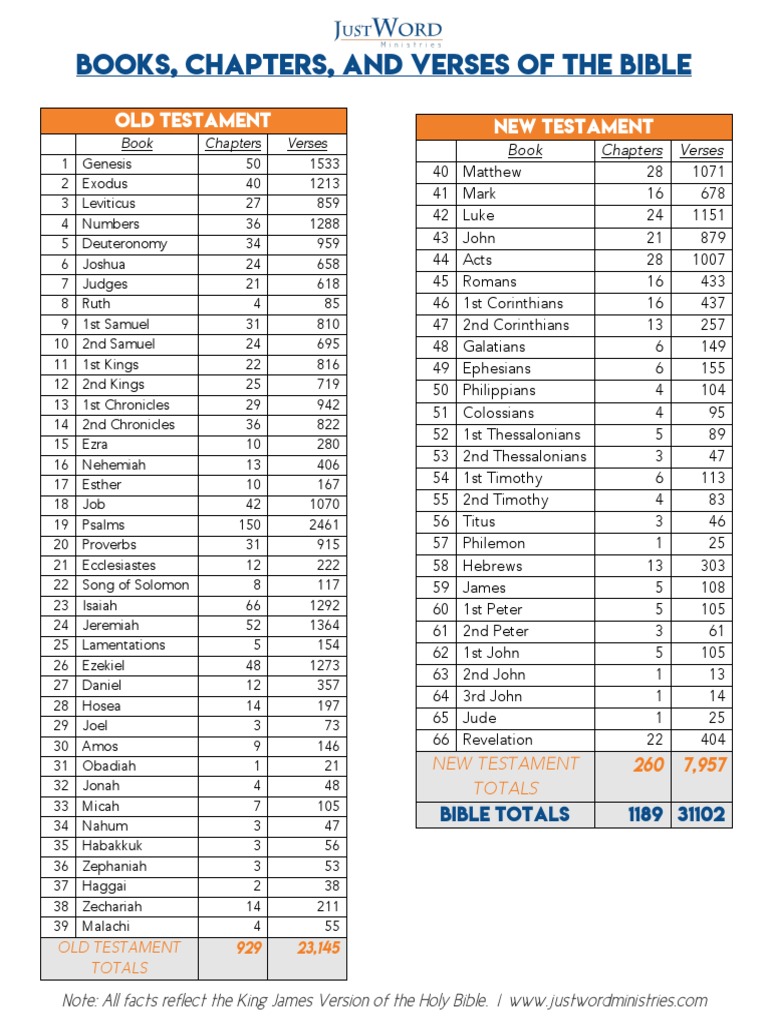
The Bible, a venerable anthology of texts revered by millions, encapsulates an array of literary genres, historical narratives, and spiritual teachings. Among its diverse books, one often encounters a curious observation: the variance in chapter lengths and overall book lengths. A particular point of intrigue arises when contemplating which book contains the most chapters. The answer, as many may know, is the Book of Psalms, which boasts a staggering total of 150 chapters. This observation raises deeper inquiries into the theological significance and the socio-cultural implications of Psalms within biblical literature.
At first glance, one might ponder the sheer volume of content within the Psalms. This prolific collection serves as a hymnary for the faithful, articulating the full spectrum of human emotion—from despair and lamentation to praise and thanksgiving. Its enduring popularity lies not merely in its numerical superiority but also in its capacity to resonate profoundly with the human experience. The lengthy nature of this book invites meticulous reflection and encourages readers to dive into its poetic depths.
The Psalms, traditionally attributed to King David and other figures, encapsulate a variety of themes. Each psalm can be considered a standalone meditation, yet collectively they form a rich tapestry of worship and spiritual expression. The eclectic nature of these texts ranges from the deeply intimate personal prayers of individuals to the grandiose praises intended for communal engagement. This diversity enables Psalms to resonate with a broad audience, transcending time and cultural barriers. Readers from varied backgrounds find solace and inspiration in the lyrical beauty of its verses.
A common observation also extends to the literary devices employed throughout the Psalms. It is characterized by the use of parallelism, metaphors, and vivid imagery. Such techniques not only enhance the aesthetic quality of the text but also deepen its theological meaning. For instance, the metaphor of the “Lord as shepherd” invokes an image of guidance and protection, evoking profound trust and comfort among believers. Furthermore, the emotional cadence within the verses mirrors the rhythm of human life, encapsulating joy, sorrow, and everything in between. This intricate interplay of literary artistry and spiritual depth compels readers to engage with the text on multiple levels.
Delving into the historical context of Psalms invites more layers of complexity to the discussion. These texts evolved over centuries, reflecting the struggles and triumphs of the Israelite people. From the harrowing exiles to the jubilant returns, Psalms chronicle a historical narrative interwoven with the spiritual journey of a nation. Thus, the volume of chapters serves not only as an indicator of length but also signifies the enduring importance of these songs in the collective memory of a people.
Moreover, the prominence of the Psalms in liturgical practices cannot be overstated. Their frequent recitation, chanting, and incorporation into worship services underscore their integral role in religious life. In many traditions, the Psalms are regarded as prayers that bridge the divine and human realms, nurturing a relationship with the transcendent. Their wide-ranging appeal and adaptability have ensured their place in various religious and cultural practices, making them enduring fixtures in the spiritual landscape.
In conclusion, the Book of Psalms, with its remarkable tally of 150 chapters, serves as a testament to the multifaceted nature of biblical literature. Its capacity to foster emotional connection, facilitate communal worship, and provide a historical framework underlines why this particular book captivates the hearts and minds of readers. Each chapter is not merely a division of text but a portal into the profound beauty of human spirituality—an invitation to explore the depths of faith through the lens of poetic expression.

