

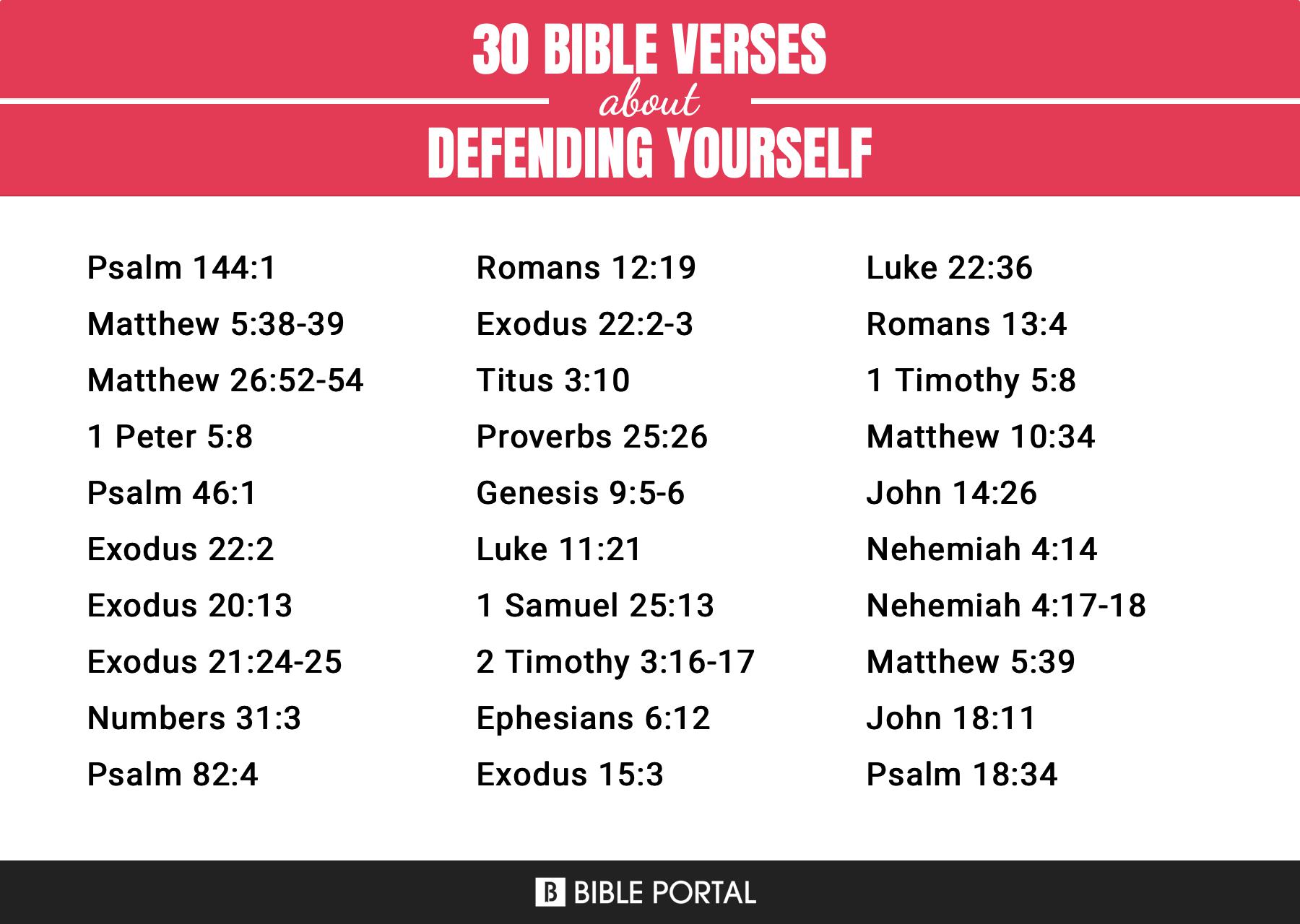
In the realm of spiritual guidance, the Bible offers a plethora of insights regarding the concept of self-protection. Understanding the nuances of defending oneself can illuminate the path to making judicious choices in challenging situations. This exploration touches on various facets, incorporating both physical and spiritual dimensions of self-defense.
To begin, one may consider the historical context within which the scriptures address self-defense. There are numerous accounts illustrating the necessity of safeguarding oneself from harm. For instance, in Exodus 22:2-3, the text stipulates, “If a thief is caught breaking in and is struck so that he dies, there shall be no guilt for his bloodshed.” This verse elucidates an essential tenet: there exists a divine endorsement for protecting oneself and one’s belongings, especially when one’s life is at stake. It sets a precedent that self-defense, when executed with prudence, is not only permissible but warranted.
Transitioning from physical to emotional realms, Proverbs 25:28 presents a metaphorical facet of self-defense: “Like a city whose walls are broken through is a person who lacks self-control.” This excerpt emphasizes the necessity of safeguarding one’s mental and emotional well-being. Here, self-defense manifests as the cultivation of discipline and self-control, highlighting that protection extends beyond the corporeal. By fostering resilience against negative influences and maintaining emotional poise, one actively defends against external intrusions that could destabilize one’s inner sanctum.
Furthermore, the New Testament introduces a nuanced perspective on self-defense. In Matthew 5:39, Jesus posits an entirely different interpretation with, “But I tell you, do not resist an evil person. If anyone slaps you on the right cheek, turn to them the other cheek also.” This poignant commandment underscores the virtue of non-resistance, prompting believers to reflect on the principles of forgiveness and mercy. In this context, self-protection transcends mere physical confrontation; it delves into the realm of spiritual strength and ethical fortitude. The challenge lies in discerning when to engage and when to surrender, navigating the delicate balance between self-defense and the higher call to compassion.
Exploring biblical narratives further enriches the discussion. The story of David and Goliath illustrates the strategy of preparedness. David, though seemingly disadvantaged, utilizes his agility and faith to overcome a formidable opponent. The lesson here is profound: one can prepare oneself spiritually and mentally for impending challenges. Embracing faith as a critical component of self-defense, believers are encouraged to rely on their spiritual arsenal, seeking wisdom and strength through prayer and meditation. This approach fosters a proactive mindset, enabling individuals to confront adversity with courage and resilience.
Additionally, a community aspect emerges as vital in the discussion of self-protection. Ecclesiastes 4:9-10 proclaims, “Two are better than one, because they have a good return for their labor: If either of them falls down, one can help the other up.” This underscores the importance of seeking support from others during perilous times. Engaging with a steadfast community can provide emotional and practical resources that fortify one’s capacity for self-defense.
In conclusion, the biblical discourse on protecting oneself traverses a multifaceted landscape, embracing physical, emotional, and communal dimensions. The scriptures reveal a balanced understanding of self-defense, encouraging the faithful to cultivate both inner strength and external vigilance. By integrating these principles, individuals can navigate life’s myriad challenges with grace, ensuring they uphold their dignity while remaining rooted in their values. The biblical narrative ultimately advocates for a harmonious approach to self-protection, urging believers to defend themselves while embodying the virtues of love and forgiveness.

