

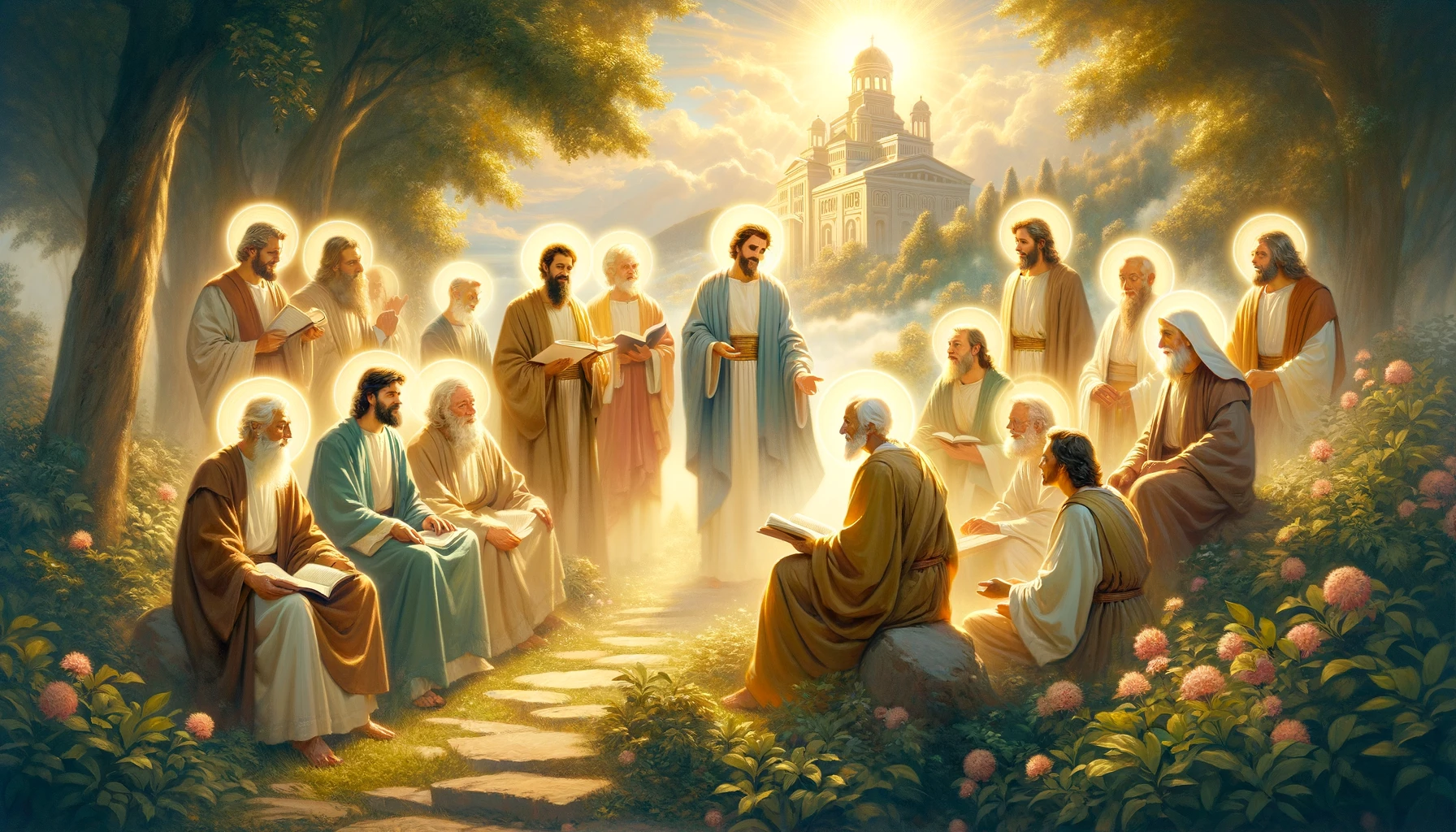
The concept of saints within the Christian tradition encompasses a rich tapestry of interpretations and implications, often giving rise to profound spiritual discourse. Saints are not merely historical figures; they serve as exemplars of faith, worthy of emulation in the pursuit of holiness. The biblical framework surrounding saints provides insight into their characteristics, roles, and the reverence afforded to them by the faithful.
First, it is essential to define who qualifies as a saint according to scripture. The term “saint” in its most fundamental sense derives from the Greek word *hagios*, which means “holy” or “set apart.” In the broadest context, all believers in Christ are regarded as saints. The Apostle Paul, in his letters, often refers to the collective congregation of believers as saints, illustrating that every individual who follows the teachings of Christ is sanctified through faith. This foundational understanding expands the notion of sainthood beyond canonized figures to include everyday believers.
Moreover, specific attributes delineate true saints. The New Testament elucidates these characteristics through various passages. Saints are called to embody virtues such as humility, love, and perseverance. In Galatians 5:22-23, the Apostle Paul lists the fruits of the Spirit, which include love, joy, peace, patience, kindness, goodness, faithfulness, gentleness, and self-control. These traits serve as hallmarks of saintly behavior, underlining the moral compass by which believers are encouraged to navigate life’s vicissitudes.
Furthermore, the sacred texts portray saints not only as paragons of virtue but as intercessors. The Book of Revelation offers a vision of martyrs and saints standing before the throne of God, pleading for the faithful on Earth. This intercessory role accentuates the belief that saints can intercede on behalf of others, a conviction that permeates many Christian doctrines, particularly in Catholicism, where the communion of saints is an essential element of faith.
The Bible also narrates the lives of specific individuals who are revered as saints. Figures such as St. Peter, St. Paul, and St. Stephen are chronicled, showcasing their sacrifices and steadfast commitments to the gospel. Their stories serve as both inspiration and guidance for believers. Through trials and triumphs, these saints’ unwavering dedication to their faith underscores the transformative power of divine grace.
In addition to moral exemplification and intercession, saints contribute to the ecclesiastical community. They unite believers across geographical and temporal dimensions. The celebration of saintly feast days provides occasions for remembrance and communal worship, fostering a sense of belonging among Christians. The Church, as a body of saints, is called to influence the world positively, working towards justice, mercy, and love, echoing the same values espoused by Christ.
Ultimately, the Bible serves as a foundation for understanding saints as integral components of the Christian faith. The narratives and teachings converge to illustrate that sainthood is not confined to canonization or historical significance. Instead, it is an invitation to all believers to aspire toward a life marked by holiness and service. In pursuing a saintly life, individuals endeavor to walk in the footsteps of Jesus, spreading love and light in a world yearning for divine truth.
In summary, the Bible delineates a multifaceted portrait of saints—individuals who are exemplary, intercessory, and vital to the Christian community. Their legacy continues to inspire generations, imparting wisdom and urging the faithful towards a deeper relationship with the divine. Through the exploration of what the scriptures reveal about saints, believers are encouraged to reflect upon their own journeys of faith, striving to embody the virtues that define true sanctity.

