

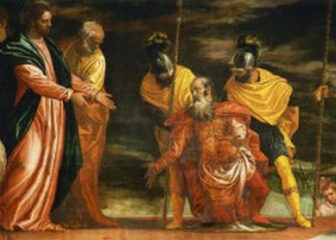
The centurion, a prominent figure in the Bible, represents not only military authority but also a complex intertwining of faith, duty, and the human experience. The term ‘centurion’ derives from the Latin word ‘centuria,’ meaning ‘a group of one hundred.’ Each centurion was tasked with commanding a century, a subdivision of the Roman army consisting of around one hundred soldiers. This title bore significant implications, as centurions were pivotal in maintaining order within the legions and ensuring the efficient execution of military strategy.
In the context of the New Testament, centurions emerge as intriguing characters that bridge the divide between the Roman military and the nascent Christian faith. Their narratives invite us to explore themes of power, authority, and humility. One particularly notable centurion appears in the Gospel of Matthew, where he pleads with Jesus to heal his servant. This interaction is remarkable, not solely for the miraculous healing but for the profound statement made by the centurion concerning faith. He asserts to Jesus, “I am not worthy to have you come under my roof, but only say the word, and my servant will be healed.” This declaration does not merely demonstrate the centurion’s recognition of Jesus’ authority; it signifies a deeper understanding of faith that transcends traditional societal hierarchies.
Centurions were often respected for their leadership qualities, bravery, and discipline. These men were not only military commanders but also served as enforcers of Roman law and order in the provinces. Their position afforded them a unique perspective on the socio-political landscape of their time, often putting them at odds with the religious sentiments of the Jewish populace. Yet, the Scriptural accounts reveal an intriguing contrast—centurions were frequently depicted as just and compassionate. For instance, in the account of Acts 10, we meet Cornelius, a centurion who earnestly feared God and gave alms generously to the people. His story culminates in a divine revelation that reshapes the early church’s understanding of salvation, showcasing the inclusivity of the Gospel message.
The role of centurions extends beyond mere military might; they embody a blend of authority and vulnerability, demonstrating that even those in positions of power can exemplify humility and faith. They challenge contemporary readers to reevaluate preconceived notions about authority figures. This shift in perspective is profound, as it compels one to consider the potential for grace and divine interaction even among those seen as adversaries in the biblical text. The centurion’s faith, particularly in Jesus’ ability to heal, serves as a model for believers today, emphasizing that authentic faith often flourishes in the heart of those who, despite their worldly status, recognize their need for spiritual help.
As we delve further into the accounts of centurions within the Bible, their narratives reveal cultural clashes and a shared quest for understanding the divine. They highlight the rich tapestry of human interactions and the potential for faith to transcend societal boundaries. Moreover, their stories encourage readers to muse on the transformative power of faith and to consider how the tenets of Christian love extend beyond conventional affiliations, fostering unity in diversity.
In summary, centurions in the Bible encapsulate a unique confluence of military duty and faith, prompting readers to rethink established norms within both their historical context and their modern applications. These individuals stand as testaments to the idea that faith has the capacity to transcend and envelop all, regardless of background or social standing, inviting everyone into a collective journey towards understanding and grace.

