

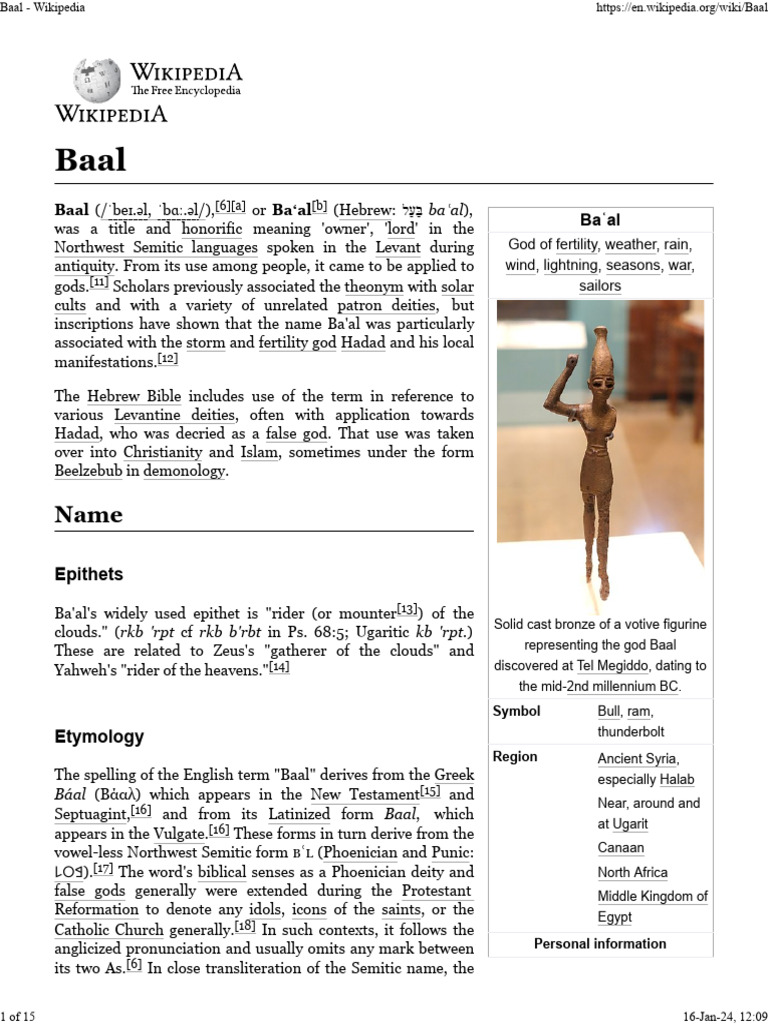
The term “Baal” emerges from the annals of ancient Near Eastern mythology, embodying multifaceted connotations that transcend a mere label or title. Within biblical contexts, Baal signifies not only a deity of great repute among the Canaanites but also encapsulates a broader spectrum of idolatrous worship that often provoked the ire of monotheistic proponents, particularly the Israelites. As we traverse the intricate labyrinth of biblical narratives, the name Baal manifests as an emblem of temptation, moral conflict, and divine retribution.
Primarily, Baal translates to “lord” or “master” in ancient Hebrew, reflecting the hierarchical structure within the pantheons of antiquity. Baal was principally associated with fertility, storms, and agriculture—a triad of natural forces crucial for the sustenance of life. The Canaanites revered him as the wielder of rain and thunder, a deity capable of bestowing bountiful harvests or casting down ruinous storms. This duality of benevolence and malevolence crafts an intriguing metaphor for human existence, illustrating the fine line between abundant grace and devastating wrath. In this context, Baal is not merely a god; he is an embodiment of the unpredictable nature of life itself.
The biblical narrative elucidates the tensions surrounding Baal worship, primarily through its stark contrast with the monotheistic worship of Yahweh. For the Israelites, Baal epitomized the seduction of polytheism and the perils of straying from the covenant with their singular God. Stories featuring prophets like Elijah encapsulate this ideological struggle, most notably during the showdown on Mount Carmel, where the futility of Baal’s prophets to conjure fire from the heavens starkly illustrates the unequivocal supremacy of Yahweh. This episode serves as a vivid reminder of the folly inherent in misplaced devotion. As the prophets of Baal danced and pleaded with silence, the heavens remained unyielding, an allegory for humanity’s cries when severed from divine truth.
Yet, the allure of Baal went beyond mere agricultural prosperity. In the eyes of the ancients, he represented the hedonistic pursuits of pleasure and indulgence. The worship of Baal often devolved into practices that included ritualistic prostitution and child sacrifice, acts that catalyzed divine condemnation in the biblical texts. These stark images draw a parallel to modern dilemmas—where the pursuit of earthly pleasures can lead to moral decay. Thus, Baal serves as a cautionary symbol, warning of the seductive yet destructive nature of idolatry, whether tangible or metaphorical. The name echoes through the ages as a reminder of humanity’s proclivity towards elevating transient desires above enduring truths.
As we dissect the legacy of Baal, we must acknowledge the symbolic significance of the name that reverberates far beyond the geographical confines of ancient Canaan. Baal’s presence within the Bible is not merely historical; it possesses a timeless quality that resonates with contemporary struggles regarding faith, identity, and the allure of distractions that divert one’s path from spiritual fulfillment. The narrative of Baal invites introspection—challenging each individual to contemplate the “baals” they may unwittingly serve in their lives today. Whether through materialism, ambition, or societal pressures, the ancient name persists as a metaphor for the myriad distractions that can compromise one’s commitment to higher ideals.
In conclusion, the exploration of what “Baal” means in the Bible unfurls a rich tapestry of ancient belief systems, moral dilemmas, and timeless lessons. Through the lens of mythology and scripture, Baal stands as a captivating figure whose legacy invites ongoing reflection regarding the nature of worship, devotion, and the perennial struggle between the divine and the ephemeral. The echoes of Baal’s name still resonate today, beckoning humanity to discern the true essence of what it means to serve a higher purpose amidst the cacophony of fleeting desires.

