

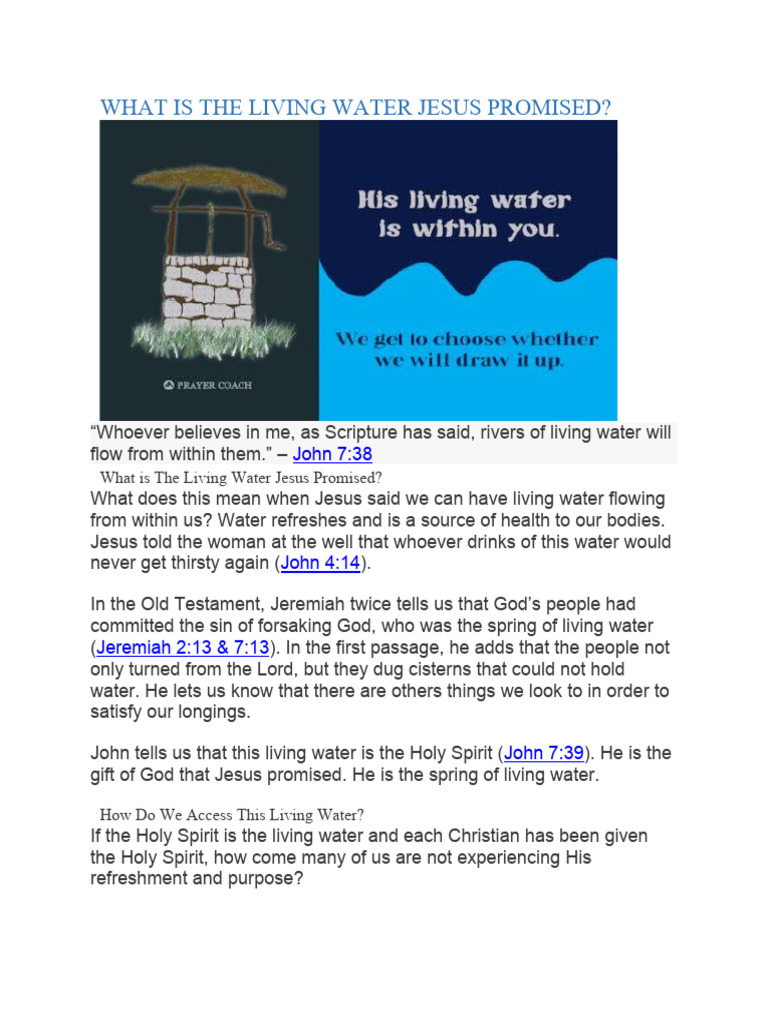
The term “Living Water” in biblical contexts transcends mere physical hydration; it embodies a profound spiritual significance that resonates throughout scripture. This phrase is predominantly showcased in the New Testament, particularly through the narrative of Jesus’ encounter with the Samaritan woman at the well. The conversation beyond the surface level warrants an exploration of its layers, shedding light on why it captivates believers and scholars alike.
In the Gospel of John, specifically in John 4:10, Jesus articulates: “If you knew the gift of God, and who it is that asks you for a drink, you would have asked him and he would have given you living water.” Here, “living water” is introduced as a divine gift, suggesting a quality of life or vibrancy that surpasses ordinary water. This juxtaposition between the tangible and intangible invites contemplation on the nature of spiritual fulfillment.
One of the most compelling observations about living water is its stark contrast to the stagnant waters often referred to in biblical literature. Stagnation symbolizes spiritual barrenness and a sense of disconnection from the divine. In contrast, living water suggests a source of vitality—flowing, fresh, and rejuvenating. This dichotomy evokes curiosity about the essence of spiritual renewal. It raises essential questions: What does it mean to be spiritually refreshed? How does one access this living water in their own life?
Historically, water in biblical narratives often signifies purification, life, and sustenance. From the earliest accounts in Genesis, where the Spirit of God hovered over the waters, to the instances of baptism, water serves as a potent metaphor for cleansing and rebirth. The motif of living water encapsulates the promise of spiritual regeneration through Christ. In essence, it alludes to the transformative power of faith—a notion that inspires intrigue among followers.
The idea of living water also extends beyond individualistic interpretations. It can be perceived as a communal wellspring, nourishing relationships, communities, and the Church. This communal aspect underscores the social implications of nourishment: just as water sustains life, collective faith and worship can invigorate spiritual communities. This observation reminds us that spirituality flourishes not only in solitude but also in fellowship.
Moreover, the symbolism of living water invites deeper inspection into its connections with the Holy Spirit, often referred to as the “Water of Life.” The Spirit’s role in guiding, empowering, and comforting believers accentuates the idea that living water is a continuous flow of divine presence within the believer. It is not a one-time experience but an ongoing journey of growth and transformation. This continuity captivates those who yearn for a deeper connection with the divine, offering hope and direction.
As one navigates through the biblical texts, the importance of faith becomes ever more apparent. Living water is inextricably linked to belief in Jesus as the source of eternal life. The spiritual thirst that humanity experiences is addressed profoundly through faith, emphasizing the holistic nature of salvation that encompasses mind, body, and soul. Such intriguing nuances raise pivotal discussions about the relationship between humanity and the divine.
Ultimately, the fascination with living water rests on its multifaceted nature. It symbolizes nourishment, regeneration, community, and sustenance not just for the body but for the spirit as well. The longing for this living water speaks to a deeper craving within all people—a quest for connection, purpose, and identity anchored in something beyond oneself. As individuals and communities continue to explore these dimensions, they find that living water remains a timeless metaphor—one that embodies hope, renewal, and the promise of a life anchored in faith.

