

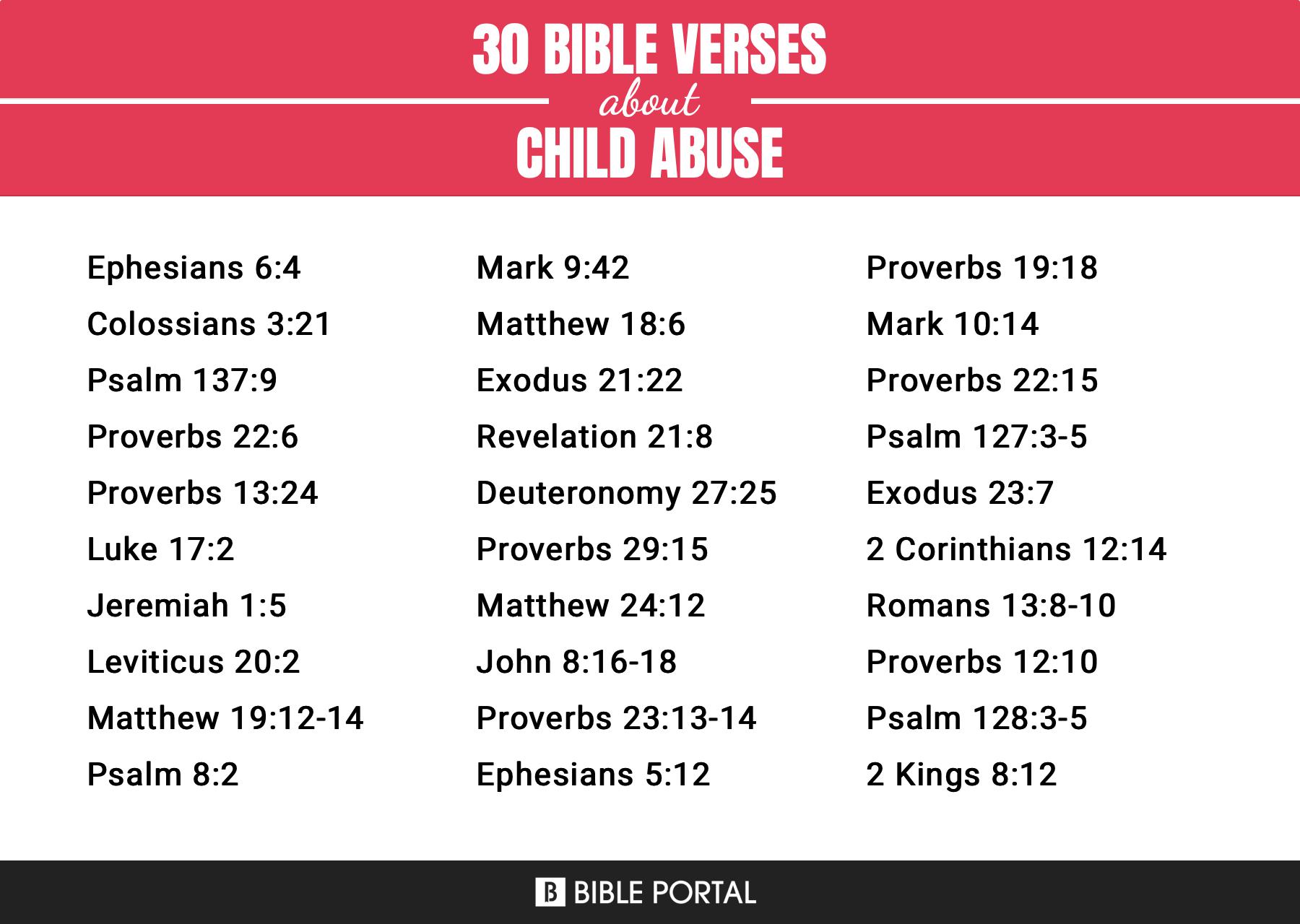
Child abuse, a grave societal malady, finds no haven within the pages of sacred scripture. The Bible elucidates a myriad of principles regarding the sanctity of life, the value of children, and the ethical responsibilities of guardianship. It serves as both a moral compass and a source of solace for those who have endured such harrowing experiences.
At the heart of the biblical narrative lies the statement of inherent worth ascribed to children. In Matthew 19:14, Jesus admonishes his disciples to allow the children to come to Him, declaring, “For to such belongs the kingdom of heaven.” This unequivocal endorsement of children emphasizes their value and the imperative of nurturing rather than harming them. It asserts that child welfare reflects a society’s moral standing.
Moreover, the Bible poses a stark warning against the maltreatment of children. In Luke 17:2, there is a visceral admonition that causing harm to a little one incurs severe consequences: “It would be better for him if a millstone were hung around his neck and he were cast into the sea.” Such striking imagery underscores the gravity with which scripture regards the safety and protection of children, delineating an inviolable line against the transgressions of abuse.
The notion of parental responsibility is heavily emphasized in various biblical texts. Proverbs 22:6 instructs parents to “Train up a child in the way he should go; even when he is old he will not depart from it.” This highlights the essential role of guardians in steering their offspring towards righteousness and morality. Conversely, the lack of guidance or, worse, the infliction of harm upon children is met with divine disfavor. Proverbs 13:24 further critiques abusive behavior: “He who spares the rod hates his son, but he who loves him is diligent to discipline him.” Here, discipline is framed as a form of love, albeit one that must never veer into the territory of abuse.
Scriptural teachings also extend to the community, advocating for vigilant protection of the vulnerable. James 1:27 asserts that “Religion that is pure and undefiled before God the Father is this: to visit orphans and widows in their affliction.” This call to action implores believers to actively engage in the welfare of those unable to defend themselves, including children who are victims of abuse. It illustrates that faith must manifest in compassionate action.
Furthermore, the Bible addresses broader injustices that can encompass child abuse within a societal framework. The prophetic literature often cries out against systemic injustices, signaling that negligence towards the marginalized, including abused children, is morally repugnant. In Micah 6:8, the call to “do justice, love kindness, and walk humbly” serves as a directive that echoes through ages, urging individuals and communities alike to redress wrongs.
The theological implications of child abuse are grave. It paints a picture not only of individual despair but a rupture in the divine order established by God. The abhorrent nature of child abuse contradicts the very essence of love, which is central to Christian teaching. It throws into sharp contrast the benevolent nature of God against the malevolent actions of individuals.
In reflection, the Bible implores us to uphold the dignity of children, advocating for their protection, nurturing, and education. It establishes a moral framework that not only condemns abuse but also champions the need for community action, parental responsibility, and divine justice. As society grapples with the burden of child abuse, turning to scripture offers both guidance and a profound reminder of the elevation and sanctity of innocence.

