

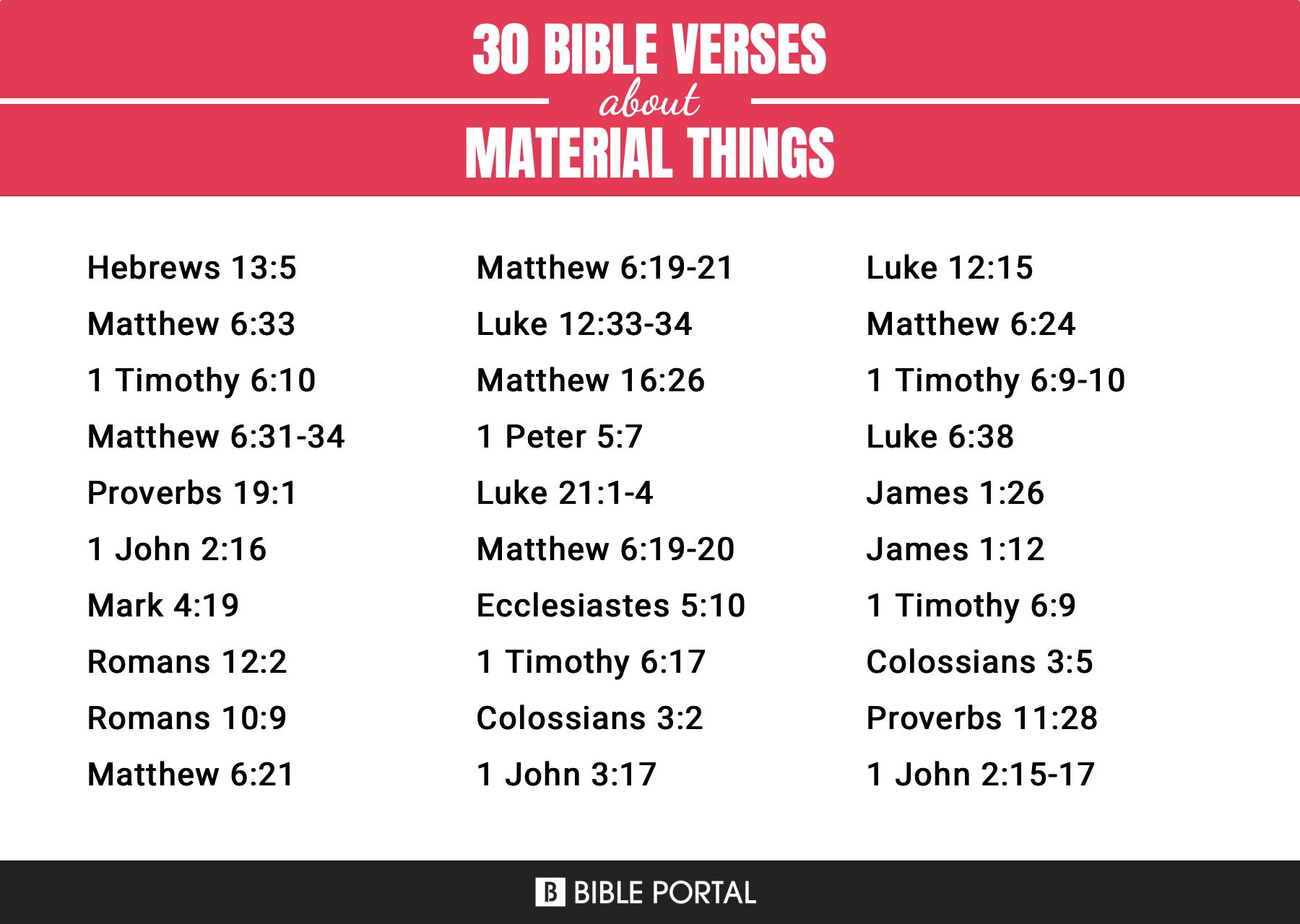
In the grand tapestry of existence, the pursuit of material things often resembles a mirage shimmering on the horizon—an alluring promise of fulfillment that can quickly dissipate, leaving only a sense of emptiness in its wake. The Bible, a text revered by countless individuals through the ages, offers profound insights into the nature of materialism, urging thoughtful reflection on the true essence of wealth and possessions.
At the core of biblical discourse lies a stark dichotomy: the ephemeral allure of earthly treasures contrasted with the enduring value of spiritual wealth. The renowned passage, “For where your treasure is, there your heart will be also” (Matthew 6:21), resonates deeply within this narrative, encapsulating the notion that one’s priorities unveil the very essence of their being. It suggests that an obsession with material goods can ensnare the heart, diverting it from transcendent pursuits and deeper, more meaningful connections.
Moreover, the Bible employs potent metaphors to elucidate the impermanence of material possessions. In the parable of the rich fool (Luke 12:16-21), a prosperous man, blinded by his success, is urged to consider the fragility of life. Like dust in the wind, his amassed goods offer no solace when faced with the inevitability of mortality. This serves as a reminder that the accumulation of wealth for its own sake is a pursuit riddled with vanity, mirroring the hollowness of a grand façade devoid of substance.
The epistles further echo this sentiment, challenging the societal norms that idolize wealth. “But godliness with contentment is great gain” (1 Timothy 6:6) urges a reconceptualization of worth. Here, Paul sheds light on a paradox: abundance does not stem from possessions but from an internal state of being—an understanding and appreciation of what truly matters. The discontentment that often accompanies the relentless chase for more is likened to a never-ending race, leaving one perpetually exhausted yet unfulfilled.
In the poetic cadence of Ecclesiastes, one might encounter the haunting phrase: “Vanity of vanities; all is vanity” (Ecclesiastes 1:2). This declaration serves as a sobering reminder that material pursuits, while seductive, ultimately lack lasting significance. The author, often identified as King Solomon, reflects upon a life replete with earthly pleasures and concludes that such endeavors are but a fleeting shadow. The pursuit of wisdom, on the other hand, is positioned as a more worthy endeavor—an eternal investment that reaps dividends in understanding and enlightenment.
The biblical perspective does not advocate for asceticism but rather encourages a discerning approach to wealth and possessions. “You cannot serve God and money” (Matthew 6:24) implores individuals to prioritize their values, visualizing a life where generosity supplants greed. When material wealth is wielded with responsibility, it transforms from a mere possession into a vehicle for benevolence, allowing individuals to contribute positively to the broader tapestry of humanity.
In conclusion, the Bible’s exploration of material things invites readers into a contemplative space, challenging the prevailing narratives of consumerism. Rich with metaphoric language and profound insights, it beckons individuals to focus on the intangible—the relationships nurtured, the kindness extended, and the wisdom cultivated. Ultimately, it suggests that the treasures one accumulates are not those that can be stacked or measured, but rather those that enrich the spirit and foster a deeper connection to the world and to one another.

