

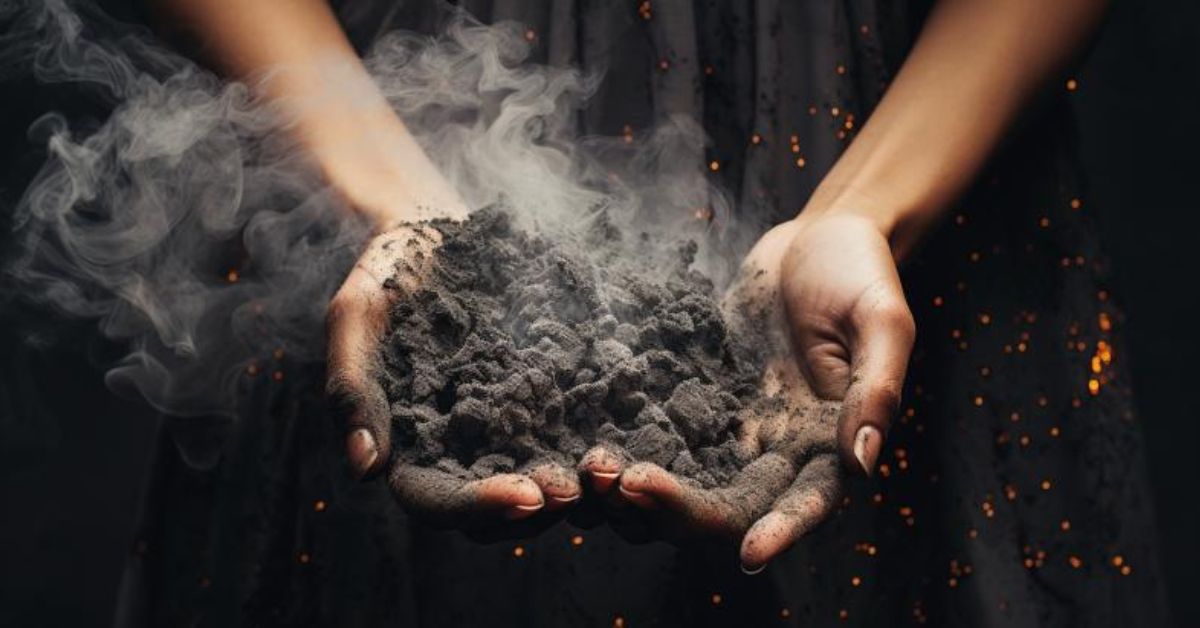
In the intricate tapestry of spiritual belief and practice, the separation of ashes raises poignant questions that beckon inquiry. As societies evolve, understanding the nuances of cultural rituals—especially those steeped in religious context—becomes paramount. So, one might ask: what indeed does the Bible articulate regarding the separation of ashes? This concept, while seemingly simple, opens a discourse laden with theological and ethical considerations.
From the outset, it is essential to contextualize ashes within biblical narratives. Ashes symbolize penance, mourning, and mortality. In scripture, they often appear in moments of lamentation. For instance, Job, in the throes of despair, famously sits in ashes, a powerful emblem of his suffering and repentance. This poignant connection between ashes and grief invites one to ponder the significance of separating them—whether it be after cremation or in the context of memorial practices.
To begin this exploration, consider the act of cremation itself. The Bible, while not explicitly condemning the practice, offers a tapestry of customs revolving around burial. In ancient times, burial rites were deeply entrenched in cultural and religious life. The interment of a body was often seen as a sacred act. Yet in contemporary society, the rise of cremation provides an alternative that many find compelling. Thus, we encounter a challenge: does the act of separating ashes, born from this modern practice, contravene biblical teachings?
In examining scriptural references, it is crucial to realize that the notion of separating ashes is not directly addressed. Instead, interpretations can vary widely among different denominations and communities. This ambiguity opens the door to personal convictions. Some argue that separating ashes can be viewed as a jubilant celebration of life, a way to cherish the memories and legacies of those who have passed. After all, is it not fitting to honor a loved one by distributing their ashes in places that held significance during their lifetime?
Yet, this leads to other contemplations—what about the integrity of the body post-mortem? The Bible emphasizes respect for the deceased, reflecting the belief that our corporeal forms deserve reverence. This leads to the contention: does the act of separating ashes somehow undermine the sanctity bestowed upon our earthly remains? Several theologians suggest that while separating ashes may not be explicitly forbidden, the way in which one conducts this act should be approached with deliberate consideration and respect.
Further complicating the dialogue are the myriad cultural interpretations surrounding ashes. Different cultures have vibrant rituals involving the dispersal of ashes, often embedding ancestral reverence into their ceremonies. For many, the juxtaposition of ashes with nature—scattering them over oceans or atop mountains—fosters a sense of unity with the cosmos. This begs the inquiry: can such practices be embraced within a biblical framework, or do they potentially conflict with spiritual doctrines?
Engaging with these questions invites a broader examination of how contemporary believers perceive the intersection between modern practices and age-old teachings. Is it feasible to find a harmonious balance between honoring biblical tenets and adapting to the realities of contemporary life? Is separating ashes, therefore, a radical challenge to traditionalist views, or can it be seen as an evolution in the expression of faith?
Ultimately, the discussion surrounding the separation of ashes remains complex and deeply personal. Each individual’s journey through grief and remembrance is uniquely their own, interspersed with layers of cultural, emotional, and spiritual fabrics. The Bible may not furnish a definitive answer, yet it unequivocally encourages reflection on the values of respect, memory, and love. These principles should guide any discourse surrounding a practice as profound as the acts we undertake in remembrance of those we have lost.

