

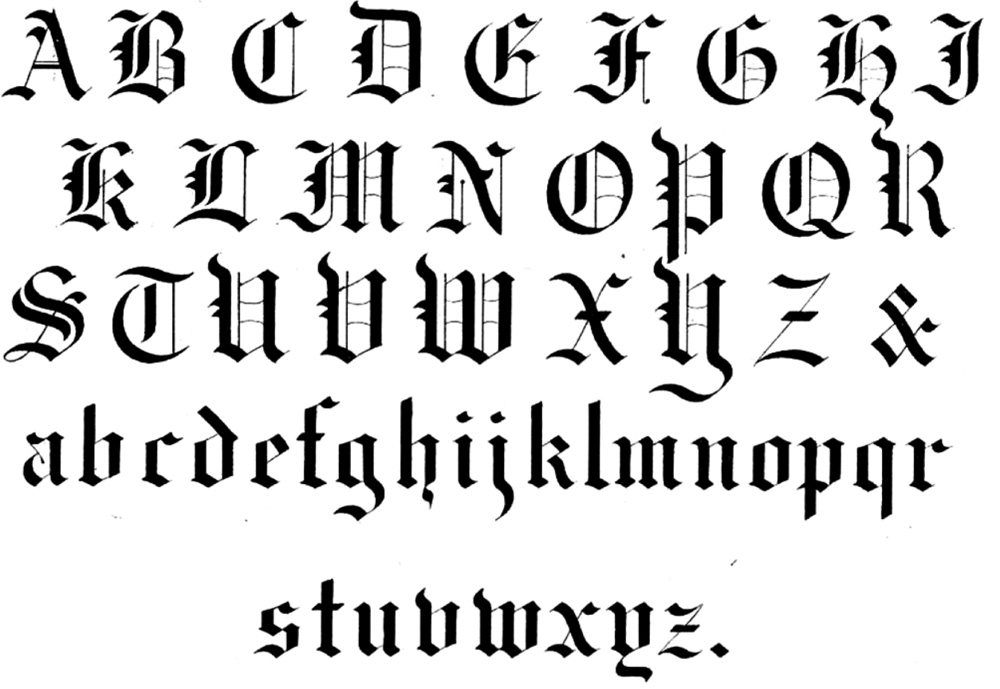
The Bible, a tome revered across centuries, is a sacred vessel of divine wisdom and human experience. Yet, the font it is inscribed in evokes curiosity beyond its textual content. What font, one might ponder, houses the age-old narratives that have shaped civilizations? This question unfurls a tapestry of typographic history, heritage, and spiritual significance.
Historically, the fonts utilized in biblical texts emerged from the intricate weave of language and culture. The earliest manuscripts were penned in uncial script, a distinct form that breathed life into the letters. Uncial script, with its rounded forms and uniform height, offered a clarity that beckoned readers toward the transcendental realms depicted within the verses. It was akin to a gentle clasp of hands, inviting seekers to engage with sacred stories.
Transitioning through the ages, the arrival of the Gutenberg Press in the 15th century heralded a significant transformation in biblical publishing. The font used—the now-famous Blackletter—captured both the fervor and solemnity of the text. Each character bore a gravitas reminiscent of a historical chronicle etched into stone; it resonated with the resonance of stained glass in an ancient chapel. Blackletter became not merely a means of communication, but a bridge connecting the divine narrative with the mortal realm. Its intricate lines and sharp angles infused each page with a dramatic flair, as if the letters sang praises rather than conveyed mere words.
As time wove its intricate patterns, the demand for legibility surged. The Renaissance whispered a rebirth of clarity, giving rise to serif typefaces like Garamond and Times New Roman. These elegant forms encapsulated a serenity that softened the message; akin to the gentle rustle of leaves in a peaceful glen, they invited devotional reading. The introduction of these types shifted the biblical narrative from the elite confines of the clergy to the hands of laypeople, democratizing access to spiritual wisdom. Readers found themselves enveloped in a typographical embrace that fostered contemplation and introspection.
Today, in the digital age, the Bible is often rendered in contemporary fonts like Arial or Calibri in online versions. Though functional, these sans-serif typefaces may lack the profound resonance of their predecessors. Imagine the words of Psalms or the profound teachings of Christ adorned in stark, minimalist lines. It evokes a dissonance, as if divine wisdom were stripped of its resplendence. An ill-suited typeface, devoid of historical context or aesthetic depth, fails to capture the soul of the documentation it bears.
The journey of biblical fonts encapsulates not just an evolution of style, but a reflection of society’s relationship with the sacred text. Fonts serve as more than mere letters on a page; they are a conduit for the divine message, embodying both reverence and accessibility. Each stroke of the pen or click of the keyboard reverberates through the corridors of time, echoing with the voices of countless generations.
Ultimately, the inquiry into which font the Bible is written in transcends typographic curiosity; it is a metaphor for our quest for understanding in a complex world. Just as fonts have evolved to reflect our society’s preferences and values, so too does our interpretation of spirituality shift and grow. In every curve and line, the letters of the Bible beckon us to ponder deeply, to engage earnestly, and to find meaning that resonates with our collective human experience. In this dance of ink and spirit, the true essence of the Bible remains indelibly etched in our hearts, regardless of the font it may adorn.

