

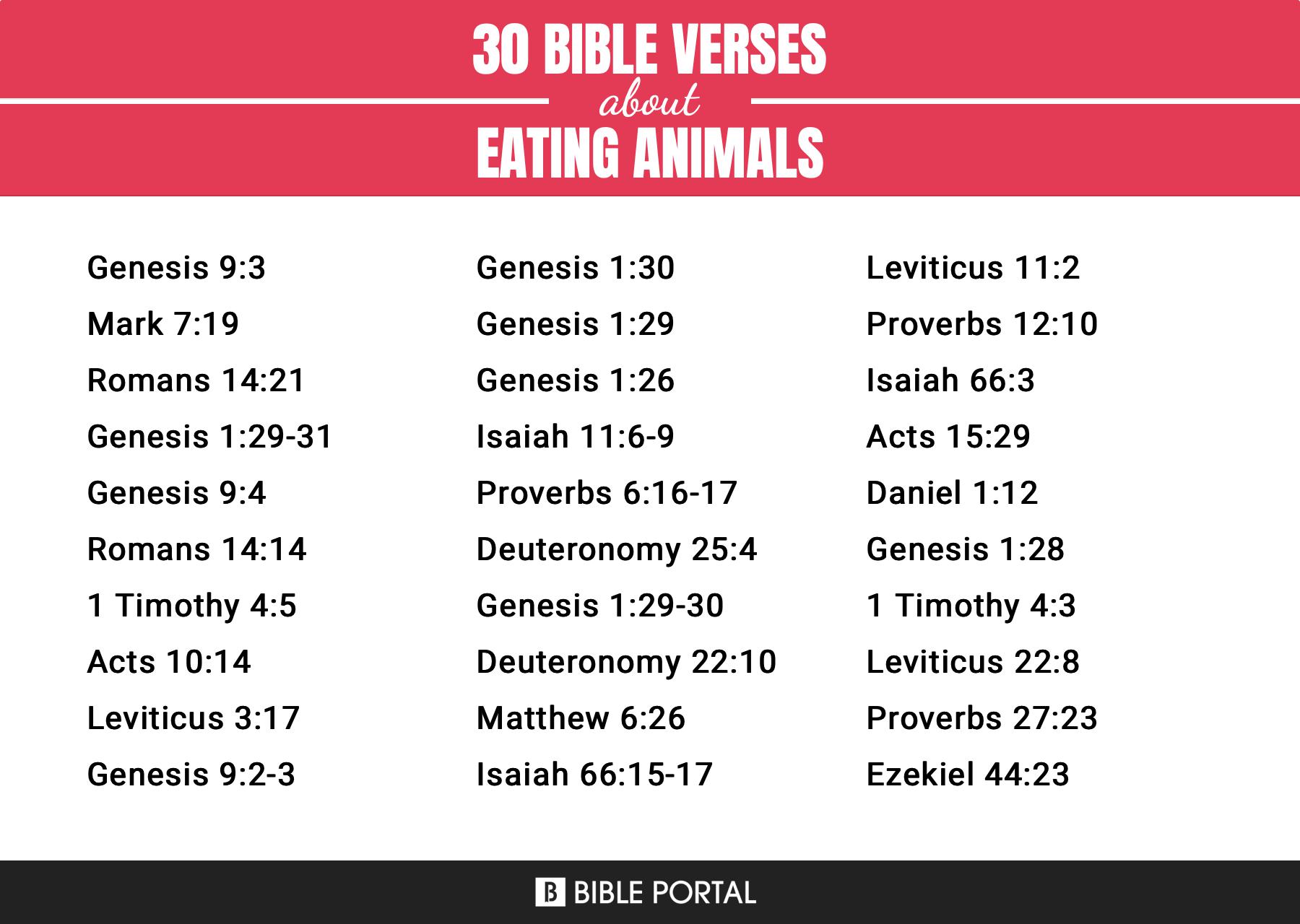
In the annals of biblical scripture, the discourse surrounding the consumption of animals reverberates with theological significance and ethical complexities. At first glance, the act of eating may appear straightforward, a mere fulfillment of the body’s proclivity for sustenance. However, within the sacred texts, it unfolds into a narrative laden with moral imperatives, historical context, and spiritual motifs.
The Old Testament introduces readers to the intricate tapestry of dietary laws, particularly in the books of Leviticus and Deuteronomy. These texts delineate a covenant between the Israelites and the divine, establishing a framework for which animals may be deemed clean or unclean. The concept of ‘cleanliness’ transcends mere physicality, reflecting a divine order that seeks to elevate humanity’s understanding of the natural world. The Israelites were instructed to consume only specific animals—those that chew the cud and have split hooves—an admonition inviting contemplation on the interconnectedness of life. For instance, the lamb, associated with sacrifice and redemption, becomes a poignant symbol of innocence and purity.
As we traverse through the scriptures, we encounter instances wherein eating animals serves as a divine provision. The narrative of Noah post-flood emerges as a telling microcosm of this theme. Following the deluge, God grants Noah and his descendants the right to consume flesh, introducing meat into their diets as a sign of providence amidst a drowned world. This divine concession, however, is accompanied by stringent prohibitions against the consumption of blood, underscoring the sanctity of life. The imagery of blood—life’s essence—evokes a solemn acknowledgment of the sacrifice inherent in eating animals.
Transitioning to the New Testament, one finds a marked evolution in the dialogue regarding dietary practices. Jesus’ radical approach to traditional laws reframes the understanding of food, inviting spiritual reflection over ritualistic adherence. In the account of the vision given to Peter, found in the book of Acts, this evolution unfolds further, as the divine decrees that no creation is to be called unclean. Here, the metaphor of the ‘fence’—previously a bulwark separating the sacred from the profane—is dismantled, inviting believers to engage with the world in a profound, inclusive manner. Eating, thus, transforms into an act of unity, where barriers are pierced by love and acceptance.
Yet, even within these narratives, there lingers a dialectic of responsibility. The exhortation to exercise dominion over the earth, encapsulated in the story of creation, carries with it a solemn duty to steward the planet and its inhabitants. To eat animals is not merely to extract sustenance but to engage in a delicate balance of respect and reverence. The argument for ethical consumption gains traction, emphasizing compassionate treatment and sustainable practices. Herein lies the crux of a salient inquiry: What type of relationship do we forge with the beings whose lives we interrupt for our nourishment?
The biblical perspective on eating animals, thus, transcends the mere act of consumption. It invites exploration into the realms of ethics, companionship, and a shared existence. As contemporary readers navigate these ancient texts, they are summoned to reflect on the ripples of their choices, weaving their consciousness into the fabric of a broader ecological narrative. In the end, the biblical lessons on eating are not confined to earthly sustenance, but rather, they inspire a holistic communion with creation—a dialogue etched in faith, responsibility, and the interconnected web of life. The act of eating becomes a sacred ritual, a moment where heaven and earth converge, prompting each individual to ponder their place within this extraordinary continuum.

