

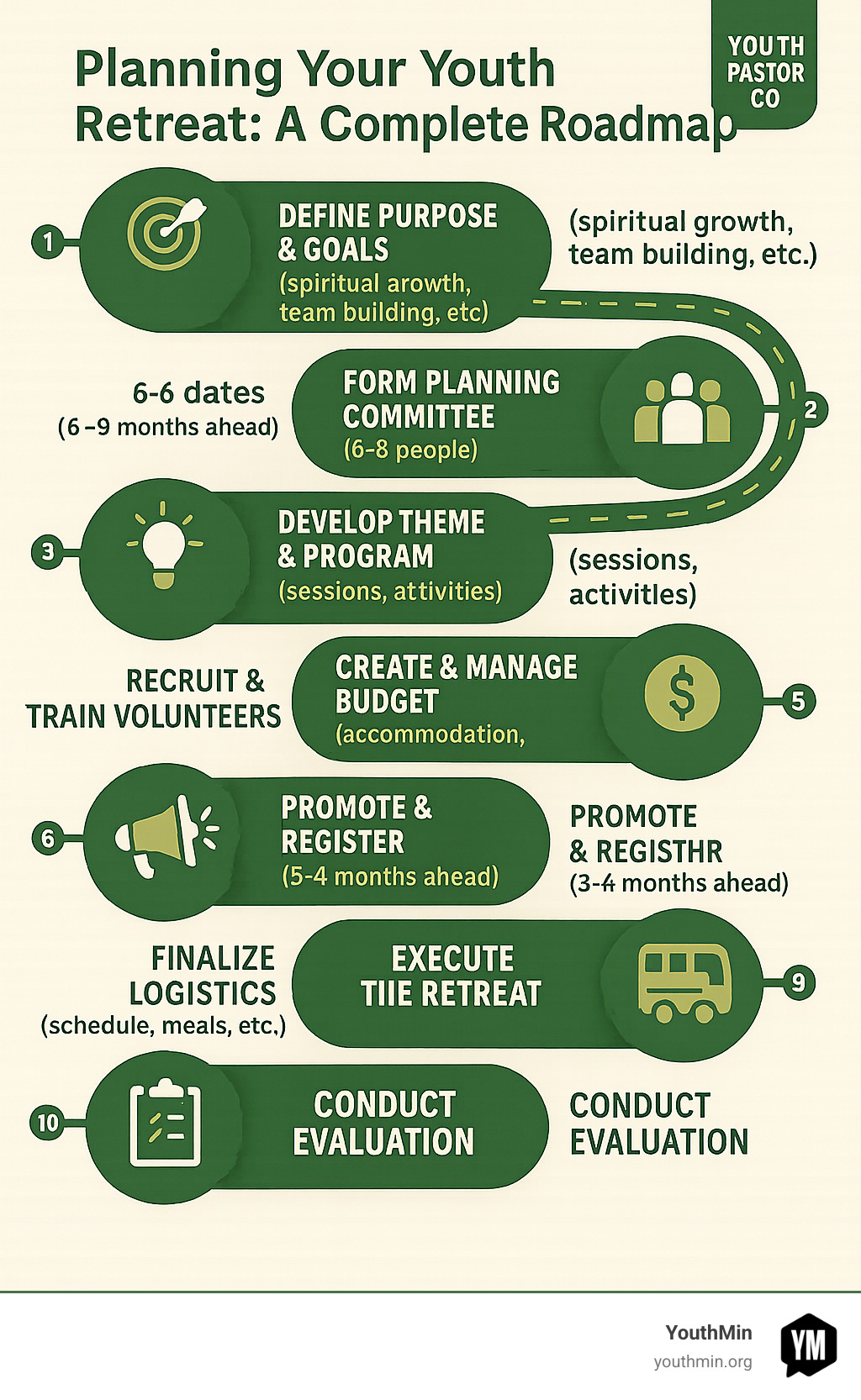
The air in a fellowship hall thickens with a peculiar blend of nervous excitement and reverent expectation as soon as the word “retreat” is whispered among the youth. It is a moment when teenagers, still wrestling with the cacophony of everyday life, sense a rare invitation to step beyond the ordinary and into a sanctified space where faith can be explored with fresh curiosity. Church leaders recognize that a well‑orchestrated retreat can become a catalyst for deep transformation, not merely a weekend of games and worship. By weaving together purposeful prayer, relational fellowship, and immersive experiences, the retreat offers a sylvan sanctuary where hearts can be turned toward a greater narrative. In what follows, an extensive outline unfolds the essential elements that transform a simple gathering into a life‑changing pilgrimage for young believers.
Clarifying the Retreat’s Purpose
Every endeavor begins with a clear愿景. For a church youth retreat, the purpose is more than “having fun”; it is a pedagogical expedition aimed at fostering spiritual maturity. Begin by articulating a succinct mission statement that addresses both the observable symptoms—such as waning attendance or disengaged attitudes—and the underlying yearning for authentic connection with the divine. A purpose statement like “to cultivate a community of believers who experience transformative encounter through guided reflection, communal worship, and purposeful service” encapsulates both the outward behavior and the inward longing. This clarity will serve as a compass for every subsequent decision, from activity selection to budget allocation.
Choosing the Ideal Setting
The venue acts as the silent stage upon which the retreat’s drama unfolds. A setting that echoes the retreat’s thematic undertones can magnify its impact. Rural campsites surrounded by towering pines provide a natural cathedral, while urban church facilities offer accessibility and familiar comfort. When evaluating potential locations, consider factors such as capacity, acoustic qualities, proximity to emergency services, and the availability of quiet spaces for contemplation. A site that balances serene isolation with logistical practicality ensures participants can transition seamlessly between high‑energy sessions and reflective solitude.
Crafting a Captivating Theme
A resonant theme functions as the thread that binds disparate activities into a coherent tapestry. Choose a theme that mirrors a biblical narrative or a timeless spiritual truth, then develop a motif that can be expressed through visual art, music, and storytelling. For instance, “From Shadow to Light” invites participants to explore the journey from doubt to hope, employing imagery of dawn, lantern walks, and testimonies of renewal. Infuse the theme with metaphor and symbolism that allow personal experiences to be projected onto a larger spiritual story, thereby stirring a sense of collective fascination.
Structuring the Day’s Flow
The schedule is the骨架 of the retreat, dictating rhythm and energy. A well‑balanced itinerary alternates between high‑octane group activities, contemplative prayer slots, and communal meals. Begin each morning with an invigorating praise session that lifts spirits, followed by a teaching segment that unpacks the theme’s theological nuances. Midday may feature experiential learning stations—such as guided nature walks, art‑based reflection, or service projects—allowing participants to embody the retreat’s message. Evenings can culminate in candlelit worship, testimonies, and open‑

