

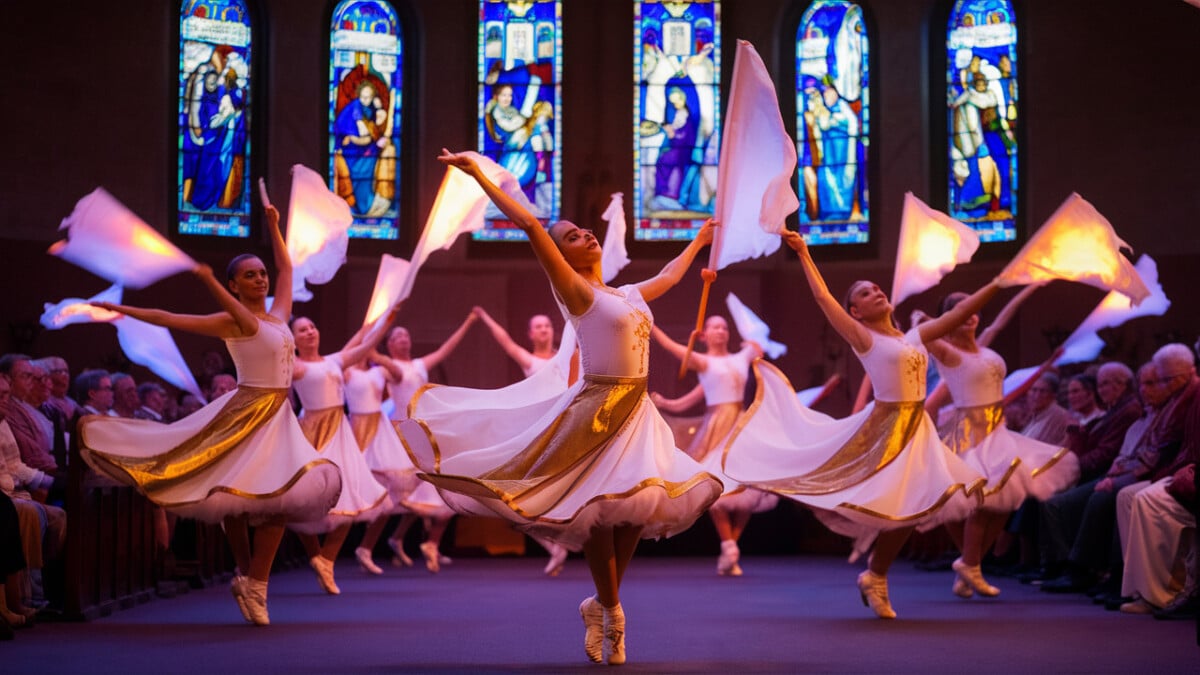
From the earliest gatherings of believers, the human body has been a vessel for divine encounter, a living harp strummed by the breath of the Spirit. When the sanctuary swells with music, movement rises like incense, turning stone floors into a sacred stage where every step tells a story. In this dance of devotion, worship transcends spoken prayer, becoming a kinetic hymn that reverberates through sinew and bone. The church, a temple of fellowship, embraces motion not as a novelty but as a timeless language, weaving together the ancient and the contemporary in a tapestry of praise.
Biblical Foundations: Dance as Scripture in Motion
Scripture records moments when the body itself became a conduit of revelation. Miriam’s timbrel‑cradle dance after the Red Sea crossing (Exodus 15:20) illustrated communal exultation, while King David’s ecstatic leaping before the Ark (2 Samuel 6:14) expressed a raw, unfiltered response to the divine presence. These narratives portray dance not as a peripheral amusement but as an integral aspect of covenantal celebration. When the Psalms declare, “All my bones shall praise you” (Psalm 35:10), they invoke a holistic worship that engages the entire organism. In the New Testament, Paul’s admonition to “pray without ceasing” (1 Thessalonians 5:17) hints at a perpetual posture of the heart—often manifested through rhythmic gestures that echo the inner surrender.
Historical Expressions: Liturgical Choreography Across the Ages
Through centuries, the church has encoded movement into its liturgical DNA. Medieval mystery plays incorporated processional步伐, guiding the faithful through dramatized vignettes of salvation history. The Renaissance brought elaborate ballets for religious feasts, where saints’ stories were enacted in graceful pirouettes. Even the Reformation, while emphasizing textual purity, could not entirely silence the body; Luther’s chorales often accompanied congregational hand claps and foot stomps, turning hymnody into a collective choreography. Each epoch reveals a willingness to let the sanctuary become a stage where corporeal praise breathes life into doctrine.
The Language of Movement: Kinesthetic Theology
Kinesthetic theology posits that the body, in motion, interprets doctrinal truth more profoundly than abstract reasoning alone. When a worshipper lifts hands, a somatic declaration of surrender is enacted; when a choir sways, a communal heartbeat syncs with the divine rhythm. This “language of movement” operates like a visual metaphor, encoding meaning in gestures that words alone cannot capture. The act of circling an altar, for example, mirrors the ancient Jewish practice of “ḥalakah,” a walking prayer that encircles the holy, reinforcing the concept of divine protection. Such choreographic motifs become a living exegesis, offering the congregation an embodied understanding of theological concepts.
Unique Appeal: Why Movement Captivates the Soul
Movement possesses a unique capacity to bypass cognitive barriers, reaching the affective core of the worshiper. Unlike spoken liturgy, which can become routine, dance engages the proprioceptive senses, making the invisible tangible. When a congregation sways together, individual isolation dissolves, fostering a collective euphoria that psychologists label “collective effervescence.” The rhythmic pulse synchronizes heartbeats, creating a shared physiological experience that reinforces community bonds. Moreover, the visual spectacle of coordinated motion provides an aesthetic feast, feeding the soul’s desire for beauty and transcendence. In this way, worship through movement offers an invitation to experience the divine not merely as a doctrine to be believed, but as a presence to be felt.
Modern Expressions and Challenges: Balancing Tradition and Innovation
Today, many churches experiment with contemporary dance ministries, merging gospel hip‑hop with traditional hymnody, or employing interpretive dance during communion. These modern expressions strive to remain relevant to younger generations while honoring heritage. Yet challenges arise: concerns over modesty, theological propriety, and the risk of reducing sacred ritual to performance. Effective integration requires clear intentionality—dance must be framed as a ministerial act rather than mere entertainment. Leaders can cultivate a “sacramental gesticulation” by establishing clear theological foundations, offering training in both technique and spiritual disciplines, and encouraging reflective dialogue about the meaning behind each movement.
Practical Guidance for Congregations: Implementing Movement‑Centric Worship
For churches seeking to incorporate dance, a stepwise approach can ensure both reverence and creativity. Begin with an “orientation session,” where participants explore basic liturgical gestures—such as bowing, lifting hands, and circling—paired with scriptural reflection. Integrate short movement interludes into existing services, allowing congregants to respond spontaneously to music or spoken word. Encourage collaborative choreography, inviting members to contribute motifs that reflect their personal testimonies. Provide a supportive environment that values both skill development and spiritual formation, emphasizing that the goal is not perfection but authentic expression of praise. Lastly, evaluate the experience through reflective surveys, adjusting the balance of structure and freedom to nurture ongoing engagement.
In the symphony of worship, each step, turn, and leap becomes a note that enriches the overall harmony. When the church opens its doors to the art of dance, it affirms a profound truth: that the body, fearfully and wonderfully made, can become a living altar, offering not only voice but also motion as a sacrifice acceptable to the Divine.

