

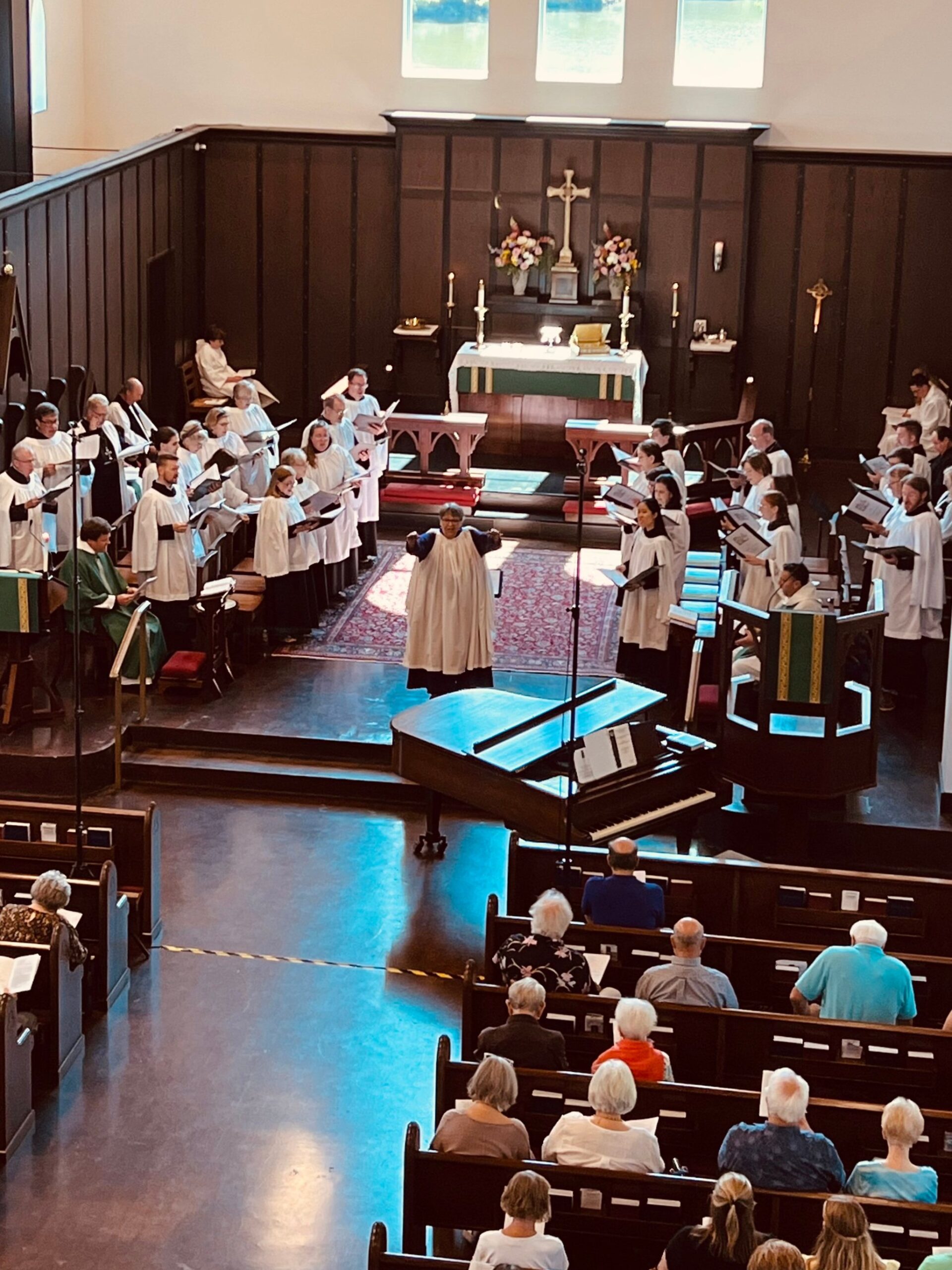
In the quiet hum of sacred spaces, where stained glass filters the light into kaleidoscopic hues and the scent of aged wood mingles with incense, a revolution is brewing—not in the pews, but in the very rhythm of worship itself. The intersection of music and liturgy is no longer a static tradition but a dynamic dialogue, where ancient hymns waltz with contemporary anthems, and centuries-old rituals find new breath in modern cadence. Church conferences on music and liturgy are not mere gatherings; they are crucibles of transformation, where pastors, musicians, theologians, and laypeople converge to reimagine how worship can echo through the ages while resonating with today’s souls. These events are where the sacred and the artistic collide, where the whispers of Gregorian chants meet the bold declarations of gospel choirs, and where the liturgy becomes not just a script but a living, breathing act of devotion.
The Alchemy of Tradition and Innovation
Picture this: a dimly lit chapel, the air thick with the resonance of a pipe organ’s deep, resonant tones. Then, without warning, the melody shifts—electric guitars hum, drums pulse, and a choir’s voices soar in a fusion that feels both timeless and electric. This is not a futuristic fantasy but the reality of modern church music conferences, where tradition is not discarded but distilled into something new. The alchemy of old and new is not about replacing the past but transmuting it. Hymns like “Amazing Grace” or “Be Thou My Vision” are reharmonized with jazz chords or minimalist piano arrangements, proving that the old can wear new garments without losing its soul. Liturgy, too, undergoes a metamorphosis. The ancient words of the Eucharist or the Psalms are not just recited but *performed*—intoned, chanted, or even set to ambient soundscapes that transport worshippers into a meditative trance. The promise here is profound: worship can be both a bridge to the past and a gateway to the divine in the present.
The Liturgical Canvas: Where Words Become Art
Liturgy is often seen as a rigid framework, a sequence of prayers and responses that must be followed to the letter. But at these conferences, liturgy becomes a canvas—one where words are not just spoken but painted in sound, silence, and symbolism. Imagine a service where the Kyrie is sung in a minor key, its mournful tones echoing the collective sighs of a congregation wrestling with grief. Or consider the Gloria, transformed into a joyous, syncopated anthem that feels like a spontaneous celebration. The liturgy, stripped of its monotony, becomes a living score, where each note, pause, and breath is intentional. This is not about breaking the rules but about rediscovering their purpose. The promise? That worship can be an immersive experience, where every sense is engaged, and every moment is pregnant with meaning. The liturgy ceases to be a checklist and becomes a journey—a pilgrimage of the spirit that unfolds in real time.
The Choir as the Heartbeat of the Church
In many traditions, the choir is the unsung hero of worship, its harmonies the steady pulse beneath the spoken word. But at these conferences, choirs are reimagined as the very lifeblood of the liturgy. No longer confined to anthems sung from a loft, they become dynamic participants in the narrative of the service. Picture a gospel choir weaving through the congregation during the offertory, their voices rising like incense, or a chamber choir intoning a Taizé chant in candlelit darkness, the repetition creating a hypnotic, prayerful rhythm. The promise here is one of unity—where the choir is not separate from the people but an extension of their collective voice. It’s a reminder that worship is not a spectator sport but a communal act, where every voice, trained or untrained, has a place in the symphony.
Technology as a Sacred Tool
In an age where screens dominate daily life, it’s easy to dismiss technology as antithetical to the sacred. Yet, in the context of church music and liturgy, it becomes a sacred tool—a way to amplify, enhance, and even democratize worship. Conferences explore how projection screens can display lyrics in real time, allowing congregations to sing with confidence, or how live-streaming can unite remote communities in shared worship. But the most intriguing innovations lie in the realm of sound design. Ambient pads, loop stations, and even AI-generated harmonies are being experimented with, not to replace human artistry but to augment it. The promise? That technology can break down barriers—geographical, linguistic, and even physical—making worship more accessible without diluting its depth. The challenge, of course, is to wield these tools with reverence, ensuring they serve the liturgy rather than overshadow it.
The Theological Choreography of Worship
Worship is not just about music or liturgy in isolation; it’s about how they dance together in a choreographed dialogue with the divine. Conferences delve into the theology behind these elements—how the structure of a service can mirror the arc of salvation history, from lament to hope, from darkness to light. They ask: What does it mean to worship with our whole being—body, mind, and spirit? How can the physicality of movement (processions, kneeling, lifting hands) be integrated with the sonic and textual elements of worship? The promise here is a holistic vision of worship, where every gesture, every note, every word is an act of theological proclamation. It’s an invitation to see worship not as a series of disconnected moments but as a grand, unfolding narrative that invites participants into the story of God.
The Future: A Liturgical Renaissance
We stand on the precipice of a liturgical renaissance, where the old is made new and the new is hallowed by tradition. The conferences of today are the laboratories of tomorrow’s worship, where boundaries are pushed, conventions are questioned, and the Spirit moves in unexpected ways. The promise is not just of better music or more engaging liturgies but of a deeper, more vibrant relationship with the divine. It’s a call to worship leaders to be both stewards of the past and pioneers of the future—to hold tradition with open hands while embracing the Holy Spirit’s leading into uncharted territory. The future of church music and liturgy is not a question of “either/or” but of “both/and.” It’s about singing the old hymns with fresh eyes and composing new anthems that echo the ancient echoes of faith.
The next time you find yourself in a church, listen closely—not just to the words being spoken but to the spaces between them, to the harmonies that rise like incense, to the silences that cradle the soul. You might just hear the future of worship taking shape, one note, one prayer, one breath at a time.

