

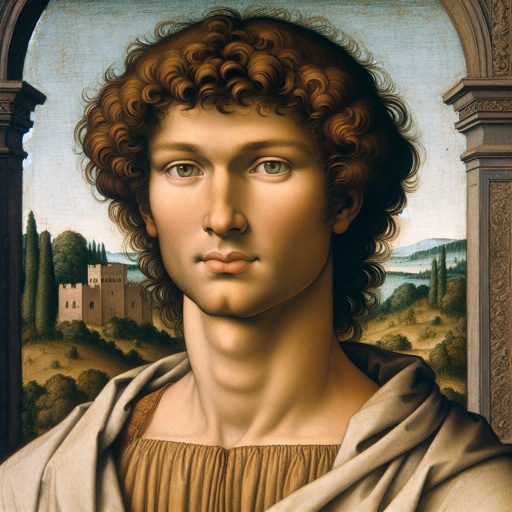
Imagining David from the Bible conjures an array of vivid imagery; he is not merely a character carved from antiquity but an eternal symbol of valor, complexity, and compelling aesthetic attributes. As the shepherd boy who ascended to kingship, David embodies the multiplicity of human experience, intertwining innocence with profound audacity. To envision David is to traverse the landscape of ancient Israel, where each feature evolves into an emblem of divine artistry.
If one were to paint a portrait of David, the first strokes would encapsulate his youthful exuberance. He was not the typical warrior of his time; instead, he reflected the simplicity and humility of a shepherd. Picture him with tousled locks, perhaps resembling strands of golden wheat swaying gently in the wind. His hair, suggestive of sunlight filtering through a grove of olive trees, would frame his face—a visage marked by a blend of vulnerability and determination. His eyes, vividly expressive, could be imagined as twin sapphires, glistening with the fervor of divine purpose and the sorrow of impending trials.
In balance with his serene features, David’s physique would encapsulate the quintessential robustness of a young shepherd. Standing tall and agile, he would possess the sinewy build crafted from endless days spent tending flocks on rugged hillsides, each muscle honed from the labor of protecting his sheep against hungry foes. There is an undeniable allure in the juxtaposition of strength and fragility that David presents. Like a fragile flower rooted in the crevice of a rock, his solidity is paired with the potential for deep emotional resonance.
Moving beyond the corporeal, David’s attire would narrate tales of pastoral life and regal destiny. Clad in a simple tunic adorned with intricate patterns, the fabric might be woven from the colorful threads of his homeland, echoing the vibrant tapestry of Hebrew culture. Each fold of the garment would whisper stories of fields and valleys, of lions defeated and giants slain. Additionally, the occasional gleam of bronze or gold could allude to his future as king, suggesting the duality of his existence—both a humble shepherd and a future monarch.
Moreover, his very presence would evoke a sense of magnetism, an aura that draws one close yet leaves an impression of formidable strength. David’s hands, perhaps rough and calloused from labor, would be equally capable of creating beautiful music. Picture him cradling a harp, each string resonating with the echo of his soulful psalms. This instrument is not merely an embellishment but a manifestation of his innermost thoughts and an articulation of his divine relationship. Like the gentle rain nurturing a parched earth, his music would instill hope and solace into weary hearts.
Though the tales of David are steeped in valorous exploits—his legendary duel with Goliath stands as a hallmark of courage—the emotional depth of his character adds layers of intrigue. He navigated treacherous waters of loyalty and betrayal, love and loss, weaving a complex web that reveals the frailties of a hero. Imagine the tempest brewing within his heart as he embraced the enormity of destiny. That duality, precariously balanced between the lion-hearted warrior and the troubled soul, imbues his image with an artful poignancy.
In essence, David is resplendent not only in his physical attributes but also in the profundities of his character. He serves as a canvas reflecting the spectrum of the human experience—vulnerable yet fierce, humble yet regal. Like a timeless sculpture standing resolute against the test of eons, David’s legacy continues to resonate, echoing through the corridors of history, bridging the realm of myth and reality with every portrait imagined.

