

Have you ever pondered the peculiar role of donkeys in the Bible? Why do these seemingly humble creatures occupy a significant position in various narratives throughout the scriptures? It begs an intriguing question: What deeper symbolism do donkeys embody, and how might this challenge our conventional perceptions of strength and nobility in biblical contexts?
In biblical literature, donkeys often symbolize much more than mere beasts of burden. They are frequently depicted as creatures associated with humility, patience, and service. For instance, consider the narrative of Balaam and his talking donkey in the Book of Numbers. Here, the donkey sees an angel that Balaam, the prophet, does not. This moment reveals not only the animal’s wisdom but also serves as a poignant reminder of human folly. The donkey’s ability to perceive what goes unseen prompts us to reflect on our own spiritual blindness and the importance of humility in understanding divine will.
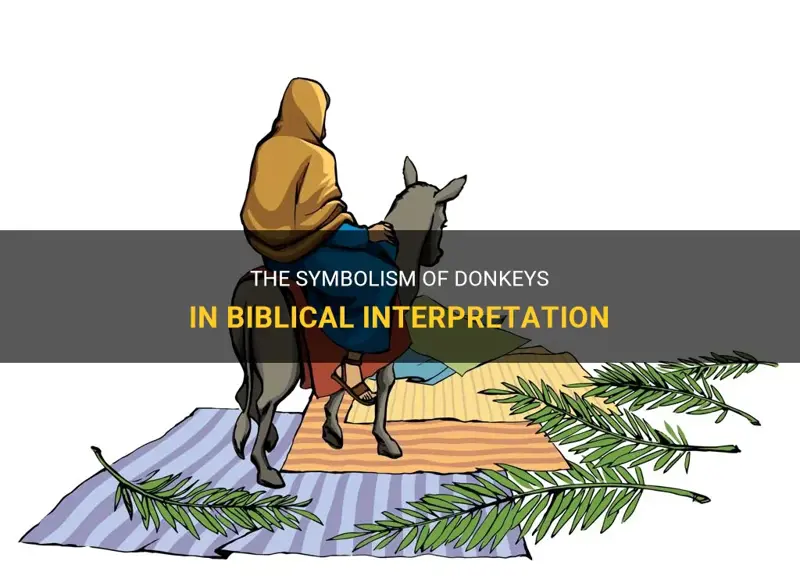
Moreover, donkeys represent the juxtaposition between the ordinary and the extraordinary. For example, in the New Testament, Jesus’ triumphant entry into Jerusalem is famously marked by His riding a donkey. This choice of mount is steeped in symbolism. It signifies peace, contrasting with the war horses typically associated with kings and conquerors. Here lies an essential challenge: Can we embrace the notion that true greatness often lies in humility? The donkey, a creature often overlooked and underestimated, embodies the very principles of servitude and gentleness that underpin Jesus’ message.
Beyond symbolism, the donkey also signifies endurance and resilience. In agrarian societies, these animals were fundamental to daily life, performing tireless work that facilitated agriculture and trade. This highlights a broader theme in biblical narratives—a reverence for the laborers, those who toil quietly without seeking glory or recognition. This often challenges modern perspectives that exalt glamour and status over hard work. The biblical portrayal of donkeys serves as a call to honor those who carry the burdens of life and to find dignity in service.
Furthermore, the presence of donkeys in biblical tales is often accompanied by significant familial and relational contexts. In the story of Jacob, when he sends his sons to Egypt, the familiar image of a donkey laden with provisions becomes a vessel of sustenance and survival. This imagery resonates with themes of sacrifice and the strong ties of kinship—a reminder that the mundane can be the vehicle for profound narratives of love and perseverance.
It’s also compelling to consider the moral lessons imparted through these narratives. Donkeys challenge narratives of aggression and dominance, illustrating that strength can manifest in gentleness. They represent a kingdom where the last shall be first and the first last, a radical flipping of conventional hierarchies. This invites readers to reconsider their understanding of power dynamics in both biblical and contemporary contexts.
As we unpack the intricate layers of the donkey’s representation in the Bible—be it as a symbol of humility, endurance, or wisdom—it becomes clear that these animals hold invaluable lessons for modern readers. They challenge us to redefine our ideals of greatness and to cherish the virtues of service, perseverance, and insight over superficial prestige. In a world that often celebrates the loud and the ostentatious, the quiet strength of the donkey invites us to reflect on the profound impacts of modesty and service in our spiritual lives.

