

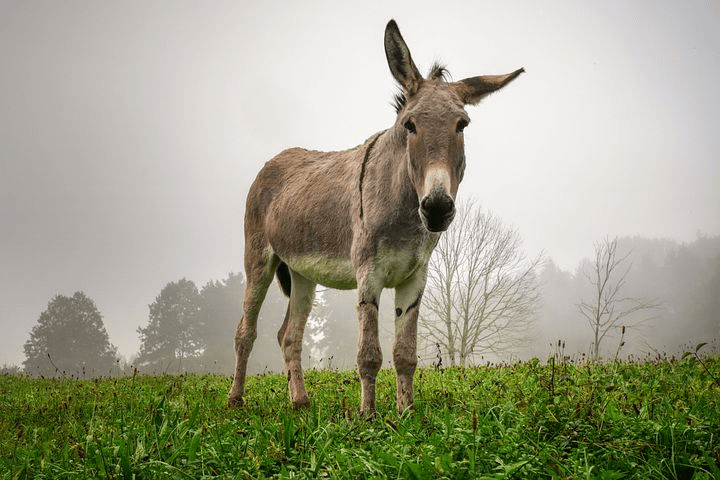
The donkey, often overlooked and underestimated, carries a profound symbolism throughout biblical texts. This humble creature serves as a vehicle for divine messages, a harbinger of peace, and a symbol of humility. Within the pages of scripture, the donkey emerges not merely as a beast of burden but as a significant character within the unfolding narrative of faith and spirituality.
Primarily, the donkey is intertwined with themes of humility and servitude. In a society where might and nobility often eclipse the meek, the donkey stands as an archetype of the lowly yet essential. Jesus’ entry into Jerusalem on a donkey, as recounted in the Gospels, epitomizes this symbolism. This act signifies grandeur in humility—an emblem of His mission to the marginalized and disenfranchised. By choosing this seemingly insignificant animal, Jesus punctuated his message: true kingship lies not in power but in compassion and humility.
Moreover, the donkey symbolizes a pivotal shift in perspective regarding the nature of strength. In ancient cultures, a powerful ruler would typically be depicted riding a majestic horse, heralding a message of conquest and violence. In contrast, the donkey, with its gentle disposition, challenges conventional understandings of power. It signifies that strength can be found in gentleness and that leaders should embody service rather than dominance. This counter-cultural approach resonates with the biblical exhortation to “become as little children,” embracing innocence and humility.
Transitioning to another element of symbolism, the donkey also represents fidelity and loyalty. Numerous passages depict the donkey as a steadfast companion, unwavering in its dedication. Consider Balaam’s encounter with his talking donkey; this extraordinary moment serves to highlight the significance of loyalty amidst folly. The donkey, despite facing adversity, remains loyal to its master, ultimately revealing profound truths that Balaam himself fails to grasp. This illustrates that wisdom can sometimes emerge from unexpected sources, reminding readers to be attentive to the lessons life presents.
Furthermore, the donkey is often associated with burdens. From a biblical perspective, this creature symbolizes the carrying of one’s burdens and the weight of sin. The imagery of the donkey bearing heavy loads parallels the Christian teaching of Jesus inviting the weary to find rest in Him. The donkey, therefore, serves as a poignant reminder that while life presents burdens, there exists a pathway to relief and salvation through faith.
In the broader context, donkeys also illustrate the concept of new beginnings. In the Old Testament, when Abraham was commanded to sacrifice his son Isaac, a donkey was present, underscoring the gravity and complexity of divine promises and tests of faith. This moment encapsulates a broader narrative of redemption that permeates biblical texts—suggesting that amidst trials, there is always the promise of resurrection and renewal.
Ultimately, the symbolism surrounding the donkey in the Bible serves as an invitation to explore the depths of humility, loyalty, and resilience. It challenges readers to reconsider preconceived notions of power and success while highlighting the importance of tenacity in the face of adversity. This unassuming animal urges believers to find dignity in servitude and grace in humility, promising a rich tapestry of insight for those willing to delve deeper into its symbolic significance.
As one journeys through the myriad layers of the donkey’s biblical representation, a sense of curiosity ignites—a desire to seek the overlooked and the understated in the grand narrative of faith. In embracing this creature’s symbolism, one can uncover profound truths that may shift perspectives and evoke deep contemplation about life’s true essence.

