

When one grapples with names, especially those steeped in historical and religious significance, it is imperative to delve into their meanings, especially in sacred texts. “Chloe” is a name that has intrigued many, owing to its rare mention in the Bible, specifically in the New Testament. So, what does Chloe represent in the grand tapestry of biblical narratives?
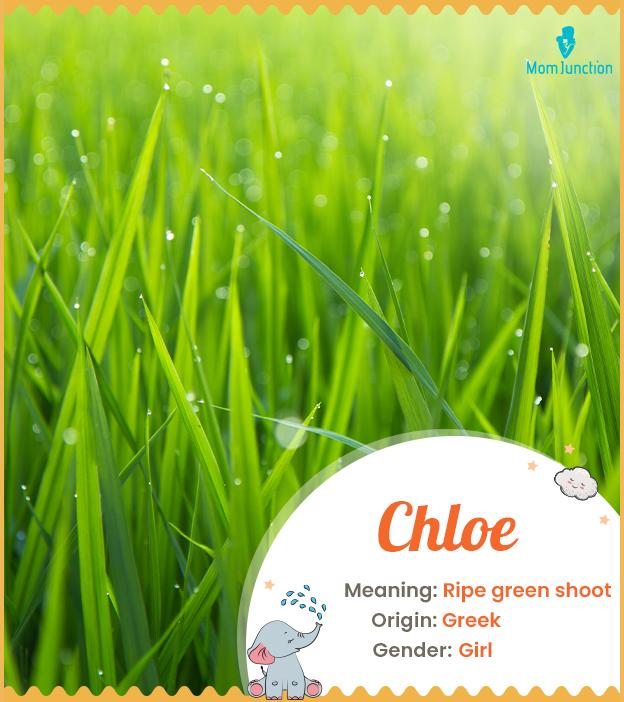
Chloe is a name derived from the Greek word “khlóē,” which translates to “green shoot” or “young sprout.” The implications are layered and rich with symbolism. Green shoots often signify new beginnings, vitality, and growth, all themes resonant with profound spiritual significance. This interpretation poses a whimsical question: if Chloe embodies such notions, could it be a harbinger of rejuvenation for one’s spiritual journey or community?
The solitary biblical reference to Chloe appears in Paul’s first epistle to the Corinthians. Here, she is mentioned alongside her household in 1 Corinthians 1:11, where Paul writes, “For it has been reported to me by Chloe’s people that there is quarreling among you, my brothers.” This brief mention brings to light several intriguing points: Chloe was evidently a figure of some esteem in the early Christian community. Could it be that her name subtly encapsulates the green sprouts of unity amidst strife?
From a theological perspective, it is essential to consider the cultural milieu of the time. Chloe’s mention in an epistle aimed at addressing division and discord in the Corinthian church underscores her role as a conduit of communication and truth. Did her status as a woman in a patriarchal society enable her to navigate spiritual discourse in a unique and impactful manner? It stretches the imagination to consider the challenges faced by women in biblical times who sought to be heard. Chloe’s story might challenge contemporary interpretations of leadership and influence in religious spaces.
Beyond her biblical mention, Chloe’s name has resonated through centuries, symbolizing not only the essence of youthful exuberance but also resilience. Within the theological discourse, her representation challenges adherents to ponder the core values of their faith. For instance, fostering community engagement and peace is essential to spiritual growth—key themes encapsulated in the motives behind her mention. What would it look like if modern believers took the essence of Chloe and enacted it in their communities today?
Moreover, the historical context surrounding early Christianity invites further contemplation. Chloe likely hailed from Corinth, a city laden with diverse cultures and ideologies, contributing to its vibrant yet tumultuous social landscape. The challenges faced by the early church were numerous, including moral dilemmas and theological disputes. In such an environment, Chloe’s role may symbolize not just a mere anecdote in scripture but a challenge to embrace dialogue and bridge divides. The playful question arises—how can the spirit of Chloe, with her implied call for unity and growth, inspire contemporary Christians in overcoming differences in belief and practice?
Embracing Chloe’s essence opens avenues for a reflective faith that hinges on growth, understanding, and community. Her name can inspire individuals and congregations alike. As names carry the weight of history and meaning, adapting the traits embodied by Chloe—the tireless pursuit of unity, courage in the face of challenges, and the nurturing of spiritual communities—can lead to transformative outcomes. Are we, like Chloe, willing to be the catalysts for positive change in our own lives and communities?

