

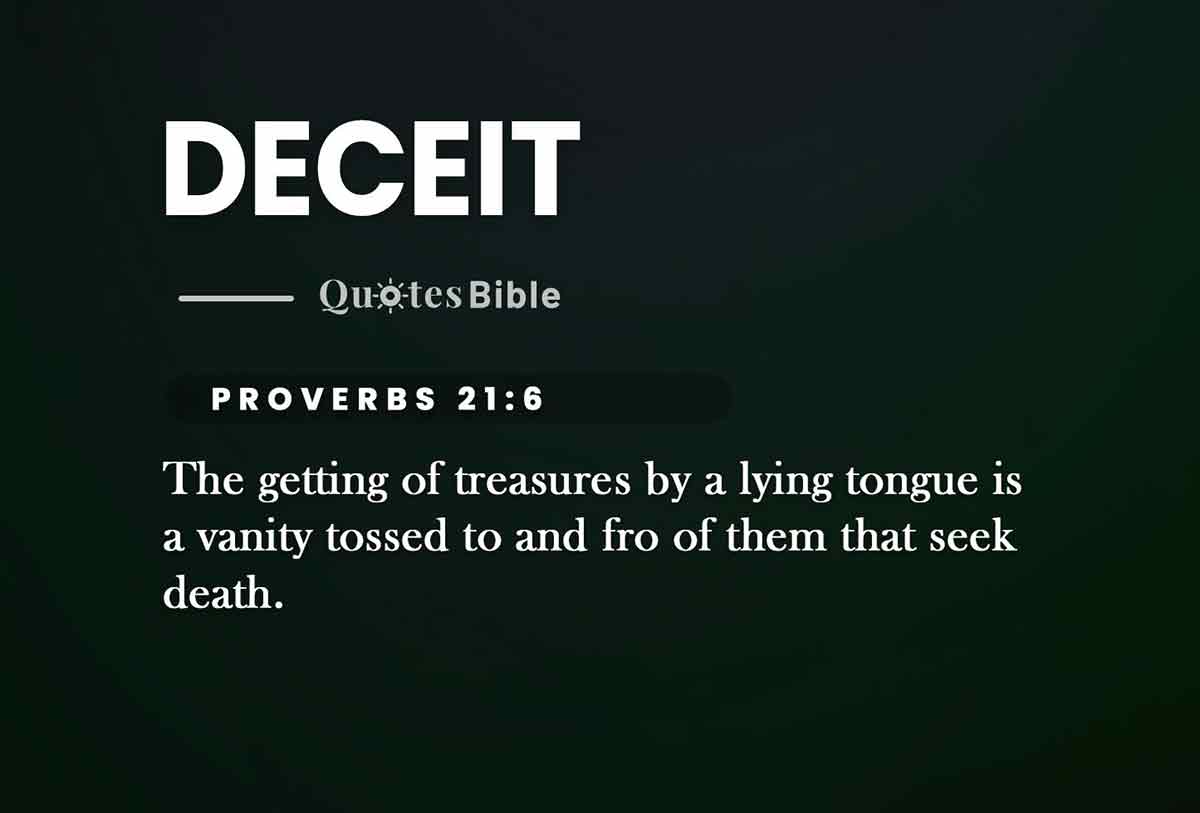
Deceit, a word that often evokes a visceral response, finds a profound exploration within the pages of the Bible. Its implications extend beyond mere falsehood; it embodies a labyrinth of moral and spiritual complexities, intricately woven into the narratives of both the Old and New Testaments. This complexity elicits a rapt fascination, much like a shadowy figure moving through the fog, compelling one to discern its significance amidst the bright illumination of truth.
At its core, deceit in the biblical context transcends the act of lying. It encompasses a myriad of behaviors designed to mislead or distort reality, often motivated by ulterior motives. In the Book of Proverbs, the notion of deceit is closely tied to the concept of foolishness. “The heart is deceitful above all things,” warns Jeremiah, drawing attention to the inherent struggle within humanity. Here, deceit is portrayed as a force that can lead one astray, much like a siren luring sailors toward treacherous shores. This metaphor illustrates the cunning nature of deceit, emphasizing its capacity to ensnare even the most steadfast hearts.
The origin of deceit can be traced to the narrative of the Fall, where the serpent, a symbol of cunning and entrapment, deceives Eve into questioning God’s command. This seminal event illustrates the catastrophic consequences of deceit — the separation from divine intention, ushering in chaos and brokenness. The serpent’s beguiling words serve as archetypal reminders that deceit often masquerades as wisdom, drawing in those eager to gain knowledge. The seduction of deceit lies not merely in the act of lying, but in its alluring presentation. It holds the key to power, to manipulation, entrenching its roots deep in the soil of human desire.
In contrast, the biblical narrative continually elevates the value of truth. Psalm 119 exhorts, “Thy word is truth,” juxtaposing the stark dichotomy between truth and deceit. This divine directive establishes a foundation upon which the moral order stands. Truth becomes a fortress, a bulwark against the insidious encroachment of falsehood. Here, the appeal of truth resonates deeply; it is the light that dispels darkness, illuminating the path for the seeker. Within this context, one can discern how deceit not only harms the deceived but also corrupts the soul of the deceiver, binding them in chains of their own making.
The New Testament further elucidates the ramifications of deceit. In the Gospels, Jesus frequently condemns hypocrisy, a variation of deceit characterized by a facade of righteousness that conceals a nefarious intent. In the parable of the wheat and the tares, the enemy sows weeds among the good crop, illustrating how deceit can infiltrate and undermine the purity of truth. Such illustrations serve as cautionary tales, urging vigilance against the subtle ways in which deceit can infiltrate lives, communities, and even initiatives deemed noble.
Moreover, the concept of deceit bears theological dimensions. Deceit can be viewed not only as a human failing but as a manifestation of spiritual warfare. The Apostle Paul cautions against the schemes of the devil, suggesting that deceit is not merely selfish manipulation but a broader cosmic struggle between truth and falsehood. This spiritual interpretation adds a layer of urgency to the discourse on deceit, inviting adherents to navigate their lives with discernment and vigilance.
In a world teetering between authenticity and artificiality, the biblical discourse on deceit resonates profoundly. It calls for a reckoning—both personal and collective. While the alluring nature of deceit tempts with its veneer of security and advancement, the eternal pursuit of truth promises fulfillment that transcends the ephemeral. The echoes of these ancient warnings continue to reverberate, reminding each generation of the delicate dance between light and shadow, urging the seeker to choose wisely, for the consequences extend far beyond the moment of choice.

