

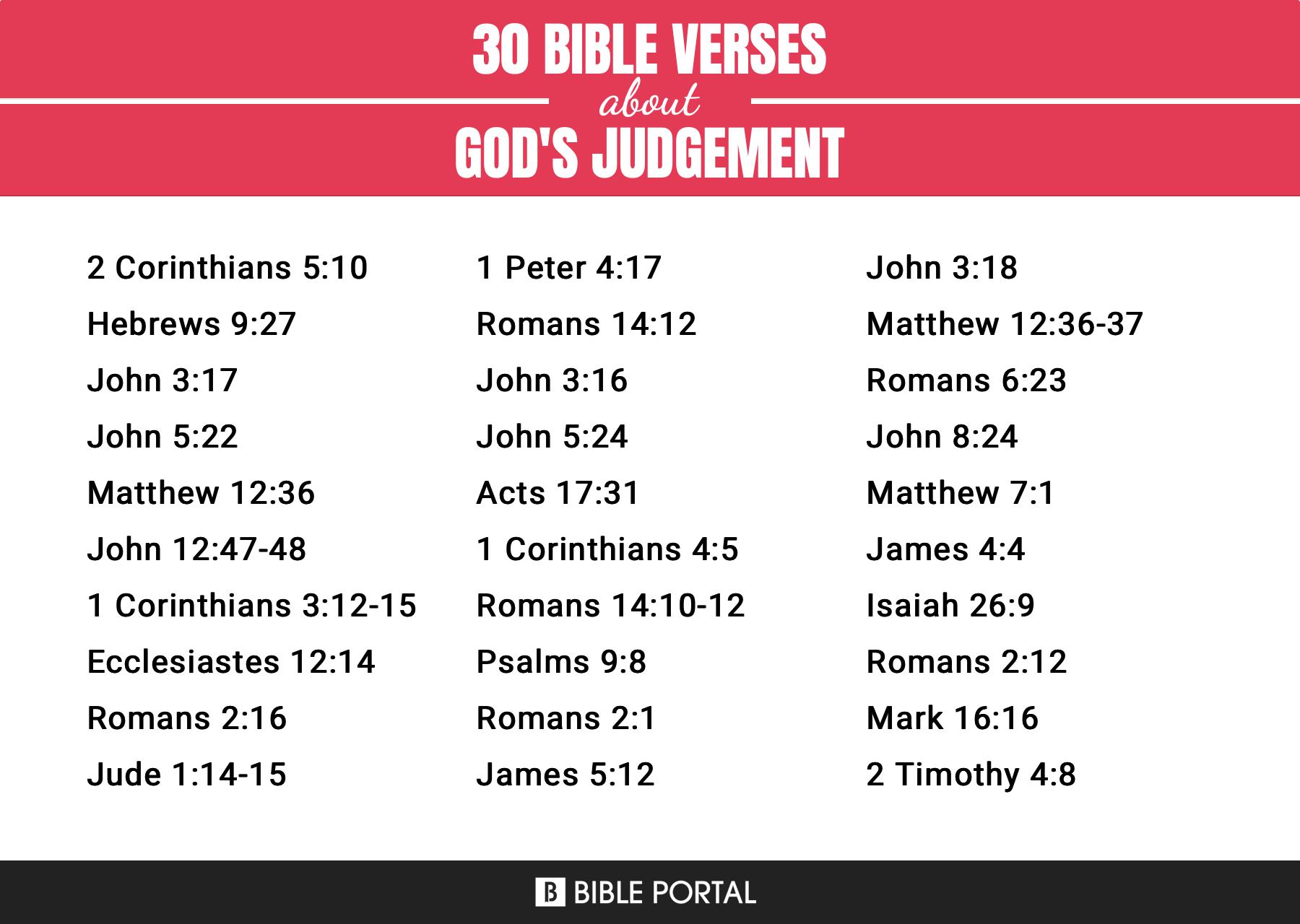
In the realm of biblical theology, the concept of judgment is both profound and multifaceted. Delving deep into its significance reveals a tapestry woven with themes of morality, divine authority, and human accountability. At its core, judgment in the Bible signifies the act of discerning right from wrong, ultimately manifesting God’s authority over His creation.
The Old Testament sets the stage for this intricate concept, providing numerous instances where God’s judgment is vividly illustrated. The Book of Genesis introduces Adam and Eve’s disobedience, leading to their expulsion from Eden—an exemplar of divine judgment. This narrative does not merely depict a punitive act but symbolizes the consequences of human choices. The imposition of judgment is often portrayed as a divine necessity, affirming God’s righteousness in response to sin and moral decay.
As one transitions into the prophetic literature, the theme of judgment intensifies. Prophets such as Isaiah, Jeremiah, and Ezekiel serve as conduits for God’s warnings to His people. They articulate visions of impending judgment against nations and individuals, urging them to repent and return to righteousness. Within this framework, judgment evolves into a poignant reminder of God’s unwavering holiness and the serious ramifications of transgression. Yet, grace and mercy glimmer through this narrative—each warning is imbued with the promise of redemption and restoration, should humanity turn from its errant ways.
In the New Testament, the interpretation of judgment undergoes a transformative shift. The arrival of Jesus Christ imbues the concept with profound depth. Rather than solely serving as a harbinger of condemnation, Jesus perceives judgment as an opportunity for reconciliation. His teachings frequently emphasize the idea of love, grace, and forgiveness, inviting individuals to transcend mere adherence to the law. The parables, such as the Prodigal Son, illustrate this revolutionary perspective—depicting a father’s love that triumphs over judgment, extending warmth and acceptance even in the face of wrongdoing.
An indispensable aspect of biblical judgment is the notion of the final judgment. Revelations brings this theme to a climactic conclusion, wherein the ultimate authority of Christ is showcased. The imagery of the ‘Great White Throne’ presents a vision of divine judgment that awaits all of humanity. This eschatological outlook evokes a spectrum of emotions—fear, hope, and contemplation. It accentuates the belief that every action bears weight, compelling individuals to engage in self-reflection and moral deliberation.
Moreover, the biblical perspective on judgment transcends individualistic motifs; it encompasses communal dimensions as well. The consequences of collective moral decisions are evident throughout scripture, with entire nations held accountable for injustice or idolatry. This collective judgment sharpens awareness of the interconnectedness of human experiences, echoing a call to societal responsibility. It invites believers to actively cultivate a community that reflects God’s standards of justice and mercy.
Ultimately, the inquiry into what judgment means in the Bible transcends mere theological exploration; it beckons a personal confrontation with one’s values and beliefs. It challenges individuals to ruminate on their own lives, fostering a transformative journey towards righteousness. The duality of judgment—both as an act of condemnation and a pathway to redemption—nudges one to ponder the divine intentions behind this profound concept. In essence, judgment serves not only as a declaration of divine authority but as an invitation to embrace the transformative power of grace, urging all to become agents of love and justice in the world.

