

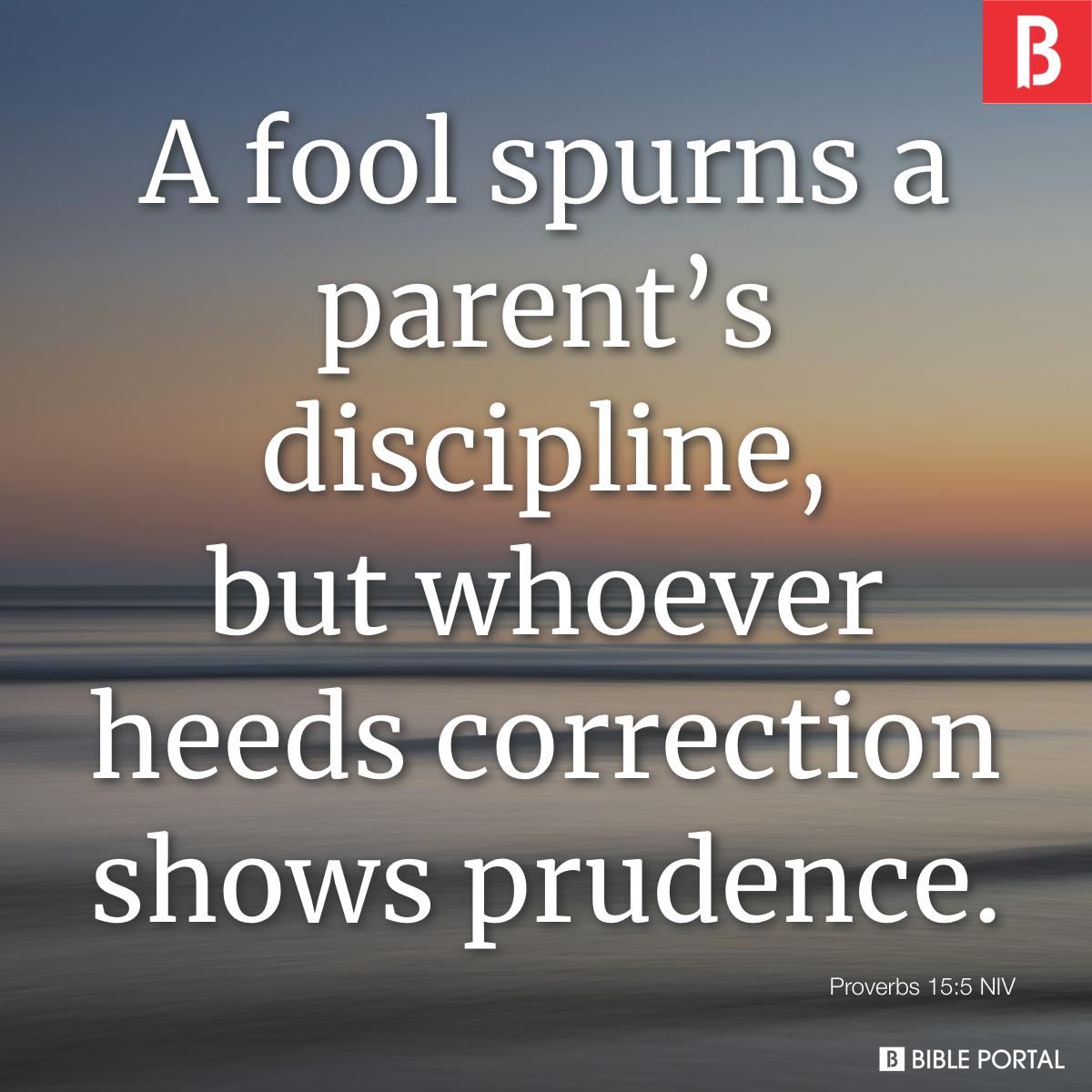
Prudence, a term often ensconced in the realm of wisdom literature, resonates profoundly throughout biblical texts. Its essence transcends mere caution; it embodies a deliberate interplay of foresight, discernment, and moral rectitude. We delve into the intricacies of prudence as articulated in the Bible, revealing its multifaceted dimensions, and its applicability to today’s challenges, thereby prompting a significant shift in perspective.
The etymology of prudence stems from the Latin *prudentia*, which signifies foresight or sagacity. In scripture, prudence is not simply a refrain but a guiding principle articulated in both the Old and New Testaments. It invites contemplation on how the art of judicious decision-making can shape our lives and foster a deeper understanding of our spiritual journey.
The book of Proverbs stands as a cornerstone for exploring the meaning of prudence in a biblical context. It is here that prudence is personified as a virtue that informs both intellectual and moral dimensions of life. In Proverbs 8:12, it declares, “I, wisdom, dwell together with prudence; I possess knowledge and discretion.” This conjures an image of prudence not merely as a characteristic, but as an essential component of wisdom itself. Wisdom and prudence are inseparably intertwined, suggesting that one cannot operate in isolation from the other.
Significantly, prudence entails recognizing the gravity of decisions and their long-term implications. It urges individuals to pause, reflect, and consider both immediate consequences and the ripple effects on one’s life and community. Thus, one finds in the act of prudence a normative pressure to engage thoughtfully with the world, to act not just for personal gain but for the collective good. This notion beckons us to contemplate how our individual choices resonate within the broader tapestry of existence.
Moreover, prudence enriches us with a framework through which to confront the complexities of moral dilemmas. The examples of wise figures in the Bible—including Solomon, who famously asked for wisdom to govern justly—underscore the importance of prudent decision-making when faced with choices that bear ethical weight. It invites us to channel our innate impulses into reasoned action undergirded by ethical considerations. The biblical narrative extends beyond mere guidelines and flourishes into an invitation to cultivate an introspective ethos.
The New Testament echoes themes of prudence, particularly in the teachings of Jesus. Consider the parable of the wise and foolish builders (Matthew 7:24-27). Here, the wise builder meticulously lays a solid foundation, representing foresight and discernment—key aspects of prudence. In contrast, the foolish builder erects a house upon sand, underscoring the folly of hasty decisions devoid of discernment. As readers, we are thrust into a duality of action and contemplation; prudence emerges as the bedrock upon which virtuous living is constructed.
Furthermore, prudence is intimately connected to the concept of humility. The scriptural texts frequently illuminate that humility serves as a precursor to true wisdom. For instance, Proverbs 11:2 states, “When pride comes, then comes disgrace, but with humility comes wisdom.” This interplay suggests that a prudent person recognizes their limitations and the distinctiveness of others’ insights. Humility resolutely dismantles arrogance, clearing the pathway for a judicious approach to life’s myriad challenges.
Engaging with prudence also necessitates an active listening posture. The act of listening—truly hearing the concerns and wisdom of others—is a fundamental aspect of irresponsible decision-making. Proverbs emphasizes this prudential principle in advising, “The heart of the discerning acquires knowledge, for the ears of the wise seek it out” (Proverbs 18:15). This assertion encompasses a dualistic equation: knowledge coupled with the willingness to reflect upon that knowledge generates wisdom, the ultimate goal of a prudent life.
In examining the overarching narrative of prudence, we are confronted with the acknowledgement that the pursuit of a prudent life does not promise ease. It demands an unwavering commitment to introspection, humility, and collective discernment in a world rife with instantaneous gratification and hasty judgments. As society grapples with questions of sustainability and ethical living, prudence insists that we remain vigilant stewards of our resources and relationships.
The modern world, illuminated by technological advancement, often spirals toward impulsiveness. Yet, the lessons woven into biblical prudence challenge us to reclaim a sense of deliberation and foresight. Beyond personal implications, prudence encourages societal engagement, urging us to participate actively in systems that promote holistic, effective change. The commitment to prudential living emerges as a revolutionary act in the face of contemporary indifference.
Ultimately, embracing prudence as a biblical principle does not merely serve as a guide for individual conduct; it calls for a reconfiguration of social paradigms. By anchoring our discernments in wisdom, humility, and ethical considerations, we invite a transformative shift within the spheres we inhabit. The call to live prudently resounds as an invitation to weave a narrative punctuated by wise choices that resonate both now and beyond our time. In this journey of understanding, we discover that prudence is indeed an invaluable compass, guiding us through the multifaceted landscape of life.

