

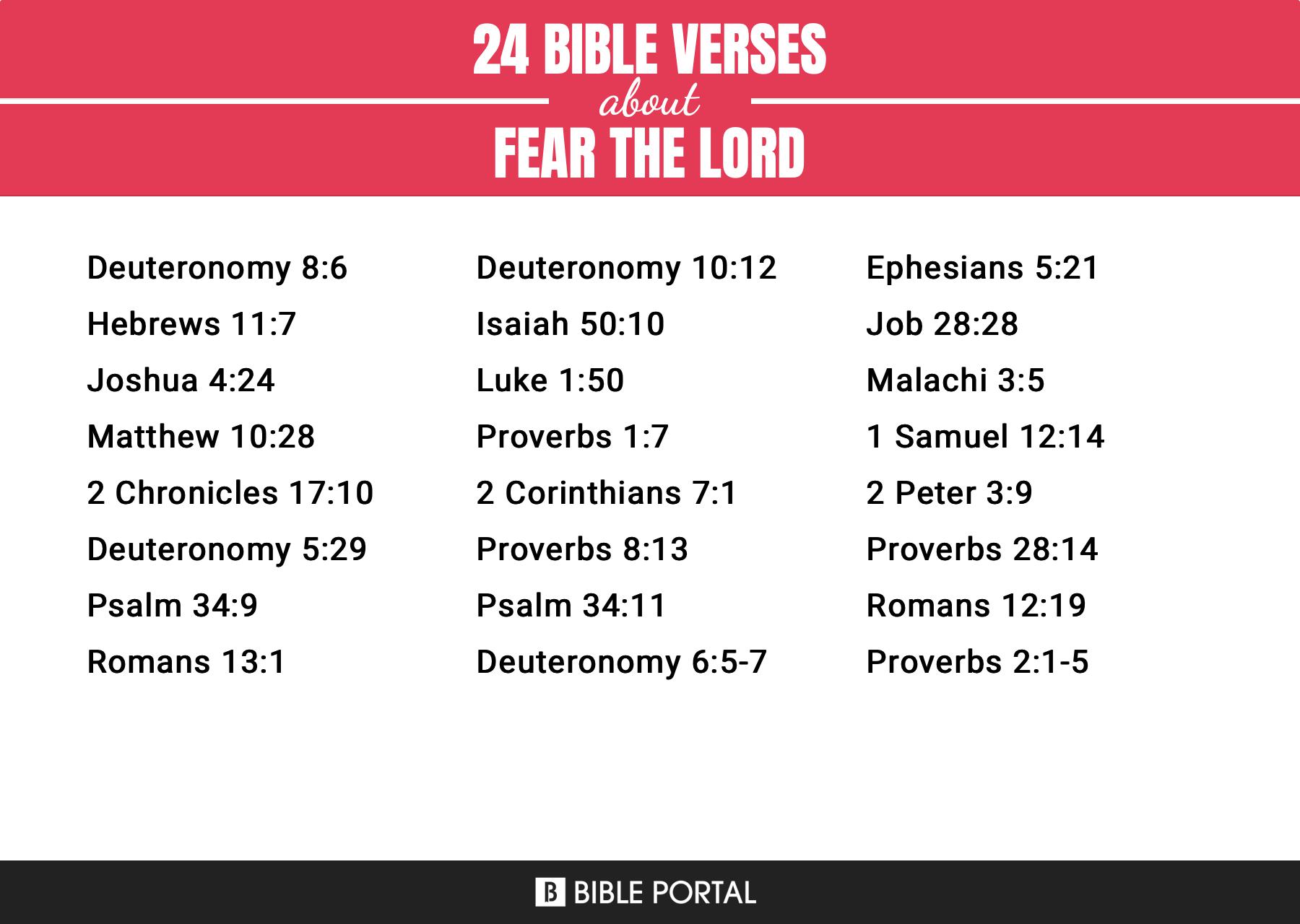
The phrase “Fear the Lord” is a profound and multifaceted concept found throughout biblical literature. It invites contemplation and poses a question that beckons exploration: what does it truly mean to fear the Lord? This inquiry not only illuminates the spiritual wisdom of various texts but also reflects a deeper, almost melancholic fascination with divinity and reverence.
At its core, the term embodies a spectrum of emotions that range from awe and reverence to dread and trepidation. The Old and New Testaments alike impart the significance of this phrase, often linking it to wisdom and understanding. Proverbs 1:7 proclaims that “the fear of the Lord is the beginning of knowledge,” suggesting that an acknowledgment of God’s omnipotence and sovereignty is foundational to acquiring true wisdom. Herein lies the fundamental paradox: the essence of fearing the Lord transcends mere fear; it beckons one towards enlightenment.
Within the biblical narrative, the fear of the Lord compels believers to recognize their own limitations in the vast tapestry of existence. This recognition fosters humility, prompting individuals to confront their spiritual deficiencies and redirect their lives toward righteousness. Such a realization reveals a deeper reason for fascination; it’s not merely the fear of punishment but rather the joyous pursuit of a life aligned with divine will that captivates the faithful.
Moreover, there exists an intrinsic connection between the fear of the Lord and love. This dichotomy may appear paradoxical at first glance, but upon closer examination, one discovers that true love for God is steeped in reverent fear. Such a relationship is akin to the reverence a child feels towards a loving parent. The fear of God serves not as a shackle but as a guiding force; it is an impetus to cultivate an intimate bond with the divine. It encourages believers to honor God’s commandments and pursue a path of moral integrity.
As one delves deeper into scriptures, it becomes apparent that the fear of the Lord encompasses a multitude of dimensions. In certain contexts, it serves as a call to repentance. The prophets articulate this exhortation, urging wayward souls to return to the paths of righteousness. This call to repentance is underscored by an understanding of accountability to a higher moral standard, thus evoking a sense of urgency and necessity. The fear of the Lord becomes synonymous with a moral compass, guiding the faithful to resist temptation and embrace a life of virtue.
Ultimately, the fear of the Lord is integrally linked to the concept of worship. This idea is vividly depicted in the Psalms, where the act of worship is interwoven with an acknowledgment of God’s power and authority. The adoration and reverence expressed in worship are reflective of a profound understanding that human existence is interdependent with the divine. In worship, believers channel their fears, offering them as homage to the Almighty, which paradoxically transforms fear into fervent devotion.
In conclusion, the biblical interpretation of “fear the Lord” transcends simplistic notions of fright; it embodies a holistic approach towards understanding one’s relationship with the divine. This multifarious concept prompts exploration and introspection, ultimately guiding individuals towards wisdom, moral integrity, and heartfelt worship. Thus, the fascination with fearing the Lord lies not solely in the command to revere but in the transformative power it wields over the human spirit, cultivating a life enriched by faith and reverence.

