

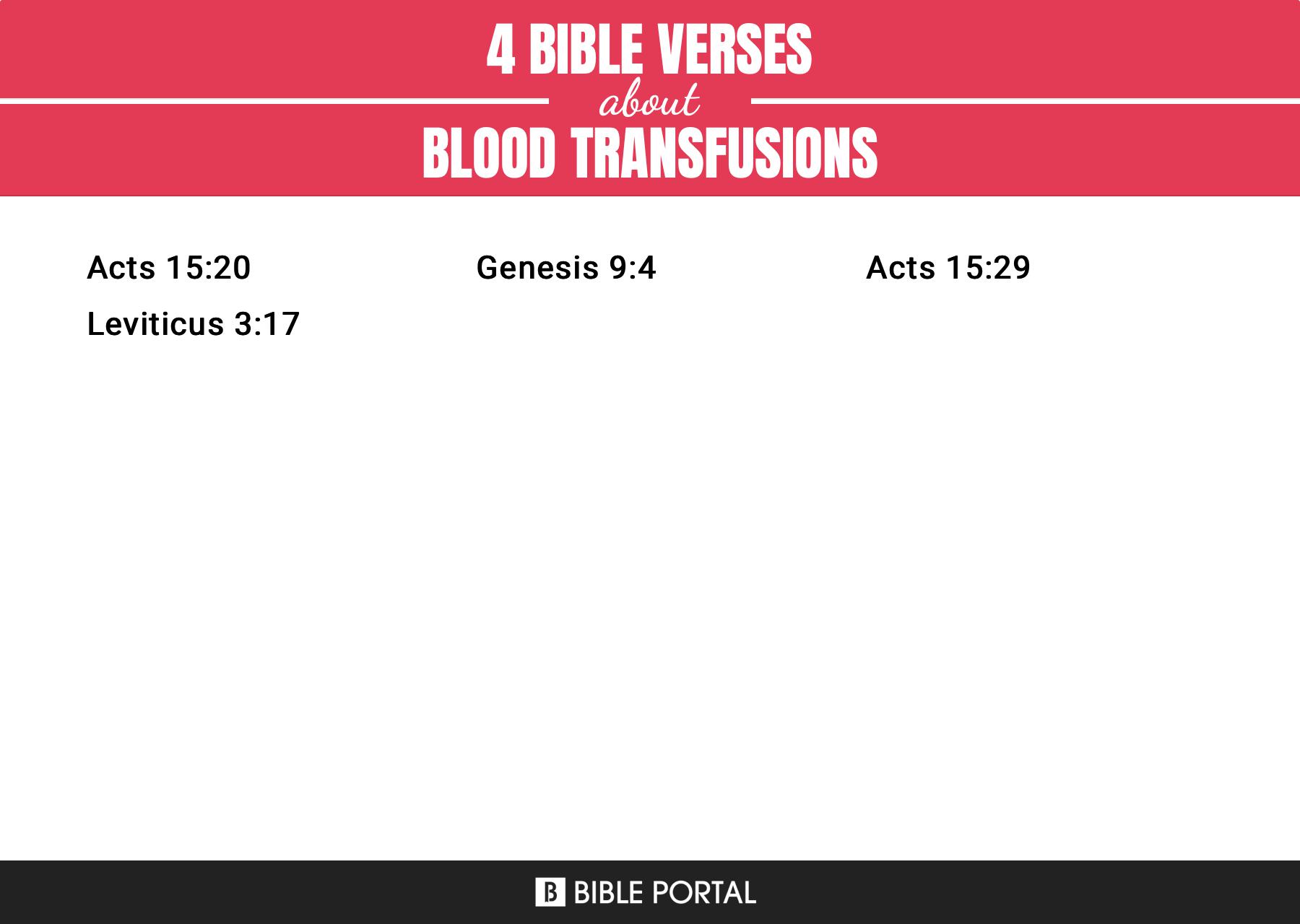
The subject of blood transfusions often evokes a range of emotional responses, particularly among those who adhere to religious principles. Within the framework of Christian theology, the perspective on blood and its sacredness is deeply rooted in scripture. A profound examination of what the Bible communicates regarding blood transfusions uncovers a wealth of insights that can inspire reflection and dialogue.
To begin, one must acknowledge the undeniable significance of blood in biblical narratives. From the early texts, blood symbolizes life, sacrifice, and the profound relationship between the divine and humanity. Leviticus 17:11 eloquently states, “For the life of the flesh is in the blood, and I have given it to you upon the altar to make atonement for your souls.” This verse encapsulates the intrinsic belief that blood possesses a divine essence, designated for atonement and communion with God. The sacred nature of blood sets the stage for understanding the ensuing discourse on blood transfusions.
In various biblical accounts, blood serves as a conduit for covenant and promise. The Passover narrative, detailed in Exodus 12, illustrates the power of blood as a protective element. The Israelites marked their doorposts with lamb’s blood to signify their covenant with God, thus sparing themselves from judgment. Herein lies a pivotal realization: blood represents not only life but also divine intervention, safeguarding believers amidst peril. Such illustrations beckon individuals to ponder the implications of blood transfusions in light of spiritual deliverance and communal well-being.
Moreover, the New Testament introduces transformative perspectives on blood, particularly through the sacrifice of Jesus Christ. In Matthew 26:28, Jesus proclaims, “For this is my blood of the covenant, which is poured out for many for the forgiveness of sins.” The redemptive power of Christ’s blood signals a paradigmatic shift, inviting believers to consider the communal aspect of blood—its ability to foster unity and healing among followers. This theological lens invites contemplation on societal practices, including blood transfusions, as acts of compassion, possibly mirroring the selflessness exemplified by Christ.
However, the conversation surrounding blood transfusions is not devoid of complexity. Some faith traditions interpret biblical edicts as prohibitions against the consumption or transfusion of blood. Jehovah’s Witnesses, for instance, adhere to the mandate found in Acts 15:29, which instructs abstention from blood. This belief stems from a literal interpretation of scripture, placing immense value on the sanctity of blood. Therefore, for adherents, the act of receiving a blood transfusion is viewed as incompatible with their understanding of divine law.
This divergence prompts an exploration of alternative perspectives within the broader Christian context. Many Christians advocate for the medical and ethical implications of blood transfusions, aligning these practices with the biblical imperative of preserving life. The tenet of love for one’s neighbor, articulated in Mark 12:31, becomes a guiding principle, reinforcing the notion that aiding those in dire need through medical advancements is not only permissible but commendable.
In light of these discussions, it becomes crucial to emphasize the importance of compassionate dialogue within faith communities. Engaging in a respectful discourse surrounding blood transfusions allows for the coexistence of differing interpretations without diminishing the core values that unite believers. By exploring what the Bible elucidates about blood, individuals may cultivate a deeper understanding that transcends mere doctrinal adherence.
Ultimately, grappling with the intersection of faith and medical ethics invites a shift in perspective—one that empowers believers to navigate complex moral terrains with wisdom and grace. As society evolves and medical practices advance, the challenge remains: how to faithfully integrate scriptural tenets with contemporary understandings of health and life-giving care. Thus, the narrative surrounding blood transfusions is not merely about the procedures themselves but rather about the broader implications of love, sacrifice, and the ongoing quest for understanding within the fabric of faith.

