

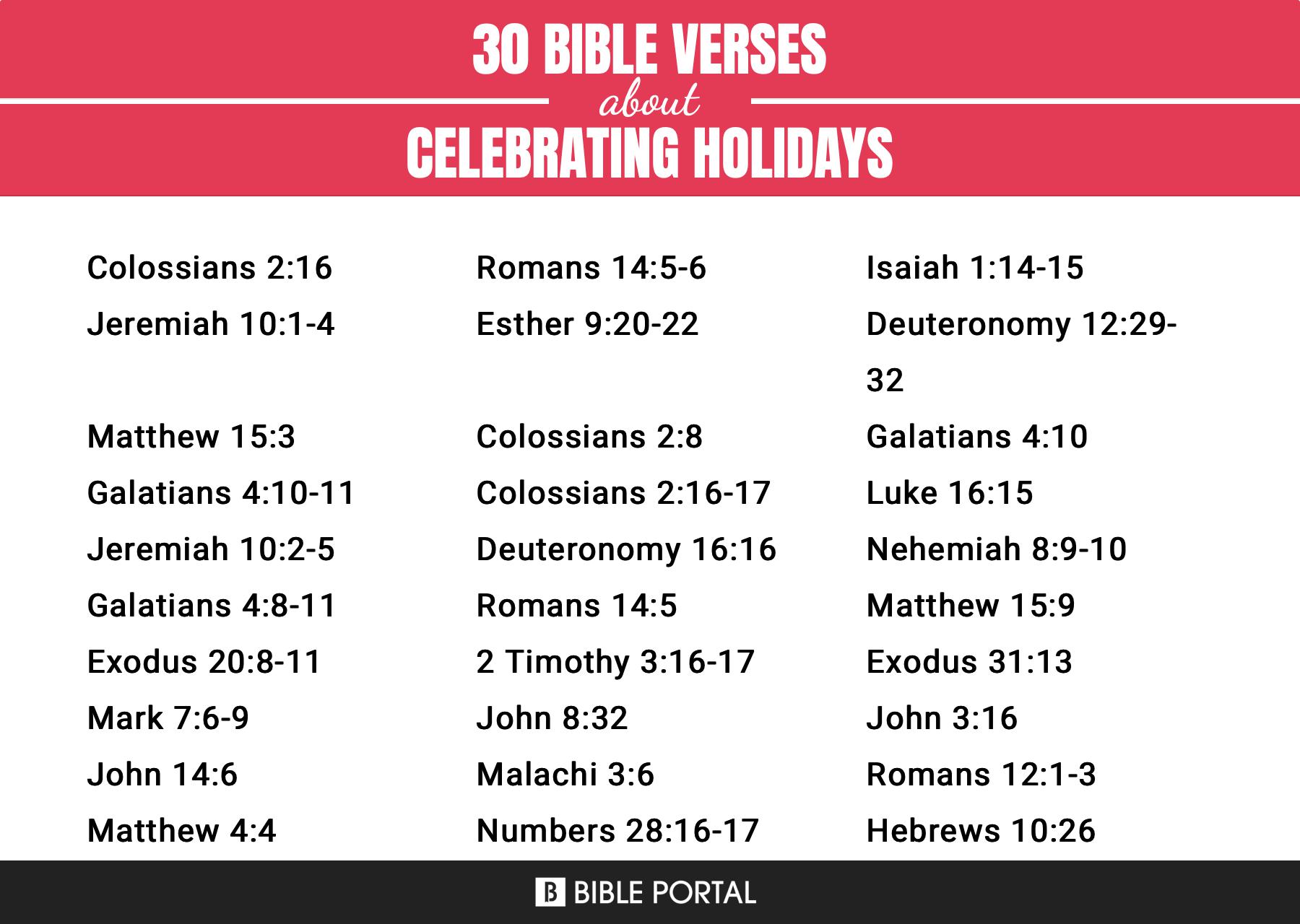
What does the Bible truly convey about the concept of celebrating holidays? This inquiry invites a deeper examination into the intersection of faith, tradition, and the human experience. One might ponder whether holidays serve merely as cultural phenomena or if they hold a distinct spiritual significance according to biblical tenets. After all, numerous festivities dot the calendar, each steeped in historical and religious heritage, yet their observance often invites contention among believers.
The Bible does not present an exhaustive mandate regarding the celebration of holidays. Rather, it offers a medley of perspectives on commemorative events, often directing attention to the underlying intent behind these celebrations. For instance, consider the Old Testament, where designated feasts such as Passover, Pentecost, and the Feast of Tabernacles are outlined with meticulous detail. These occasions were not merely social gatherings; they were imbued with profound theological implications, inviting participants to reflect on divine providence and communal identity.
Interestingly, one of the challenges that arises is the dichotomy between secular and sacred observances. Could it be that the act of celebrating can transcend its temporal context and become a manifestation of worship? When pondering Christmas or Easter, traditionally rooted in cultural practices, one might ask: Does the inclusion of festive elements dilute their spiritual essence, or can they be reclaimed as opportunities for glorifying God?
Furthermore, the New Testament provides additional insights. In Colossians 2:16-17, the apostle Paul advises that believers should not be judged by their observance of holidays and festivals, implying a certain freedom in these matters. This passage beckons one to question the motivations behind holiday observance. Are they vehicles of expressing joy, gratitude, and connection with the divine, or have they devolved into obligatory rituals devoid of meaning?
Moreover, the concept of stewardship plays a vital role in the discussion of holiday celebrations. With resources, time, and attention vying for our limited capacities, how does one balance the merriment of worldly festivities with the call to serve and honor God? Engaging with this question encourages an introspective examination of priorities and the manner in which traditions can be adapted to reflect a commitment to one’s faith.
In addition, holidays often serve as critical moments for familial and communal bonding. The narrative arcs of ancient and modern celebrations alike share a common thread of fostering connections among people. Scriptures like Psalm 133:1 proclaim, “How good and pleasant it is when God’s people live together in unity!” These verses illuminate the potential of holidays to strengthen familial ties and cultivate communal harmony, counteracting the isolating tendencies prevalent in contemporary society.
As Christians navigate the complexities surrounding holiday celebrations, the importance of discernment cannot be overstated. The question emerges: How can one celebrate in a manner that honors God while still embracing the joy and traditions that holidays bring? This equilibrium demands a reassessment of motives and a commitment to intentionality in observance.
In conclusion, while the Bible does not delineate a rigid framework for celebrating holidays, it provides a plethora of principles that can guide believers in their observances. The interplay between cultural practice and spiritual dedication invites a nuanced conversation about faith and tradition. With thoughtful consideration, individuals can lean into the joyous aspects of holidays while simultaneously seeking to deepen their relationship with the Divine. As such, perhaps the celebration of holidays is less about the specifics of the events themselves and more about the heart posture we cultivate in their midst.

