

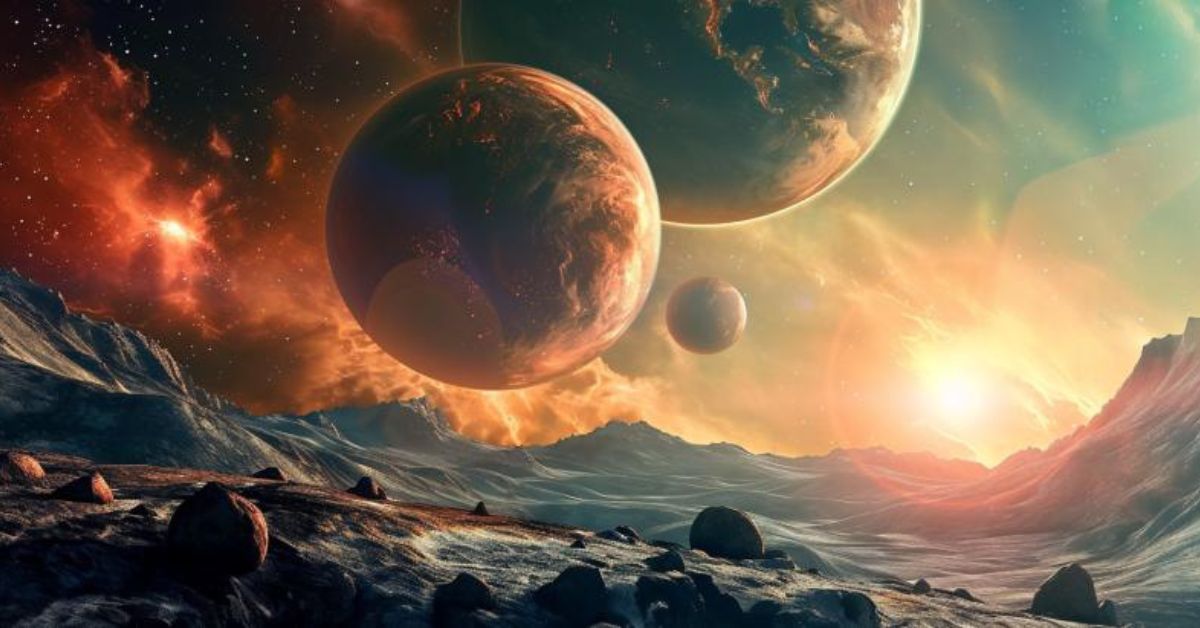
In the vast tapestry of existence, the question of life beyond our terrestrial confines has fascinated humanity for centuries. Among the myriad voices echoing through the halls of inquiry, theological perspectives offer a unique lens through which to examine this profound question. What does the Bible say about life on other planets? This inquiry navigates both the celestial imagery of scripture and the philosophical implications of divine creation.
At the outset, it is crucial to acknowledge that the Bible is primarily a text focusing on the relationship between God and humanity. Its narratives predominantly center on Earthly experiences, yet it does contain passages that invite contemplation about the cosmos. For instance, in Genesis 1:26-27, the creation of humanity in God’s image raises intriguing questions about the nature of life elsewhere. If humans are made in the divine likeness, what might beings on other planets look like? Would they possess a similar essence, or be so fundamentally different that they defy our earthly understanding?
The Biblical text offers a phantasmagoria of celestial imagery. Psalms 19:1 states, “The heavens declare the glory of God; the skies proclaim the work of his hands.” This profound appreciation for the cosmos could imply that if life exists elsewhere, it too is a reflection of divine creativity. The vastness of the universe, with its trillion galaxies, suggests an expanse of possibilities; the divine creator’s capacity is not constrained merely to the Earth but is expansive and infinite.
Moreover, the notion of otherworldly inhabitants can be found through allegorical interpretations and parables. Some theologians argue that Jesus’s references to “sheep not of this fold” (John 10:16) can metaphorically extend to intelligent life forms beyond Earth. The phrase invites a contemplative perspective on God’s far-reaching compassion, suggesting that divine grace may span the universe transcending human limitations.
Yet, the absence of explicit references to extraterrestrial life in the Biblical canon leads to diverse interpretations. Some dissenting voices argue that the focus of scripture is squarely on human redemption and moral duty, leaving no room for speculation about celestial beings. According to this viewpoint, humanity’s role is to steward the Earth, emphasizing the imperative to care for our planet rather than ponder cosmic life.
As science continues to unveil the mysteries of the cosmos, the intersection between faith and reason becomes ever more pertinent. With the discovery of extremophiles—organisms thriving in harsh environments previously deemed uninhabitable—the odds of extraterrestrial life have increasingly seemed plausible. This possibility prompts a reevaluation of scriptural interpretations, advocating for a synthesis of scientific discovery and theological insights. If extraterrestrial life were to be confirmed, how might that reshape our understanding of the divine narrative?
In conclusion, the question of life on other planets is not merely an astrological curiosity; it serves as a profound spiritual inquiry interwoven with the themes of creation, divine love, and our collective role within the universe. While the Bible may not provide definitive answers, it offers a framework of inquiry that emphasizes the grandeur of creation. As humanity gazes upwards, pondering the stars, it simultaneously reflects on its own purpose, morality, and duties, illuminated by faith yet tantalizingly anchored in the mysteries of existence. This interplay of belief and exploration invites a deeper understanding of our place in the cosmos, urging us to consider the boundless scope of divine intent and creativity.

