

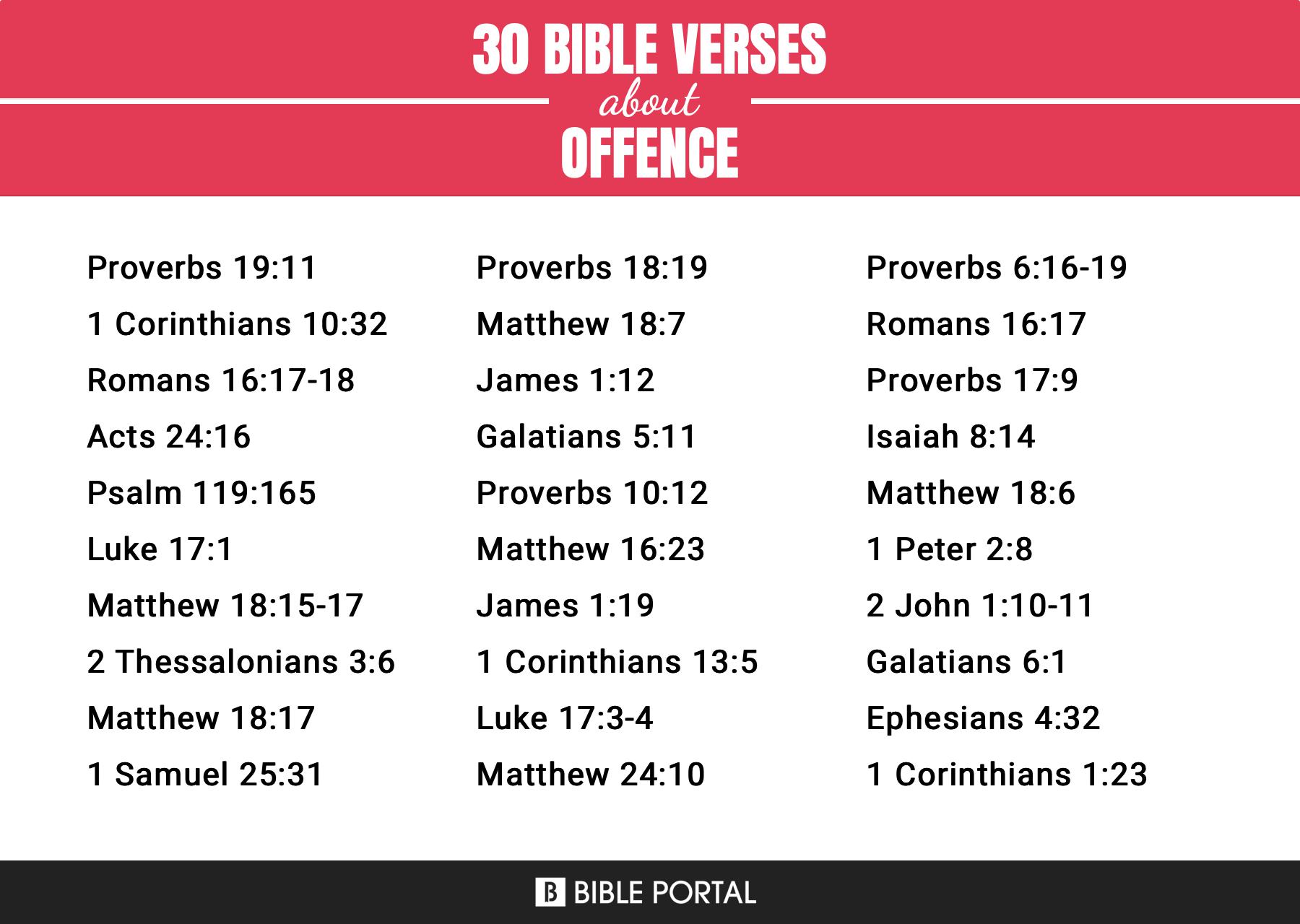
The concept of offence, particularly within the biblical context, reverberates through myriad texts, revealing profound insights into human behavior, morality, and interpersonal relationships. From the Old Testament to the New, the scriptures contemplate offences that individuals commit against God, themselves, and their neighbors. This exploration serves to illuminate various perspectives on what constitutes an offence, emphasizing the necessity of awareness and reconciliation.
To commence, the profound dichotomy between personal and communal offences is of paramount importance. The scriptures frequently illustrate the damage inflicted when an individual transgresses moral boundaries, highlighting passages that implore adherents to act with integrity and righteousness. For instance, one may encounter exhortations to avoid gossip and slander, which, although seemingly innocuous, can inflict devastating harm upon reputations and relationships. Such teachings underscore a critical understanding of the ramifications of our words and actions.
Furthermore, an understanding of offences extends to the relationship between God and humanity. The covenantal nature of the biblical narrative posits that when individuals act contrary to divine statutes, they not only offend God but also disrupt the harmony intended for creation. It is within these sacred texts that readers discover the gravity of sin and the necessity of atonement. The sacrificial rites of the Old Testament underscore humanity’s earnest desire to seek forgiveness and restore broken fellowship with the divine. Such reflections compel contemporary readers to contemplate their own moral failings and the importance of seeking redemption.
In addition to the spiritual dimensions, the biblical scriptures also provide a rich tapestry of guidance on how to respond to offences committed against oneself. Christ’s teachings in the New Testament fundamentally challenge believers to extend grace, illuminating the virtues of forgiveness and reconciliation. The poignant parable of the unmerciful servant encapsulates this message: a debt forgiven must evoke a spirit of generosity in return. Through this narrative, readers learn that harbouring bitterness only exacerbates their plight, whilst extending forgiveness fosters personal healing and liberates the soul.
Moreover, the call to community and collective restoration cannot be overlooked. The Epistles frequently admonish congregations to address offences within their ranks, advocating for processes of accountability and reconciliation. The teachings impart that conflict, when approached with humility and sincerity, can be a catalyst for deeper relational bonds and greater communal unity. It is within this context that believers are encouraged to engage in constructive dialogue, to seek understanding, and to resolve grievances amicably, thereby fortifying the fabric of their communities.
To thoroughly comprehend the implications of offence, one must also consider the notion of societal injustices frequently addressed in biblical texts. Issues such as oppression, marginalization, and inequity demand attention, as these offences are not solely personal but are also systemic. The prophetic voices of the Old Testament call for justice, urging communities to act with equitable compassion towards the disadvantaged. Readers are reminded that societal transformation begins with acknowledging these pervasive offences and striving for rectification.
In summary, the exploration of offences within the Bible traverses personal morality, communal responsibilities, and societal injustices. This multifaceted approach invites readers into a deeper understanding of their ethical and spiritual obligations. It is a clarion call for introspection, urging individuals to ponder their actions, seek forgiveness, and strive towards reconciliation—not merely with others but with the very essence of what is just and right. The exploration of these themes in scripture serves as a guide, illuminating pathways for personal growth and communal harmony.

