

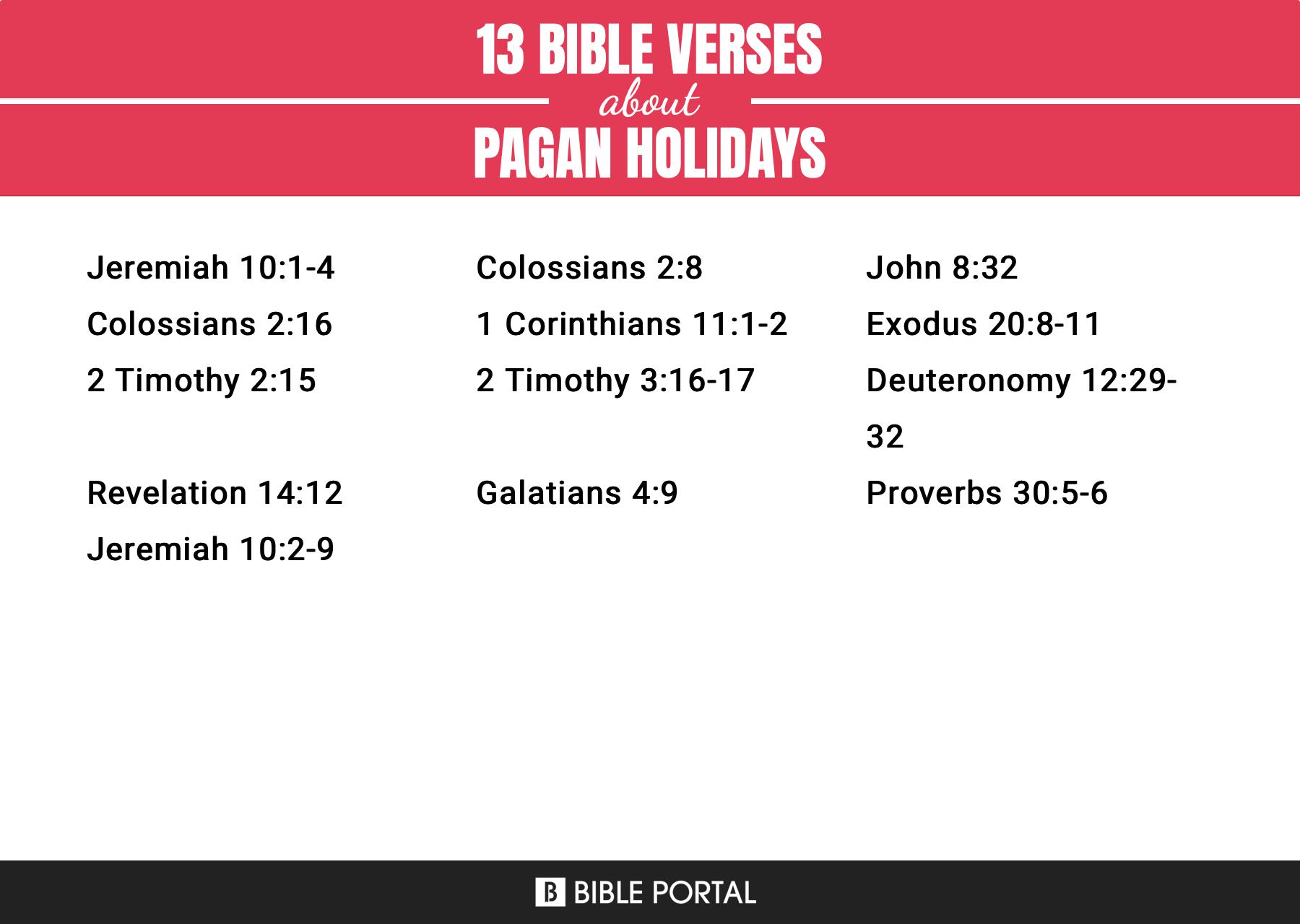
Throughout history, the melding of pagan traditions with Christian practices has raised critical questions about the observance of holidays. It invites scrutiny: what does the Bible truly say about these pagan holidays that have woven their way into modern religious festivities? This inquiry not only necessitates a profound understanding of biblical texts but also challenges individuals to consider the essence of their faith vis-à-vis cultural customs.
The Bible presents varied perspectives on holidays and earthly celebrations. For instance, scripture acknowledges the existence of festivals, often elevating their spiritual significance. However, within these narratives lurk admonishments regarding practices that bear remnants of paganism. Take, for example, the exhortation in Deuteronomy 12:30-31, which warns against inquiring about the gods of other nations and adopting their detestable practices. This beckons believers to question: to what extent have these traditions influenced their faith?
Moreover, when examining instances in the New Testament, one finds Paul’s discourse in 1 Corinthians 10:20-21. Here, he delineates the stark distinction between the worship of God and the veneration of idols. Paul’s insistence that one cannot partake in both the table of the Lord and the table of demons instills a potent reminder of the risks inherent in mingling sacred observances with elements that may not align with Christian teachings. The essence of worship, therefore, becomes paramount. How do we ensure that our celebrations reflect the reverence due to the Creator?
One of the most debated holidays is Christmas, celebrated widely yet deeply rooted in pre-Christian winter solstice festivities. The question of its alignment or divergence from biblical teachings was highlighted by figures like the early church theologians, who grappled with the incorporation of December 25th as the date for Christ’s birth. Some scholars argue for a clear delineation, asserting that the celebration, albeit culturally derived, serves the purpose of honoring the incarnation of Christ. Conversely, others raise concerns about “syncretism,” where secular and sacred converge too closely, potentially diluting the message of the Gospel.
Then there’s Easter, another holiday steeped in religious significance yet intricately linked to pagan springtime rites. The connotations of rebirth and renewal resonate through historical festivals dedicated to fertility deities. The Biblical narrative of resurrection undoubtedly holds paramount significance, yet does the association with such rites detract from its spiritual integrity? Engaging with this conundrum fosters an essential dialogue about authenticity in worship practices.
Furthermore, observing holidays such as Halloween presents its own set of dilemmas. Often criticized for its pagan origins and associations with darker themes, many Christians are left grappling with their stance on participation in such festivities. Ephesians 5:11 admonishes followers to have no fellowship with unfruitful works of darkness, compelling individuals to weigh the implications of their choices against scriptural counsel.
In summation, the dilemma surrounding pagan holidays and their intersection with biblical principles elicits a robust examination of faith and practice. The Bible, rich with wisdom, serves as a guide through the labyrinth of tradition and belief. Each holiday beckons faithful adherence to scriptural truths while inviting a deeper contemplation of what it means to celebrate authentically. The challenge remains: can one reconcile the vibrant cultural tapestry of holidays with a faith that demands fidelity to divine wisdom? It is a biblical imperative that calls for careful reflection amidst the confluence of culture and creed.

