

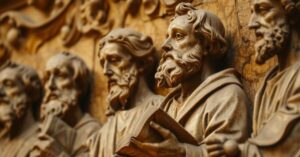
Throughout the annals of biblical history, the role of prophets has captivated believers and scholars alike. These individuals, often regarded as intermediaries between the Divine and humankind, played pivotal roles in shaping the spiritual landscape. However, the question remains: what does the Bible say about prophets after Jesus? This inquiry provokes profound contemplation regarding the continuity of prophetic voices in the Christian narrative.
To commence this exploration, it is paramount to understand the traditional role of prophets in the Old Testament. Figures such as Isaiah, Jeremiah, and Ezekiel were empowered to deliver messages from God, often admonishing the people of Israel and foretelling future events. Their profound insights revealed God’s nature and intentions, illuminating the path for those who would heed their warnings. Yet, with the advent of Jesus Christ, the narrative shifted. The New Testament portrays Jesus not merely as a prophet, but as the Summation of prophecy itself, the culmination of countless predictions and aspirations woven throughout the earlier texts.
However, the narrative does not conclude with the resurrection. The Gospel of Matthew asserts that Jesus’ promise to send the Holy Spirit (Matthew 28:20) paves the way for a reimagined paradigm of prophecy. The advent of the Holy Spirit signifies a democratization of prophetic gifts. Upon His ascension, Jesus empowered His followers, imparting spiritual gifts—including the gift of prophecy—to the burgeoning Christian community. The Apostle Paul addresses this in 1 Corinthians 12, where he elucidates the distribution of spiritual gifts among believers, underscoring the ongoing significance of prophecy as a means to edify the Church.
Engaging with prophetic utterances post-Jesus necessitates a nuanced understanding. The early Church, as depicted in the Book of Acts, was replete with prophetic figures. Agabus, for instance, foretold a devastating famine and was instrumental in rallying the community to address impending crises. Such instances serve as a clarion call for modern believers to perceive prophecy not as an antiquated relic, but as a vibrant aspect of spiritual life that continues to manifest in contemporary contexts.
Moreover, the New Testament acknowledges a diversity of prophetic expressions. The epistles encourage believers to “test the spirits” (1 John 4:1), inviting a discerning posture toward prophecies encountered in their faith journeys. This delineation invites curiosity and caution alike, emphasizing that not all prophetic claims are inherently trustworthy. Therefore, the faithful must cultivate spiritual wisdom, ensuring that their understanding aligns with scriptural foundations and divine principles.
In examining the theological implications of ongoing prophecy, one encounters the poignant question of purpose. Prophetic messages, whether historical or contemporary, serve to illuminate God’s character, nurture hope, and provide direction. In an era characterized by uncertainty and disillusionment, the call for prophetic voices remains urgent. The capacity to perceive God’s direction, particularly in tumultuous times, is integral for a resilient faith community.
Furthermore, the promise of future prophecies is ensconced in the visions of Revelation, where prophets testify of God’s ultimate restoration plan. These prophetic visions extend beyond mere predictions; they encapsulate the overarching narrative of hope and redemption. Thus, modern believers are encouraged to remain vigilant, open to divine whispers that may guide them toward transformative action in their lives.
Ultimately, to consider the question of prophets after Jesus is to embark on an exploration of faith’s complexity. In engaging with biblical teachings, believers are invited to a dynamic relationship with God, one where prophecy serves as a tool for guidance, inspiration, and spiritual growth. Essentially, the biblical conception of prophecy transcends time, inviting individuals to be active participants in a living tradition that continues to unfold in their spiritual journeys.

