

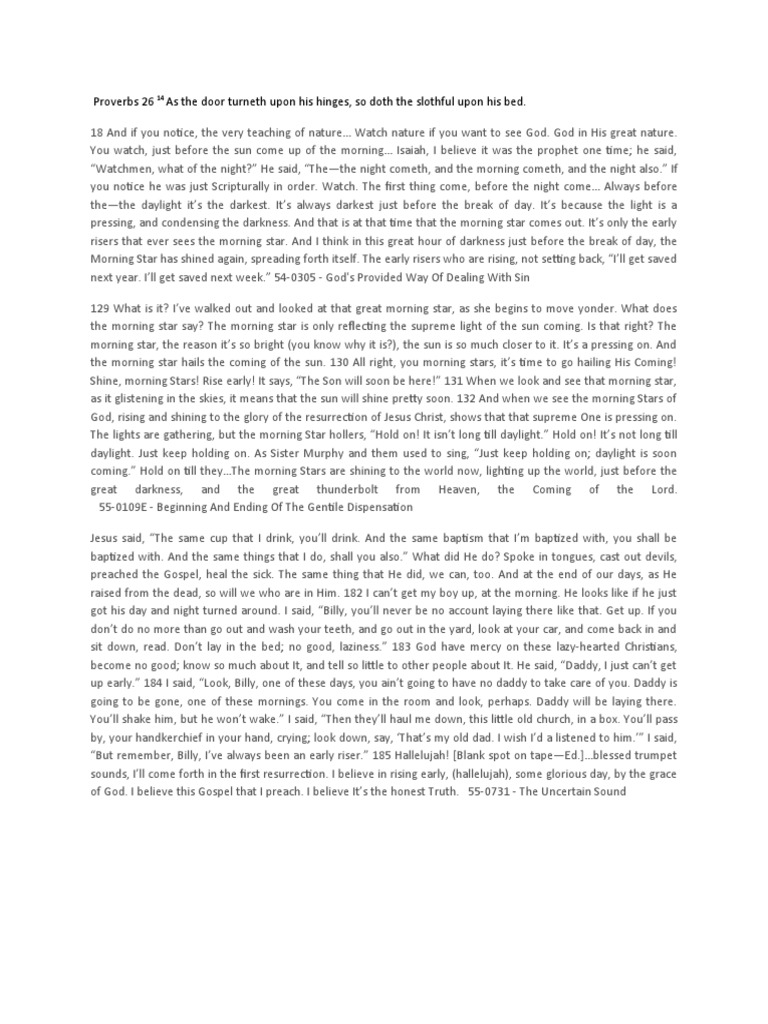
Slothfulness, often coined as laziness, has been a subject of contemplation in the realm of Christian teachings for centuries. To embark on a deeper inquiry into what the Bible articulates regarding this pervasive human trait, one might ponder—are we, as conscientious individuals, occasionally succumbing to our own proclivities towards inertia? Let us unravel this intricate subject through a biblical lens, examining the moral implications, scriptural admonitions, and potential rectifications for our lax attitudes.
The Bible is replete with verses that underscore the virtues of diligence and the vices of slothfulness. In Proverbs 6:6-8, a rather stark admonition is issued: “Go to the ant, you sluggard; consider its ways and be wise! It has no commander, no overseer or ruler, yet it stores its provisions in summer and gathers its food at harvest.” Here, the ant is portrayed as an emblem of industriousness, encapsulating the essence of preparing diligently for future contingencies. The juxtaposition between the ant and the sluggard starkly accentuates the biblical stance that hard work is not merely a commendable trait but a divine expectation.
Moreover, the Scriptures vividly delineate the consequences of a slothful disposition. Proverbs 19:15 poignantly states, “Laziness brings on deep sleep, and the shiftless go hungry.” This metaphorical ‘deep sleep’ is illustrative of a state where individuals become oblivious to the reality of their circumstances. The image conjured is one of a life unfulfilled, dreams deferred, and potential squandered. Slothfulness does not intrinsically harm the individual but reverberates through the tapestry of human relationships and communal responsibilities, leading to societal stagnation.
In contrast, the biblical narrative also extols the virtues of labor. Colossians 3:23-24 instructs believers to “work heartily, as for the Lord and not for men.” This exhortation transcends the mere act of labor; it permeates the very essence of our intentions and attitudes towards work. It poses an intriguing dilemma: Are we genuinely working for a higher purpose, or are we merely trudging through our daily obligations? This calls into question the authenticity of our motivations and the extent to which slothfulness may infiltrate our lives.
To further illuminate the topic, one must consider the philosophical and theological implications of slothfulness. The notion of ‘acedia,’ viewed as a form of spiritual sluggardliness, suggests a detachment not only from work but from one’s own spiritual commitments. This apathy can lead to a desensitization of the soul, wherein one becomes indifferent to spiritual growth and ethical development. The Bible’s guidance serves as both a warning and a call to reclamation, urging believers to rise from complacency into a state of active pursuit of righteousness.
In light of these reflections, it prompts an incisive challenge: How can we cultivate a culture of diligence in our lives and communities? The remedy for slothfulness does not merely lie in the act of laboring harder but rather in a holistic approach that entails spiritual, physical, and communal engagement. Setting explicit goals, fostering communal responsibility, and nurturing a fervor for growth can serve as integral components in combating the insidious nature of sloth.
In conclusion, the Bible presents a nuanced and multifaceted perspective on slothfulness, intertwining moral, spiritual, and communal dimensions. By grappling with the theological edicts regarding diligence, we not only align ourselves with divine expectations but also enhance the fabric of our societal structures. This examination invites all of us to introspect, reevaluate our motivations, and, ultimately, re-engage with the world around us with vigor.

