

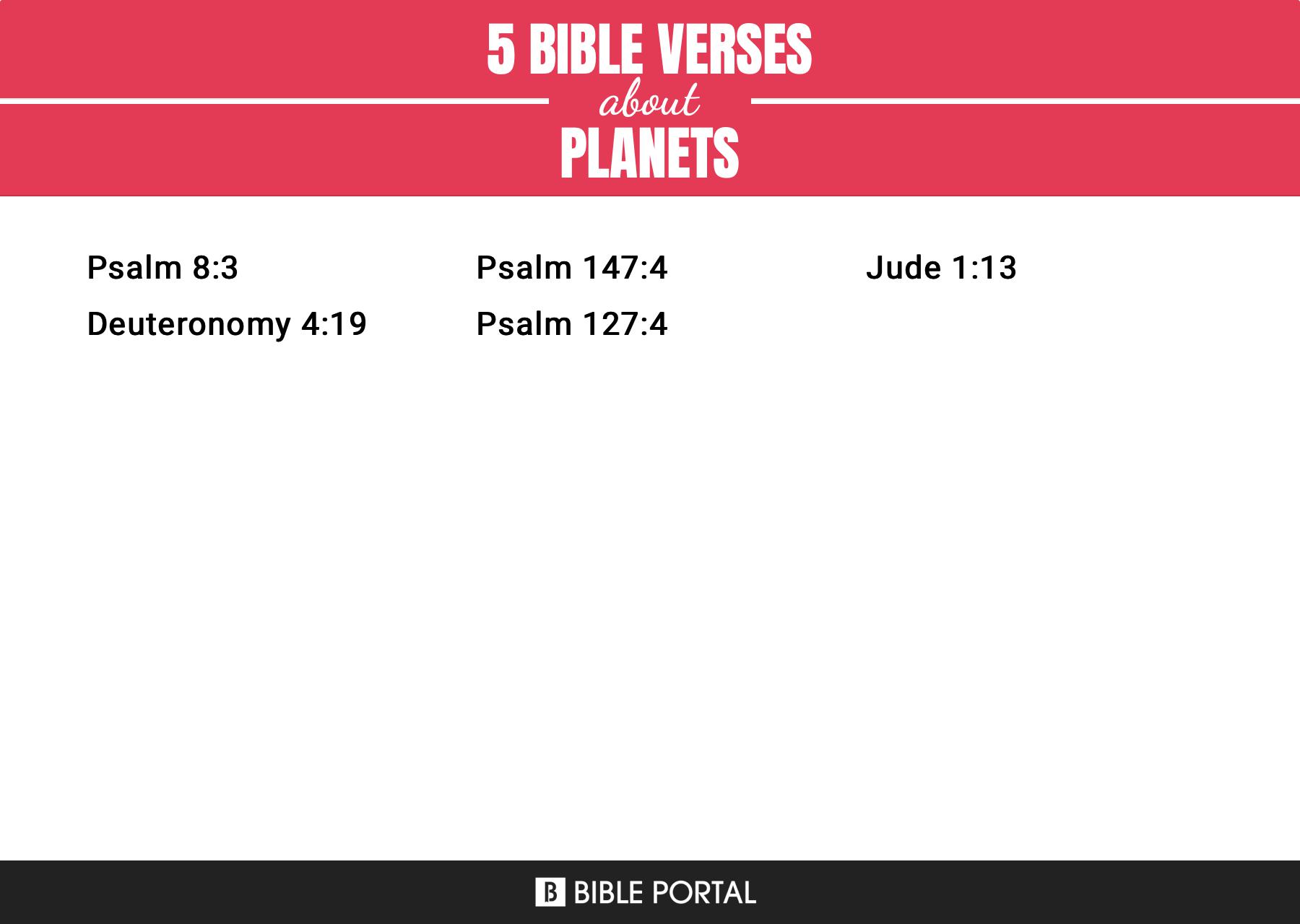
The celestial bodies we observe in the night sky have long sparked human curiosity and intrigue. Among these, the planets—each a distant world orbiting our sun—invite contemplation not only of their physical characteristics but also of their spiritual significance. While the Bible does not explicitly delve into the scientific aspects of planets, it does touch upon the broader themes of the cosmos, which can be thoughtfully explored to reveal deeper theological insights.
Throughout scripture, the stars and celestial bodies are often regarded as manifestations of divine creativity. Genesis, in its poetic account of creation, describes God creating the heavens and the earth, establishing celestial lights to separate day from night (Genesis 1:14-19). This suggests an intentional design, a cosmic order that allows humanity to reflect on the majesty of the Creator. The vastness of the universe and the specific mention of celestial lights acknowledge the enormity of God’s power and the delicate balance within which creation exists.
Another profound observation comes in the form of the Psalms, where the beauty and grandeur of the night sky elicit worship and awe. Psalm 19:1 declares, “The heavens declare the glory of God; the skies proclaim the work of his hands.” This poetic imagery not only invites believers to admire the beauty of the universe but also hints at the existence of a meaning that transcends our earthly experiences. The planets, twinkling like gems against the dark tapestry of the universe, serve as a reminder of a higher purpose and a cosmic narrative that God orchestrates.
Moreover, the planets can symbolize the constancy of God’s existence and promises. In Jeremiah 31:35-36, the Lord proclaims His unwavering commitment to His covenant with Israel, likening it to the reliability of the celestial bodies: “Only if these decrees vanish from my sight,” declares the Lord, “will the descendants of Israel ever cease to be a nation before me.” Here, the permanence of the stars and planets serves as a metaphor for God’s eternal faithfulness, reinforcing the idea that just as the planets maintain their courses, so too will God maintain His promises.
In addition to affirming divine sovereignty and faithfulness, the planets evoke contemplation about our own place within the universe. The prophet Isaiah invites us to reflect on the vastness of God’s creation. In Isaiah 40:26, he asks rhetorically, “Lift up your eyes and look to the heavens: Who created all these? He who brings out the starry host one by one and calls forth each of them by name.” This verse invites individuals to ponder both the magnificence of the cosmos and their personal significance in God’s overarching plan. Each star—and by extension, each planet—stands as testimony to divine order and care.
The planets, with their various characteristics and distances from Earth, further symbolize the enormous diversity reflected in God’s creation. From the fiery storms of Jupiter to the icy rings of Saturn, each celestial body serves a purpose and tells a story that speaks to the complexity and intricacy of God’s handiwork. Such diversity inspires a sense of wonder, prompting questions about the purpose of each planet not just in an astronomical context but also in a spiritual one.
In conclusion, while the Bible does not specifically enumerate the planets or engage in astronomical discourse, it richly informs our understanding of the universe through its overarching themes. The reflection on the celestial bodies invites awe and reverence for the Creator, while simultaneously encouraging believers to consider their place within this grand tapestry. The planets, then, are not mere wanderers in the sky but are profound reminders of the divine orchestration at work—a call to marvel at the mysteries of creation and to seek a deeper understanding of our own existence and purpose.

