

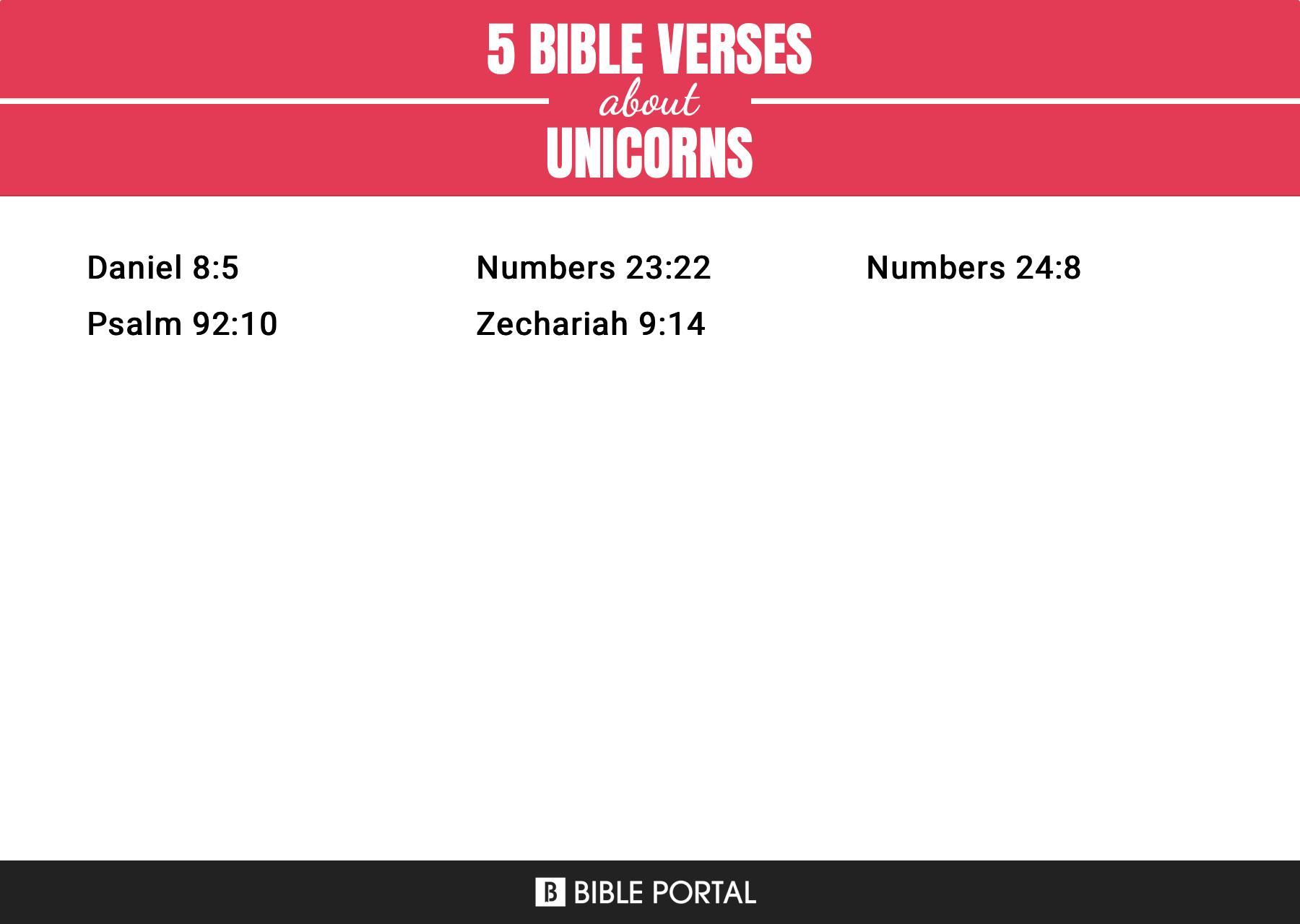
Unicorns, those ethereal beings often associated with purity and grace, have captivated the human imagination for centuries. In the realm of Holy Scripture, these fascinating creatures make an enigmatic appearance, stirring curiosity and debate among theologians, historians, and the lay faithful alike. Though they are predominantly regarded as elusive symbols of beauty and divinity, their representation in biblical texts invites a deeper exploration into the nature of faith, myth, and reality.
The term “unicorn” in the Bible is traditionally thought to refer to a singular horned creature, depicted in various translations, primarily the King James Version (KJV). Yet, the original Hebrew word, “re’em,” remains somewhat ambiguous. Scholars posit that the re’em may describe a wild ox or even a mythical creature, adding layers of complexity to our understanding. The whimsical quality of unicorns transcends mere zoology; they embody archetypal themes of innocence and the untamed spirit.
One of the most compelling references to unicorns appears in the Book of Numbers (23:22) and Job (39:9-10). Here, the unicorn is portrayed with phrases that evoke strength and sovereignty: “God brought them out of Egypt; he hath as it were the strength of an unicorn.” This passage invites readers to consider the unicorn not simply as a creature, but as a metaphor for divine power and liberation. It suggests that the essence of the unicorn flows through the strength of faith and divine protection, making it a potent symbol for believers navigating life’s trials.
The imagery of unicorns is not limited to mere passages; it extends into ancient Near Eastern culture, where such creatures often appeared in mythology and iconography. The association of the unicorn with purity seemingly finds resonance in its biblical depictions. The creature’s singular horn has become synonymous with virtues such as chastity and redemption. In this light, unicorns are emblematic of a world where the sacred and the surreal intermingle harmoniously. Just as unicorns are rarely sighted, so too are moments of unblemished grace in the mundane experiences of daily life. Thus, to pursue the unicorn is to endeavor towards a higher, transcendent reality.
The richness of the unicorn motif extends into Psalm 92:10, which states, “But my horn shalt thou exalt like the horn of an unicorn.” In this context, “horn” often symbolizes strength, authority, and kingship. The unicorn, with its resplendent horn, stands as a metaphor for spiritual fortitude, a call to rise in one’s convictions amid adversity. The crafting of strength from vulnerability becomes an essential theme, as the pursuit of faith often requires one to embrace uncertainties.
Additionally, unicorns traverse the boundaries of reality and imagination. In a world that frequently prioritizes the tangible, the elusive qualities of the unicorn remind us that some truths defy empirical explanation. In this manner, the unicorn operates as a luminary in the narrative arc of biblical literature, encouraging believers to remain open to the miraculous. This notion resounds powerfully in a faith context, inviting the believer to explore the unfathomable depths of divine possibility.
Ultimately, the biblical references to unicorns emerge as a tapestry woven with threads of strength, purity, and the spiritual quest. They symbolize the virtues of unwavering faith and present an invitation to transcend beyond the limitations of earthly vision. Just as unicorns are often sought yet seldom found, so too is the journey of faith—a pursuit defined by mystery, beauty, and the enchanting promise of the divine. The biblical unicorn, therefore, serves as a poignant reminder of the interconnectedness of myth, symbolism, and our ever-evolving understanding of grace.

