

The intersection of faith, culture, and spirituality is often fraught with complexity, particularly when discussing practices such as Voodoo. To many, Voodoo conjures images of mysticism, rituals, and an enigmatic understanding of the divine. However, those who delve deeper into its tenets might be surprised to find profound parallels and distinctions when juxtaposed with biblical teachings. What, then, does the Bible say about Voodoo? This exploration reveals a tapestry of beliefs and an invitation to reassess our understanding of faith traditions.
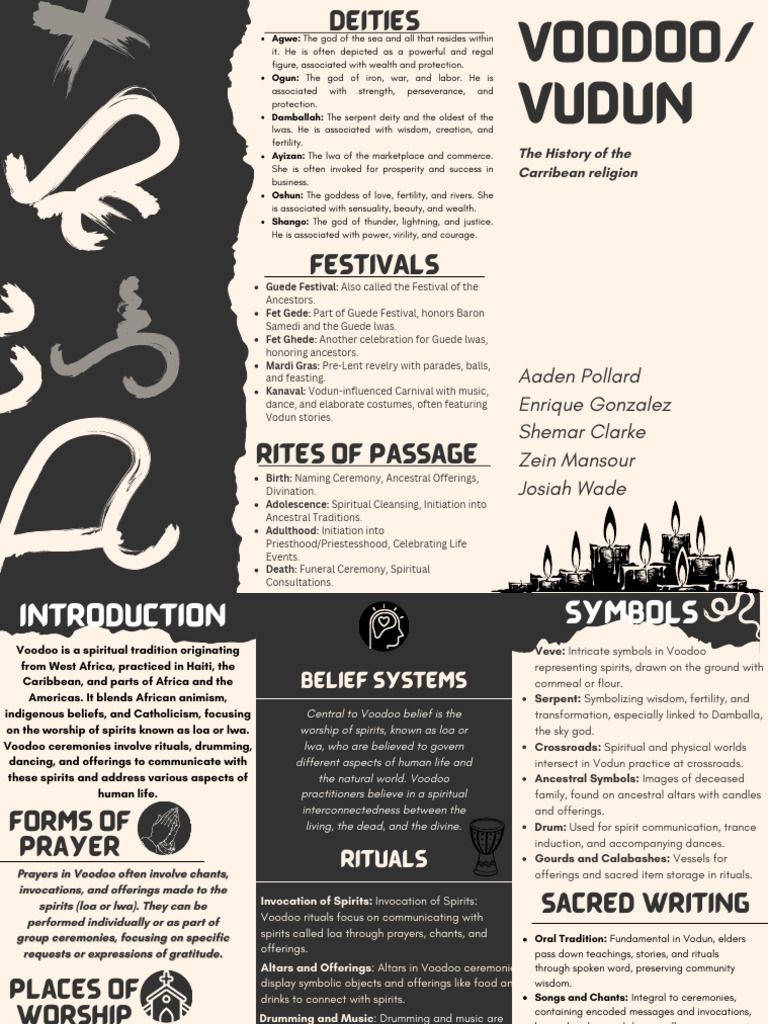
At its core, Voodoo emerges from a rich cultural heritage primarily within Haitian society but resonates across various Caribbean islands and among African diaspora communities. This syncretic faith combines African spiritual practices with elements of Roman Catholicism, creating a mosaic of worship that is both unique and layered. Characters such as the Loa—spirits that mediate between the divine and the earthly—play a significant role in these practices, serving as custodians of morality and providers of guidance for adherents.
From a biblical standpoint, the scriptures often warn against practices that deviate from the worship of the one true God. Deuteronomy 18:10-12 explicitly cautions against divination, witchcraft, and necromancy, deeming such practices as abominable in the eyes of the Lord. This raises a pivotal question: Is Voodoo, with its intricate spiritual framework, fundamentally incompatible with biblical teachings? The answer is complex. While the Bible indeed admonishes involvement in forms of sorcery and divination, it simultaneously calls for empathy and understanding towards those who express their spirituality in unforeseen ways.
Another striking aspect to consider is the community and relational dynamics within Voodoo rituals, which parallel the communal essence described in the New Testament. Acts 2:42-47 illustrates a close-knit community bound by shared beliefs and acts of service. In Voodoo, practitioners often gather to commune, worship, and celebrate their heritage, creating a sense of belonging that echoes biblical principles of community and fellowship. Thus, while one may argue against the theological authenticity of Voodoo through a strict biblical lens, one cannot dismiss the underlying humanistic values that resonate on both sides.
Moreover, examining the narrative of Jesus and his approach to marginalized individuals—inclusively welcoming those rejected by society—provides an opportunity to reassess perspectives toward Voodoo practitioners. In the Gospels, Jesus frequently engaged with the “other,” those deemed unholy or sinful according to Jewish law. His transformative message hinged on love, grace, and understanding. Consequently, focusing on love and respect can lead to a richer dialogue about religious plurality and the many paths individuals take towards the divine, including Voodoo.
In a world increasingly perceived as polarized along religious lines, prophetic voices urge for a paradigm shift. Instead of relegating different spiritual practices to the margins, embracing curiosity about contrasts can lead to newfound wisdom. The essence of the biblical faith can foster understanding rather than alienation, urging adherents to extend kindness even amidst doctrinal differences.
In conclusion, while the Bible admonishes certain practices associated with Voodoo, it simultaneously implores followers to cultivate compassion and community. By embracing curiosity and shifting our perspectives, we can foster dialogue that honors both the richness of biblical teachings and the vibrancy of diverse faith expressions. Thus, both Voodoo and biblical faith offer profound reflections on the human condition, beckoning us to explore, understand, and evolve collectively.

