

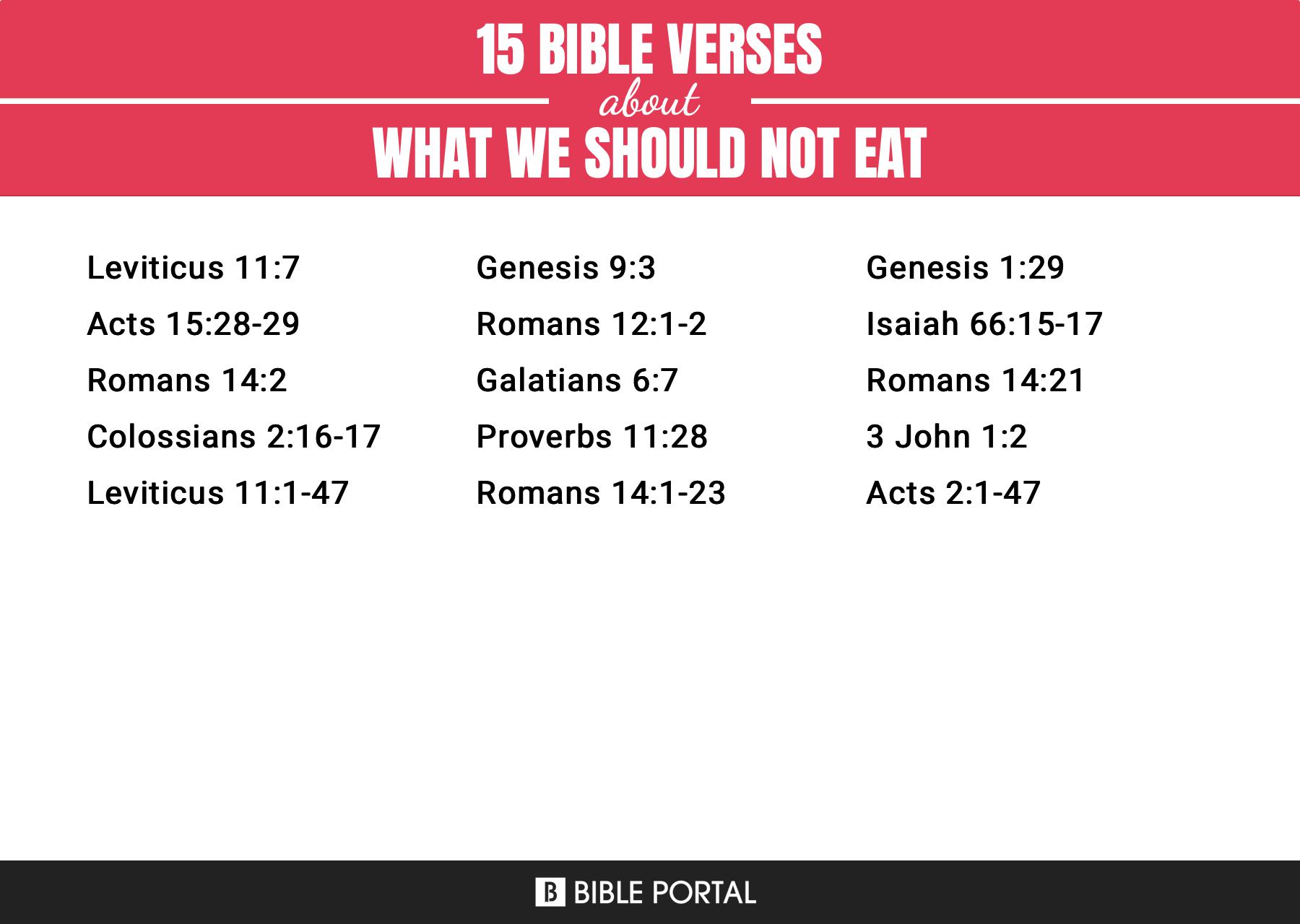
Exploring the teachings of the Bible regarding diets and food consumption unveils a profound exploration of morality, spirituality, and the intricate relationship between humanity and the natural world. Throughout the Scriptures, various verses and passages elucidate what is deemed permissible and forbidden, serving as a moral compass for adherents across diverse cultures.
At the heart of this dietary discourse lies the early account of creation in the book of Genesis. In Genesis 1:29, God presents humans with a verdant array of fruits and plants, declaring them suitable for nourishment. This divine edict suggests a primordial ideal wherein the consumption of plant-based foods aligns human existence with the rhythms and cycles of the Earth. This initial guidance not only underscores a responsibility toward stewardship of the environment but also accentuates the importance of maintaining balance within the ecosystem.
As we navigate through the Biblical narrative, we encounter dietary laws inscribed in the Levitical codes. The book of Leviticus delineates a series of injunctions that designate certain animals as ‘clean’ or ‘unclean.’ For instance, animals that both chew the cud and have split hooves, such as cows and sheep, are deemed acceptable for consumption. Conversely, creatures like pigs and shellfish are categorized as unclean, thereby serving as cautionary symbols against indulgence. This classification transcends mere culinary preference; it speaks to a broader theme of purity and community identity.
Additionally, the contextual significance of these dietary restrictions can be seen as a vehicle for cultivating discipline and mindfulness. The emphasis on what could not be consumed encourages followers to reflect on their choices, fostering an innate appreciation for the sustenance provided by the Earth. Such an approach fosters a deeper connection, prompting consumers to regard nourishment as a sacred gift rather than a trivial obligation.
The New Testament introduces a transformative perspective on food regulations. With the arrival of Jesus Christ, a pivotal paradigm shift occurs. Jesus articulates the notion that it is not what enters the mouth that defiles a person, but rather what emerges from the heart (Matthew 15:11). This assertion emphasizes the moral implications of one’s actions over adherence to ritualistic codes. It posits that ethical living and intention hold greater significance than mere ritual compliance, thereby inviting a wider interpretation of dietary choice.
As the narrative progresses to the apostolic age, we witness further developments in dietary philosophy. In Acts 10, Peter’s vision challenges the long-standing prohibitions against certain foods. The message is clear—God has cleansed all things, thereby dismantling barriers that once segregated communities and reinforced divisions among believers. This revelation advocates inclusivity and underscores an evolving understanding of spiritual nourishment that transcends traditional norms.
The contemplative themes interwoven throughout these biblical texts beckon a modern audience to reflect upon the implications of their dietary habits in the context of sustainability and ethical responsibility. Engaging in mindful consumption invites a reciprocal relationship with the environment, where choices resonate with personal values and global ramifications. It compels individuals to examine the origins of their food, the treatment of animals, and the environmental impact of agricultural practices.
Ultimately, the admonitions scattered across the books of the Bible reveal a kaleidoscopic tapestry that speaks to the heart of what it truly means to eat responsibly. They implore readers to honor the intricate connections between faith, practice, and the Earth, fostering a profound awareness that perhaps, in choosing our sustenance, we are also choosing to honor the sacredness of life itself.

