

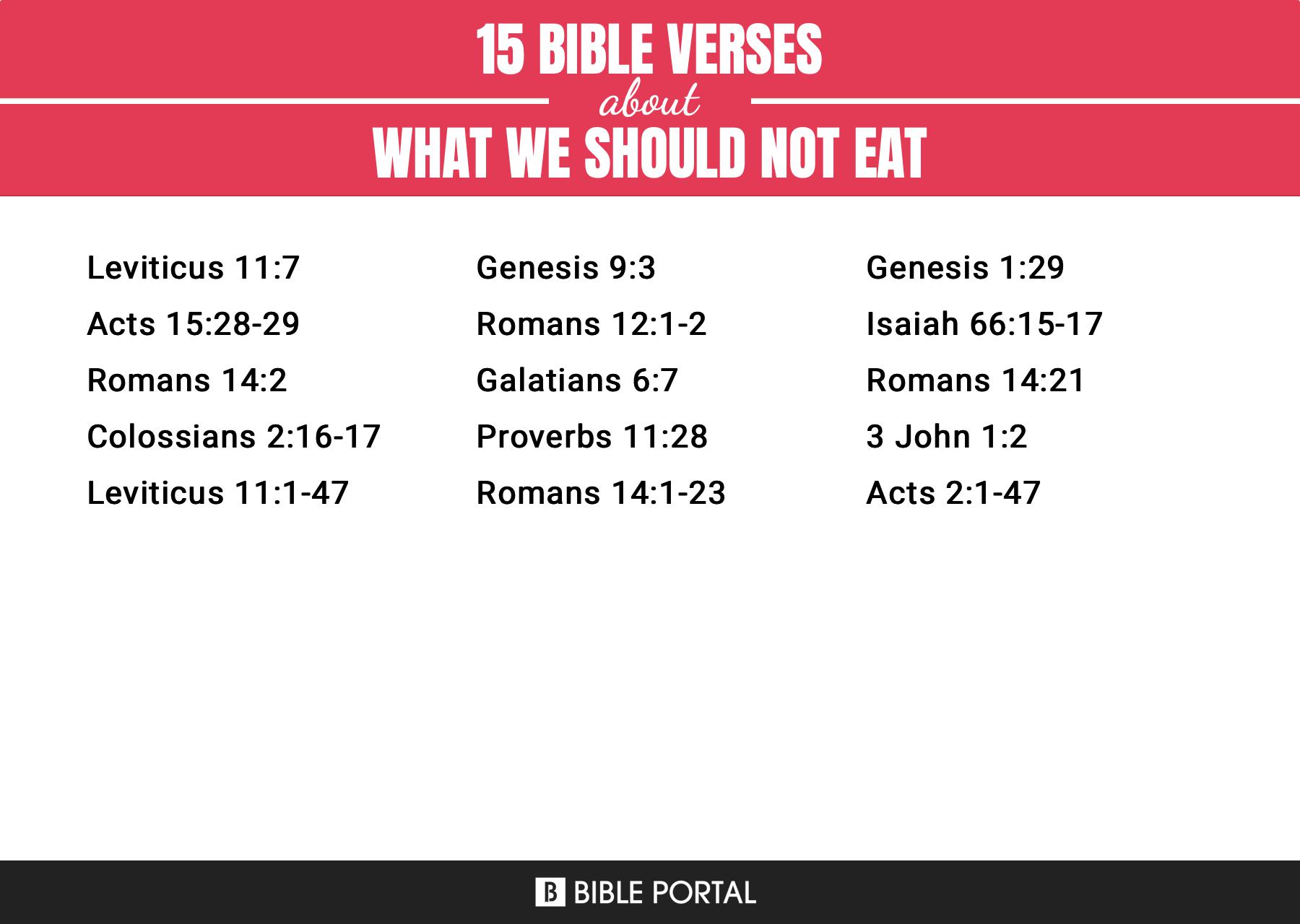
The topic of what we should eat according to the Bible invites profound reflection and contemplation. This ancient text not only serves spiritual nourishment but also provides pragmatic dietary guidance. Exploring this subject enhances one’s understanding of health, morality, and spirituality, ultimately promising a transformative shift in perspective regarding our daily sustenance.
The Bible begins its discourse on diet in the book of Genesis, emphasizing the divine intention behind our consumption choices. Initially, humanity is provided with a splendid array of vegetation: “I give you every seed-bearing plant on the face of the whole earth and every tree that has fruit with seed in it” (Genesis 1:29). This verse reflects a verdant reality where plant-based sustenance forms the cornerstone of the human diet. This herbal cuisine, teeming with vitamins and minerals, promotes vitality, underpinning a compelling case for a more plant-centric approach to eating.
Transitioning from Genesis to Leviticus, we encounter the Old Testament’s dietary laws, particularly those outlined in Leviticus 11. Here, the Israelites receive specific injunctions on what qualifies as clean and unclean food. This demarcation serves not only to maintain physical purity but also carries spiritual significance. For instance, the prohibition of certain animals, such as pigs and shellfish, can evoke deeper questions about obedience and adherence to divine commands. Curiously, while these regulations may seem antiquated, many modern dietary practices echo these ancient guidelines. The wisdom inherent in these laws can prompt us to consider the ethical ramifications of our consumption choices.
Additionally, the New Testament introduces a radical re-evaluation of these dietary laws. In Acts 10, the apostle Peter receives a vision that challenges long-held distinctions between clean and unclean. The voice from heaven declares, “Do not call anything impure that God has made clean.” This pivotal moment signifies a broadening of dietary boundaries, extending grace and liberation concerning food choices. It’s a powerful reminder that dietary restrictions can evolve, grounding us in the principle of discernment rather than legalism. This element of flexibility invites curiosity about the nature of food itself, urging us to investigate the sources and ethical implications of what we consume.
The theme of gratitude also permeates the biblical narrative surrounding food. In 1 Timothy 4:4-5, it’s asserted that “everything created by God is good, and nothing is to be rejected if it is received with thanksgiving.” This verse accentuates the importance of recognizing the divine source of our nourishment. It may evoke a mindfulness practice regarding meals – transcending the mere act of eating to one of honoring the origin of our sustenance. When approached with gratitude, meals transform from mundane rituals into sacred experiences, each bite imbued with purpose and appreciation.
Conversely, the Bible also warns against gluttony and the idolization of food. Proverbs 23:20-21 counsels against associating with those who drink too much wine or gorge themselves on meat. Such warnings serve as poignant reminders to maintain balance and moderation in our dietary habits. This call for temperance surpasses physical consumption, encapsulating a holistic approach to living — where our choices reflect integrity and mindfulness, extending beyond ourselves to encompass community and environment.
In conclusion, the biblical perspective on what we should eat is a rich tapestry woven from historical, ethical, and spiritual threads. It invites believers to reevaluate not only what they consume but how they approach food itself. Through an appreciation of God’s providence, an openness to dietary evolution, and a commitment to moderation, the journey towards understanding what we should eat culminates in a profound recognition: our food choices have the power to nurture our bodies, nourish our spirits, and build a deeper connection with the divine.

