

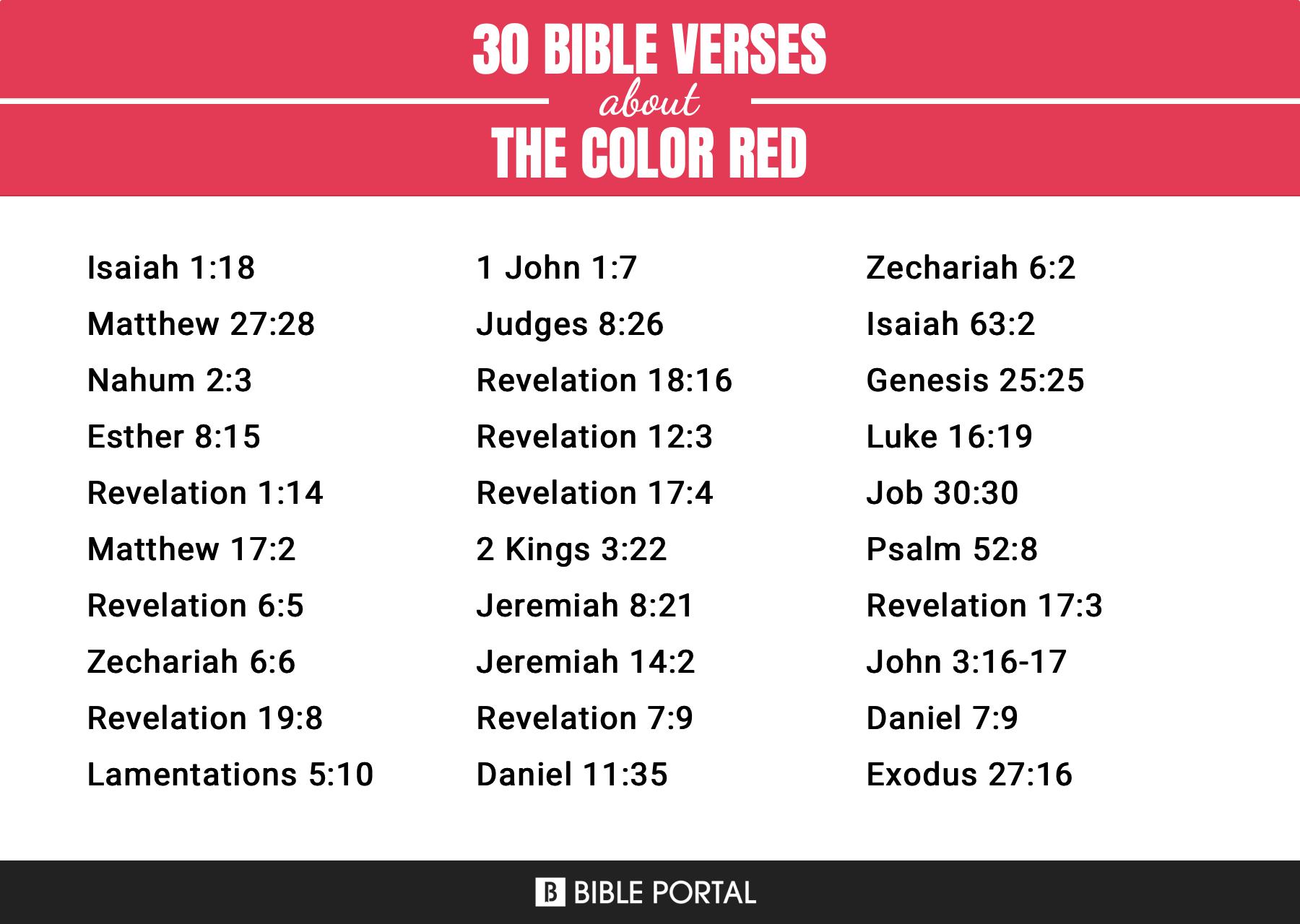
The color red has captivated the human imagination for millennia, evoking emotions that range from passion to danger. In biblical literature, red carries profound meanings that dwell upon the themes of sacrifice, love, sin, and divine wrath. This exploration will delve into the multifaceted symbolism of red within the context of scripture, illustrating its diverse representations throughout both the Old and New Testaments.
To commence this discourse, one must recognize the association of red with the notion of sacrifice. The sacrificial system, a cornerstone of ancient Israelite worship, employed red as a prominent symbol. The blood of animals, a critical component of these offerings, was often depicted in vivid crimson. The Book of Leviticus elucidates this notion, asserting that life is in the blood (Leviticus 17:11). Thus, red transmutes into a powerful emblem of atonement, illustrating the gravity of sin and the profound cost of reconciling with the divine. It serves as a stark reminder of the harsh realities entwined with sin and the necessity of sacrifice for redemption.
Moreover, red symbolizes love and devotion, particularly in the context of familial and divine relationships. In the Song of Songs, a poetic celebration of love, the beloved is described as having lips that are as red as a scarlet thread (Song of Songs 4:3). This color conveys not only physical beauty but also the ardent passion inherent in love. In an analogous manner, Christ’s love, exemplified through His eventual sacrifice on the cross, reflects the most profound act of love known to humanity. The crimson hue of His blood represents not merely His suffering but the unmerited grace extended to all who believe. Thus, red emerges as a dual symbol of both the passion of love and the price of love paid in blood.
Red is also inextricably linked to the theme of sin and judgment. In the prophetic literature, particularly in Isaiah, sin is often depicted with vivid imagery that conjures the color red. The prophet writes, “Though your sins are like scarlet, they shall be as white as snow” (Isaiah 1:18). Here, red represents the guilt and wickedness that separates humanity from God, a stunning juxtaposition with the purifying whiteness of divine forgiveness. The scarlet hue mirrors the depth and severity of human transgression while simultaneously offering hope for redemption. This dichotomy, emblematic of sin’s burden contrasted with the promise of grace, imbues the color red with a complexity that reflects the human experience.
Another critical aspect of red’s symbolism is its connection to conflict and warfare. The biblical narrative often employs red to symbolize the bloodshed of battles and the horrors of warfare. In the Book of Revelation, descriptions of the end times frequently invoke red imagery, indicating impending judgment and dire consequences for unrepentant humanity. The red horse of the apocalypse, ridden by a figure representing war, serves as a stark reminder of the calamitous nature of human strife (Revelation 6:4). In this light, red speaks to the darker aspects of human existence—violence, division, and the constant struggle for supremacy.
Additionally, the association of the color red with the Holy Spirit is another significant dimension of its biblical symbolism. In the New Testament, the day of Pentecost is marked by the miraculous descent of the Holy Spirit, portrayed as tongues of fire (Acts 2:3). These flames, radiant and vivid, evoke the color red and signify the transformative power of the Spirit. This portrayal emphasizes that red is not solely a color of judgment and sacrifice but also one of empowerment and inspiration. It embodies the vibrant life and energy brought through divine intervention in the hearts of believers.
Furthermore, the use of red in various biblical festivals and rituals signifies its importance in communal worship and celebration. For instance, during Passover, the blood of the lamb, brushed on the doorposts, is a potent representation of safety and deliverance from judgment (Exodus 12:13). The observance of this event, laden with historical significance, intertwines the color red with themes of liberation and hope. Scholars suggest that this ritualistic use of red highlights how deeply embedded the color is in the fabric of Israelite identity and faith.
In conclusion, the color red encapsulates a spectrum of meanings within the biblical text. From sacrificial love to the burden of sin, and from divine judgment to empowerment by the Holy Spirit, red emerges as a powerful and dynamic symbol. Its varying representations challenge readers to engage with the depth of biblical narratives. Whether it evokes feelings of sorrow or elation, red reminds us of the complex interplay between human experience and divine revelation. The enduring significance of this color in scripture challenges us to contemplate its implications within our own lives, urging introspection regarding love, sacrifice, and the moral paths we tread.

