

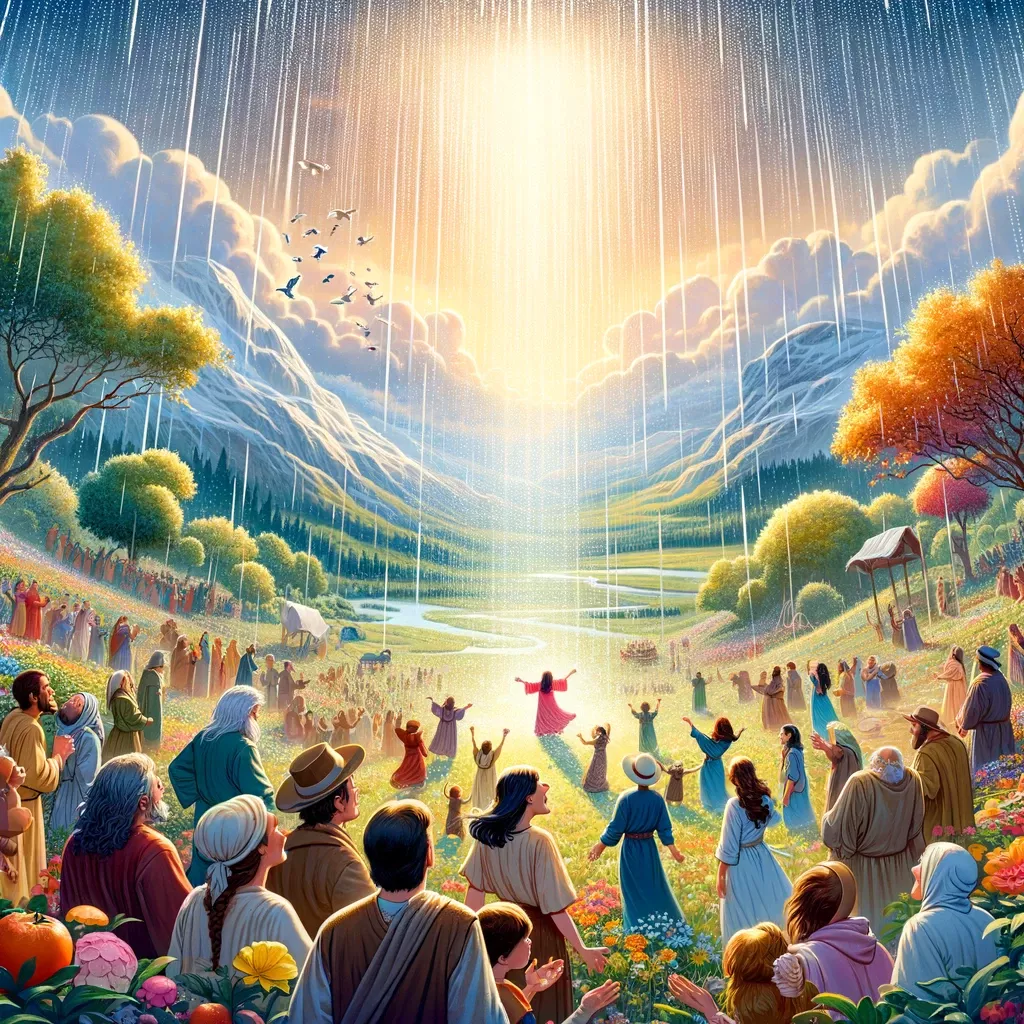
Rain, a gentle yet formidable force of nature, has woven itself into the fabric of biblical literature, serving numerous symbolic purposes. This aqueous phenomenon transcends mere meteorological occurrence; it acts as a metaphor for divine intervention, renewal, and judgment throughout sacred texts. To comprehend the significance of rain in biblical scripture requires a dissection of its multifaceted roles in both literal and figurative contexts.
In its most fundamental interpretation, rain signifies nourishment. It is no coincidence that biblical agricultural societies relied heavily on precipitation for their survival. The Old Testament often associates rain with God’s providence, a symbol of His grace and blessings. For instance, in Deuteronomy 11:14, the promise of rain is directly linked to the faithfulness of the people toward God’s covenant. Herein lies a profound lesson: the heavens’ tears can be seen as the sustenance that feeds not just crops, but the very essence of life itself.
Yet, rain is not merely life-giving; it is also a harbinger of transformation. Apostles often used rain as a metaphor for spiritual rejuvenation. The image of a barren desert transformed into a lush oasis serves as a powerful allegory for human rebirth. This motif resonates deeply within the framework of repentance; just as rain washes away dust and debris from the earth, so too does it cleanse the heart and soul. In this light, rain becomes a symbol of redemption—an invitation to discard the burdens of transgression.
Moreover, rain embodies divine judgment. The cataclysmic downpour during the Great Flood, as recounted in the story of Noah, illustrates how rain can serve as an instrument of divine wrath. This juxtaposition of benevolence and retribution underscores the duality of rain in the biblical narrative—one cannot fully grasp its beauty without acknowledging its potential for devastation. The tempest becomes an embodiment of God’s displeasure, echoing the urgent need for moral rectitude.
On a more nuanced level, the imagery of rain invites reflection on human relationships. Just as rain fosters growth in the fields, so too do our interactions nourish personal connections. In the Book of James, for instance, rain is metaphorically used to illustrate the importance of patience and perseverance: “Be patient, therefore, brothers, until the coming of the Lord. See how the farmer waits for the precious fruit of the earth, being patient about it, until it receives the early and the late rains.” Here, rain becomes a metaphor for trust and expectation, reminding us that some journeys necessitate endurance.
Furthermore, the concept of latter rain is pivotal in discussing spiritual awakening. This biblical term often refers to an outpouring of the Holy Spirit, a deluge of divine influence that revitalizes faith and invigorates communities. In prophetic literature, the latter rain signifies a time of unprecedented spiritual harvest, urging believers to remain vigilant and prepared for this moment of divine favor.
In summary, the significance of rain in the Bible extends far beyond its physical properties. It is a profound symbol imbued with diverse meanings—nourishment, transformation, judgment, growth, and spiritual awakening. Each droplet tells a story of divine interaction and human experience, inviting us to explore our own spiritual landscapes. Just as the skies pour forth their liquid blessings, we too are called to ponder what it means to be renewed, both by the rain and by our interactions with the sacred narratives that shape our understanding of the world.

