

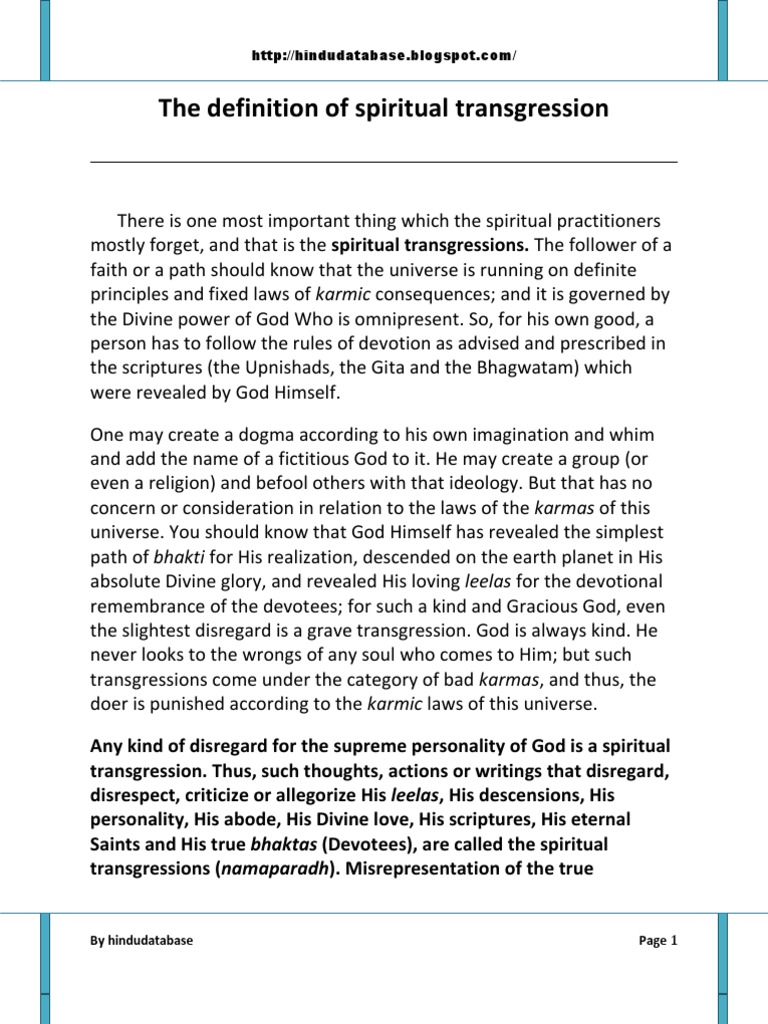
Transgression in the Biblical context is a multifaceted concept steeped in spiritual significance, imbued with nuances that reflect the complexities of human morality and divine expectation. At its core, transgression refers to the act of violating a sacred command or moral law—essentially stepping beyond the boundaries set by the Almighty. This idea extends far beyond mere disobedience; it embodies a deliberate turning away from the covenant relationship between humans and God.
To fully grasp the implications of transgression, one must delve into the original Hebrew and Greek terms often translated as “sin.” In Hebrew, the word “pesha” denotes rebellion or revolt against authority. This paints a vivid picture of defiance against God’s statutes. In a similar vein, the Greek term “parabasis” refers to the act of crossing over or transgressing a defined moral boundary. This intersection of languages reveals a common thread: transgression is intrinsically linked to an overt act of moving away from divinely ordained paths.
From the earliest texts, the Bible conveys that transgression incurs profound consequences, primarily spiritual disconnection and estrangement from God. The Genesis narrative showcases the first transgression: Adam and Eve’s eating of the forbidden fruit. This singular act of disobedience casts them out of paradise, revealing that transgression disrupts the harmony intended by divine creation. It serves as a cautionary tale that warns against the seductive allure of temptation and the dire repercussions that follow such choices.
However, the Bible does not merely depict transgression as a gateway to despair; it also portrays it as an opportunity for redemption. The theme of repentance runs throughout Scripture, suggesting that while transgressions may sever bonds, they can also catalyze transformation. The Psalms articulate this beautifully, where penitence is often a precursor to divine forgiveness. David’s heartfelt confessions are prime examples, showcasing the profound ability of remorse to restore one’s relationship with God.
Moreover, the New Testament expands the understanding of transgression through the lens of grace. Christ’s sacrifice is often framed as the atonement for humanity’s transgressions. In this context, transgression becomes not only a point of contention but also a narrative pivot, allowing believers to experience redemption. The Apostle Paul elucidates that through faith, one can transcend the burden of transgression and embrace a new identity—this shift encourages believers to view their missteps as not merely failures but as part of a larger spiritual journey.
The discourse surrounding transgression often raises questions about ethical living and societal morality. With various interpretations of what constitutes a transgression, definitions can shift based on cultural and temporal contexts. For instance, actions once deemed sinful may be reevaluated as societal norms evolve. This ambiguity invites reflection and discourse, challenging individuals to examine their values and the principles guiding their moral compass.
In contemporary society, the notion of transgression also invites a broader philosophical inquiry: can one’s transgressions lead to personal growth? Engaging with this question can foster a transformative perspective on what it means to stray from God’s path. Such contemplation might reveal that human imperfection is less about failing and more about learning and evolving. This shift in perspective encourages the embracing of grace, both towards oneself and others.
In summation, transgression in the Bible transcends the simplistic notion of wrongdoing. It encapsulates rebellion, consequences, potential for redemption, and a dialogue with modern ethical dilemmas. As individuals grapple with their own transgressions, they are invited to participate in a narrative rich with opportunities for reconciliation, growth, and ultimately, a deeper understanding of their place in the divine tapestry. Through this exploration, the journey from transgression to transformation becomes a profound testament of faith and resilience.

