

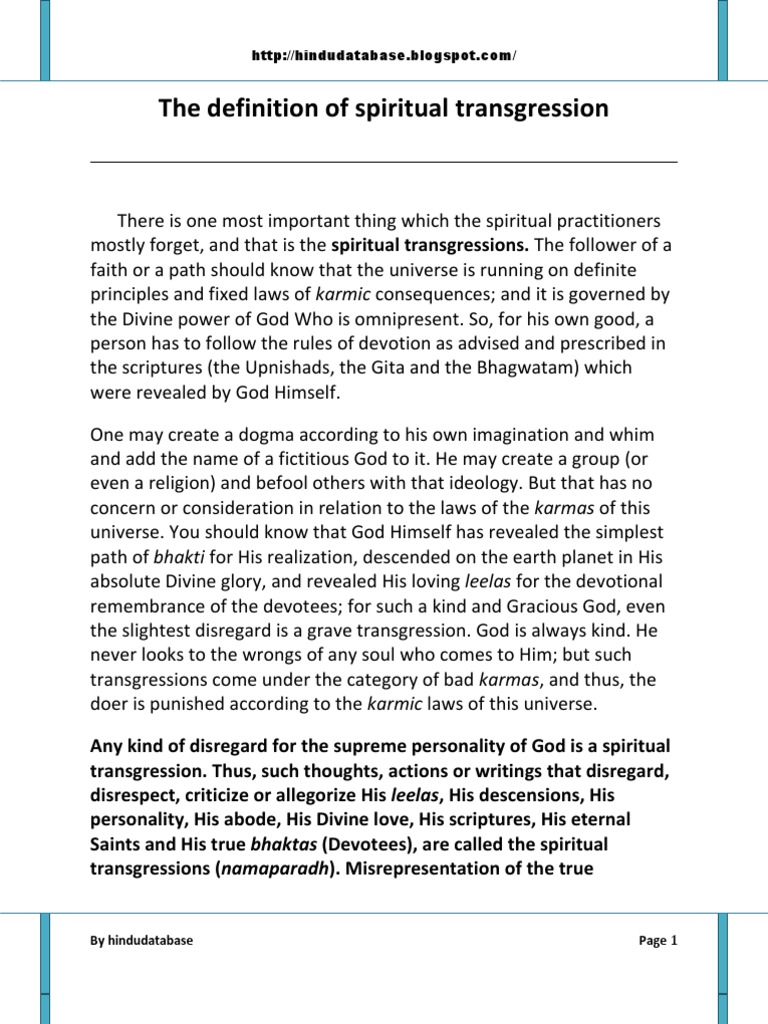
Transgression, a term laden with complex implications in scriptural contexts, finds its origins in the Hebrew word “pesha,” often encapsulating notions of rebellion or wrongdoing against divine edicts. In the Bible, the concept of transgression encompasses various themes, illustrating the multifaceted nature of human sinfulness and its repercussions within the divine framework. Readers of theological literature can expect a profound exploration of these themes, ranging from personal reflections to communal implications.
The initial encounter with transgression in the biblical narrative brings forth the fundamental dichotomy between obedience and disobedience. The stories of Adam and Eve, set in the idyllic paradise of Eden, powerfully illustrate this notion. Their transgression through the consumption of the forbidden fruit was not merely a breach of dietary restriction but a profound act of defiance against God’s explicit command. This act instigated the theological premise of original sin—the belief that this initial disobedience has ramifications that echo through generations, affecting humanity’s relationship with the divine.
Moreover, the concept of transgression permeates the Mosaic Law, where it is explicitly defined and addressed through numerous commandments. In Exodus, the Israelites receive the Ten Commandments, a foundational set of laws delineating moral and social obligations. Each command functions as a boundary; crossing such thresholds constitutes transgression, necessitating not only acknowledgment but also atonement. The gravity of transgression is underscored in Levitical offerings, which detail sacrificial practices aimed at reconciliation with God following a transgressive act. Thus, readers can delve into discussions about the significance of repentance and restoration, highlighting the relationship’s salvific nature.
In a broader biblical context, transgression is often portrayed as a communal affliction, influencing entire nations. The prophetic literature brims with admonitions against collective transgressions—idolatry, social injustice, and ethical corruption. Micah 6:8 famously encapsulates God’s expectations of His people, emphasizing justice, mercy, and humility. When a society strays from these tenets, the consequences manifest not only in individual lives but across the socio-political landscape. Readers will find rich material examining historical instances of national transgression, providing insights into the interplay between divine judgment and human action.
Furthermore, the New Testament shifts the perspective on transgression, particularly through the lens of grace and redemption embodied in the figure of Jesus Christ. In the Sermon on the Mount, Jesus enriches the understanding of transgression by interiorizing the laws. He challenges listeners to consider not merely actions but intentions. Thus, harboring hatred or lust equates to the act itself. This radical shift invites readers to contemplate personal morality and the heart’s condition, rather than adhering strictly to an external code of conduct.
Additionally, the concept of transgression evolves through the Apostle Paul’s epistles, where he articulates a theology of grace that offers hope amid human frailty. In Romans, Paul illustrates that all have sinned and fall short of the glory of God, yet he also exhorts believers to embrace their identity in Christ, who obliterates the power of transgression through the gift of grace. Herein lies a central theme: the transformative power of divine love in overcoming human failing. Readers can expect an exploration of theological discussions surrounding grace and justification, presenting the crux of Christian faith as a dynamic process of confronting one’s transgressions while leaning on divine mercy.
Moreover, the eschatological implications of transgression cannot be overlooked. The Book of Revelation encapsulates a vision where ultimate justice will be meted out, thus affirming the necessity of accountability for transgressions committed. The imagery of the final judgment serves to remind believers of the importance of living righteously, highlighting that while grace abounds, so too does the call to holiness and moral integrity. Readers will engage with the tension between grace and judgment, pondering profound questions about how to navigate their faith in an often morally ambiguous world.
In conclusion, the concept of transgression in the Bible serves as a powerful reminder of the perennial struggle between divine expectation and human imperfection. It invites readers to reflect deeply on personal and collective morality, the nature of sin, and the profound grace that offers hope and restoration. This exploration is not merely theological; it resonates with contemporary issues of ethics, justice, and societal responsibility. Each layer of the discussion invites a thoughtful engagement, ensuring that readers carry forward a nuanced understanding of transgression and its implications in both historical and modern contexts. The call to heed the lessons of scripture is ever-present, urging adherence to a path of righteousness while embracing the redemptive power available through faith.

