

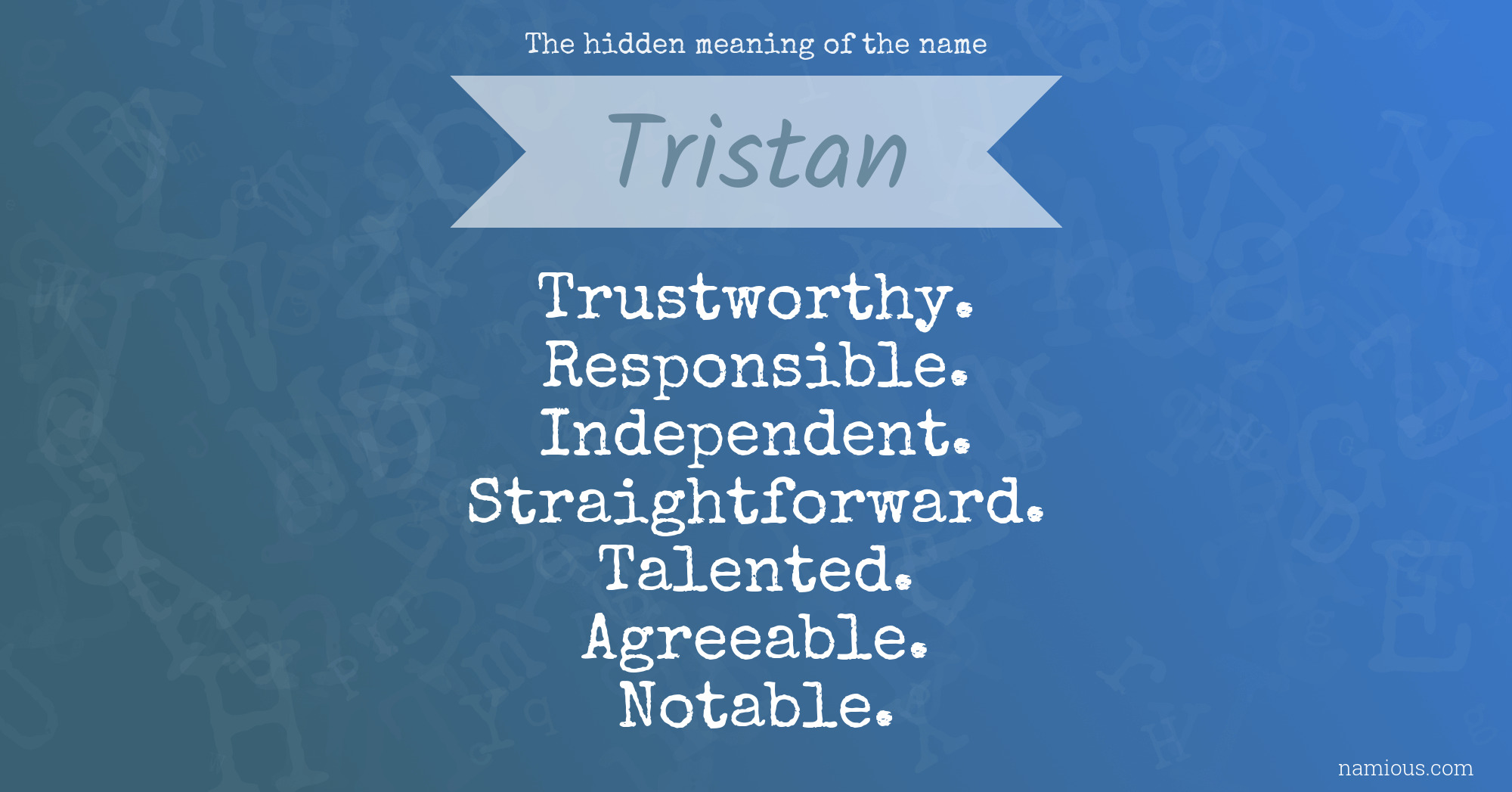
In the tapestry of biblical names, the name Tristan is particularly intriguing, as it evokes both historical significance and a wealth of interpretative possibilities. While its origins may not be rooted directly in biblical scripture, it carries connotations that resonate deeply with themes found within the sacred texts. Understanding what Tristan means within this context offers insights into the complexities of language, culture, and the human experience.
The name Tristan is believed to be derived from the Latin word “tristis,” meaning “sad” or “sorrowful.” This etymological background leads to a poignant exploration of themes surrounding grief, loss, and the multifaceted nature of love as depicted in various biblical passages. Such associations prompt reflection on the significance of joy juxtaposed with sorrow, a theme vividly illustrated throughout the Bible. For example, the tale of Job exemplifies profound suffering intertwined with unwavering faith, manifesting the essence of how human experience can encapsulate both despair and resilience.
Moreover, the narrative of Tristan in Arthurian legend brings an additional layer of depth to the name. Although not directly biblical, these stories echo the themes of chivalry, passion, and tragic love, reminiscent of biblical accounts such as that of David and Bathsheba. The parallel encourages consideration of love’s duality—often a source of great joy, yet also a precursor to heartache and turmoil.
When we delve into the Bible, we encounter various stories that shed light on similar phenomena. The tale of Joseph, sold into slavery by his brothers, unveils a journey filled with betrayal and hardship, yet ultimately culminates in reconciliation and forgiveness. This narrative reframes the notion of sorrow, suggesting that redemption and transformation often accompany times of tribulation, thus casting a new light on the meaning of sadness associated with the name Tristan.
In the context of naming conventions, Tristan serves as an interesting case study. Names within biblical texts often carry prophetic and symbolic weight, influencing the identity and destiny of the individuals. While Tristan may not be a name used in scripture, its implications related to sorrow resonate deeply with the underlying beliefs about names initiating purpose. In a broader theological dialogue, one could argue that every name encapsulates an essence that reflects divine design, intertwining with God’s narrative of humanity.
Additionally, interpretation of the name Tristan invites discussions on the human condition. The duality of joy and sorrow is prominently featured throughout the Bible; for instance, in Ecclesiastes, it is stated that “there is a time for everything, and a season for every activity under the heavens” (Ecclesiastes 3:1). This philosophical observation connects directly to the essence of Tristan, reinforcing the idea that sorrow—much like joy—is a necessary component of the human experience.
Furthermore, in examining interpersonal relationships as depicted in biblical accounts, the complexity of loving encounters mirrors the romantic and tragic elements found in the tales of Tristan. Love’s trials often emerge from various narratives such as the relationship between Ruth and Naomi or the love between Solomon and his many brides. Each story presents love as a transformative force, albeit one that can lead to profound suffering, ultimately highlighting that the path of love, as in life, is seldom straightforward.
In conclusion, the name Tristan, with its roots in sadness, opens avenues for contemplation regarding biblical themes of grief, love, and redemption. While not explicitly biblical, its broader cultural implications resonate with the intricate interplay of emotions found in Scripture. As seekers explore the depths of meaning behind names, they may find that Tristan encapsulates a powerful narrative, inviting reflection on the very essence of human existence in relation to divine purpose and love’s enduring complexities.

