

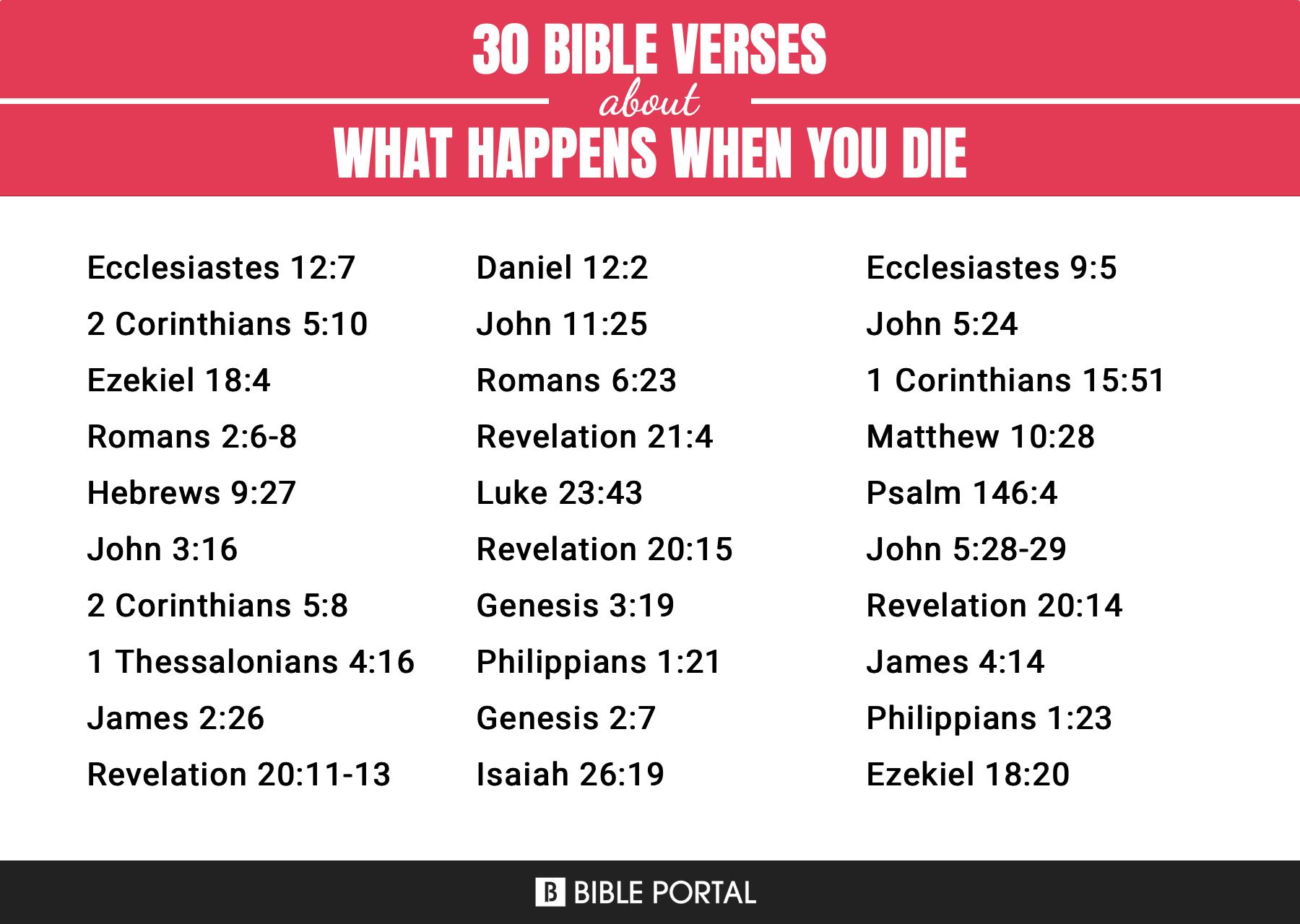
The topic of death elicits a profound curiosity within the human psyche. It transcends mere curiosity, delving into existential contemplation and spiritual introspection. Particularly within the Judeo-Christian tradition, the Bible provides a compendium of insights regarding what transpires after death, shaping our understanding and perceptions of mortality.
According to biblical scripture, death is not the terminal event we often perceive it to be. Instead, it serves as a transition—a passage from one state of existence to another. The ultimate question remains, what lies beyond the veil of mortality? This inquiry has stirred the hearts and minds of millions, impelling them to seek answers in ancient texts.
In the Old Testament, death is often depicted as a kind of sleep. Ecclesiastes 9:5 holds that “the dead know nothing,” suggesting a state of unconsciousness. This notion may offer a certain semblance of solace; death is not portrayed as the consummation of existence but rather a temporary repose. In this context, the idea of resurrection becomes pivotal, illuminating the hope for life beyond death.
Transitioning to the New Testament, the essence of what happens after we die acquires greater specificity. Key passages elucidate a stark distinction between the eternal fates awaiting the righteous and the unrighteous. Particularly notable is the parable of the rich man and Lazarus (Luke 16:19-31), which illustrates the immediate experience of judgment following death. The narrative vividly contrasts the agonizing fate of the rich man with the comfort afforded to Lazarus, providing insight into the moral dimensions of the afterlife.
The writings of the Apostle Paul further expound upon this theme. In 2 Corinthians 5:1-10, he articulates the belief in the immortality of the soul and the anticipation of being “absent from the body and present with the Lord.” This delineation captures a critical component of Christian eschatology; there exists a conscious existence beyond death, characterized by an intimate relationship with the divine.
A cornerstone of Christian doctrine is the resurrection—fundamentally tied to the life, death, and resurrection of Jesus Christ. In Revelation 20:12-15, a sobering scene is depicted: the dead standing before the Great White Throne, judged according to their deeds. This imagery serves as a cautionary reminder of moral responsibility and the eternal significance of one’s actions during earthly life. The idea that one’s choices resonate in the annals of eternity adds a weighty dimension to ethical living.
Moreover, the concept of heaven as the ultimate paradise emerges as a beacon of hope. Revelations 21:4 envisions a realm devoid of sorrow, pain, or death—a place of sublime beauty and unfathomable joy. Conversely, the fate of eternal separation from God, often referred to as hell, raises profound theological questions about justice and mercy. The duality of heaven and hell serves as a moral compass, urging adherents to cultivate a life reflective of their beliefs and values.
In summation, the Bible offers a multifaceted exploration of what occurs after death, blending theology with moral imperative. The interplay between hope, judgment, and ethical conduct reflects an overarching narrative: life on earth is but a precursor to a far more significant journey. Contemplating these biblical principles encourages individuals to embark on an introspective journey, fostering a deeper understanding of their own existence and the legacy they shall leave behind. As we grapple with our mortality, these timeless teachings continue to resonate, urging us to confront our deepest fears and aspirations regarding what lies beyond death’s enigmatic threshold.

