

Throughout history, measurements have served as the bedrock of human civilization, providing essential standards for architecture, agriculture, and trade. Among these units, one peculiar and perhaps less familiar measurement makes a recurring appearance in ancient texts, particularly within the Bible. What is a cubit, and why should we scrutinize its implications not just in biblical contexts but for contemporary society as well? Could understanding the cubit elicit a fresh perspective on how we perceive space and morality today?
The term “cubit” primarily derives from the Latin word “cubitum,” meaning “elbow.” This etymology hints at the cubit’s anatomical roots; it is traditionally thought to represent the distance from the elbow to the tip of the longest finger—roughly 18 inches, or approximately 45.72 centimeters. However, the actual length could vary based on different cultures and historical epochs, leading to a tantalizing complexity. In ancient Egyptian, Hebrew, and Babylonian texts, cubits varied in length, with sources indicating that the royal cubit could be as lengthy as 20.6 inches (about 52.3 centimeters). Such variances pose an intellectual challenge: how do we reconcile these differences when interpreting sacred texts?
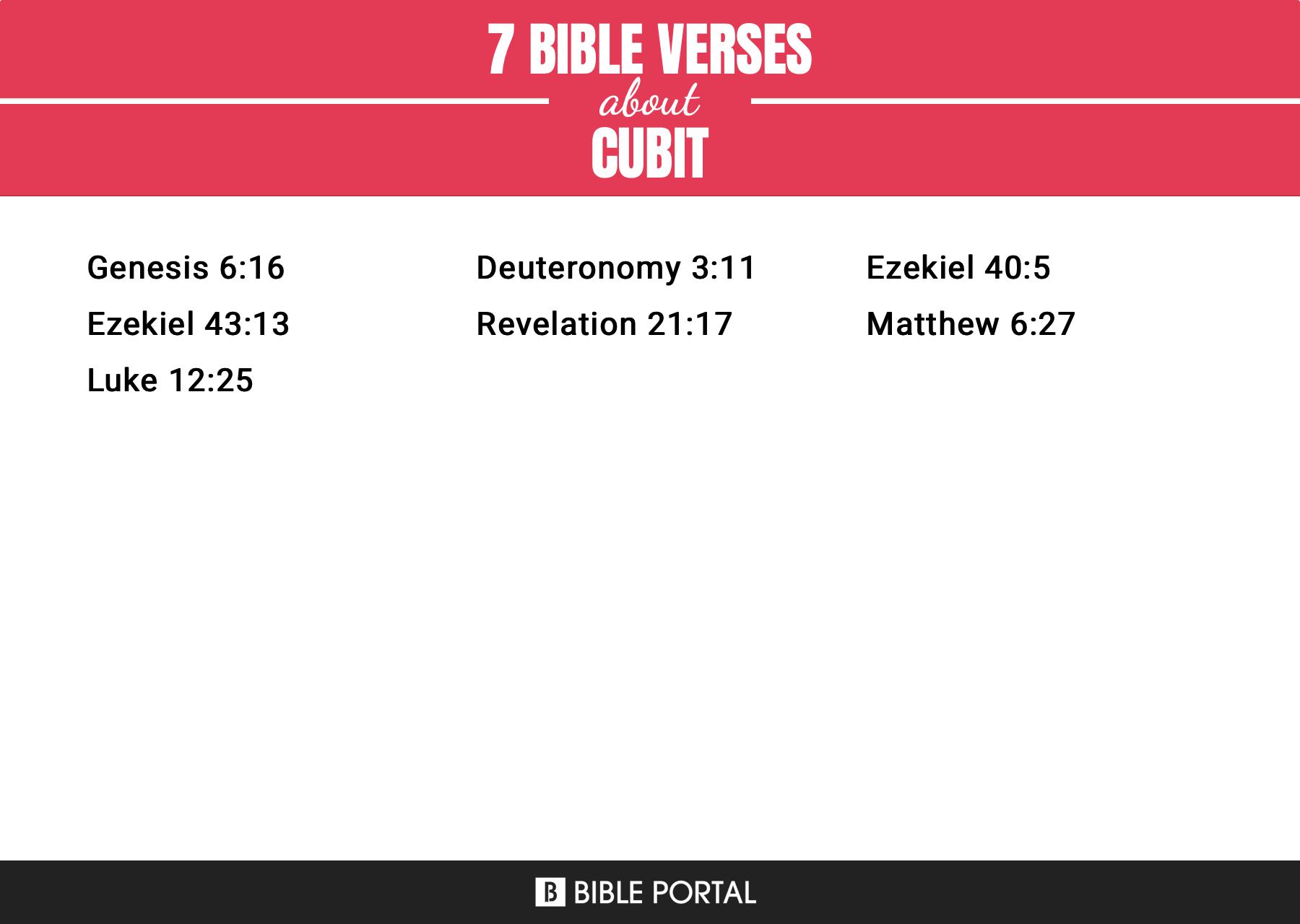
In the biblical narrative, the cubit finds particular prominence in the construction of significant edifices. For instance, the dimensions of Noah’s Ark, as presented in the Book of Genesis, were specified in cubits. The ark’s vastness, a staggering 300 cubits long, reveals astronomical proportions that compel us to ponder: why was such specificity chosen? These grand measurements raise questions about divine instruction, human obedience, and the intricate relationship between faith and empirical reality. One could ponder whether the emphasis on cubit measurements serves as a metaphor for the vast aspirations of humanity—our inherent desire to ascend above our mortal limitations.
A profound exploration of the cubit serves to illuminate broader themes within biblical narratives. During the construction of the Tabernacle in Exodus, the specifications were met with meticulous precision, with the cubit playing a central role. It served not merely as a physical measurement but as a conduit through which divine wisdom transgressed human understanding. The fact that God instructed Moses to create a sanctuary using this unit instills a sense of sacred significance. What implications does this hold for how we view our own spiritual spaces today? Are our houses of worship or places of reflection equally defined by precise measurements of reverence and intention?
Moreover, cubits can also highlight the interplay between the material and the spiritual dimensions of human existence. The measurement signifies more than just physical space; it alludes to the broader themes of growth, expansion, and limitation. What about our spiritual cubits? How do we measure the depth of our wisdom and compassion? The cubit, while a unit of measure, invites modern readers to consider the immaterial realms that elude quantification. Would you be willing to measure your selflessness in cubits? It challenges us, doesn’t it? The very notion of measuring one’s spirit seems both ludicrous and essential at the same time.
As we delve deeper, we encounter an interesting facet: the cubit as a historical lens through which we can examine societal norms and boundaries. Its ancient applications reveal how humanity grappled with the need for organization and structure in their spaces—be it for shelter, worship, or communal gatherings. This need resonates abundantly in contemporary society, where our lives are still governed by measurements. Yet, ponder this: do we allow ourselves to expand beyond the cubits of our predefined spaces? How often do we confine our aspirations, dreams, and relationships within self-imposed limitations that echo these archaic paradigms?
The cubit’s implications extend beyond mere dimensions. In laying the foundations of grand structures, we must grapple with the ethical dimensions entwined in the very architecture we erect. From the Tower of Babel to the Temples of Jerusalem, these endeavors reflect humanity’s relentless pursuit of understanding and community. Are we consciously constructing our own edifices of societal values? Do we erect walls or bridges with respect to differing perspectives, backgrounds, and beliefs? These considerations impel us to reevaluate our roles within our communities. Are we cubits in the larger structure of humanity, or are we content with merely fulfilling our measurements?
Moreover, in an age characterized by rapid advancements and alarming environmental crises, the cubit invokes another layer of contemplation. As humanity constantly redefines its boundaries—be it through technological innovation or environmental exploitation—we stand at a crossroads. How do we determine what is sustainable and equitable in an ever-evolving world? The cubit, in its simplicity, serves as a poignant reminder of the need for balance, urging us to weigh our ambitions against the fragility of the earth.
In conclusion, the cubit serves as more than a historical or biblical measurement; it transcends its physical dimensions to engage in a deeper existential dialogue. As we reflect on its significance, we are called to assess our own aspirations, both individually and collectively. In seeking to understand the cubit within biblical contexts, we are ultimately invited to engage with our own limitations and aspirations—challenged to reconceive what it means to truly measure life, love, and legacy. Can you envision a world where cubits reflect not just physical boundaries but serve to bridge our moral divides, encouraging us to transcend our own limitations in the quest for a more compassionate society? The challenge lies before us—a true testament to the enduring power of ancient wisdom as we navigate our future.

