

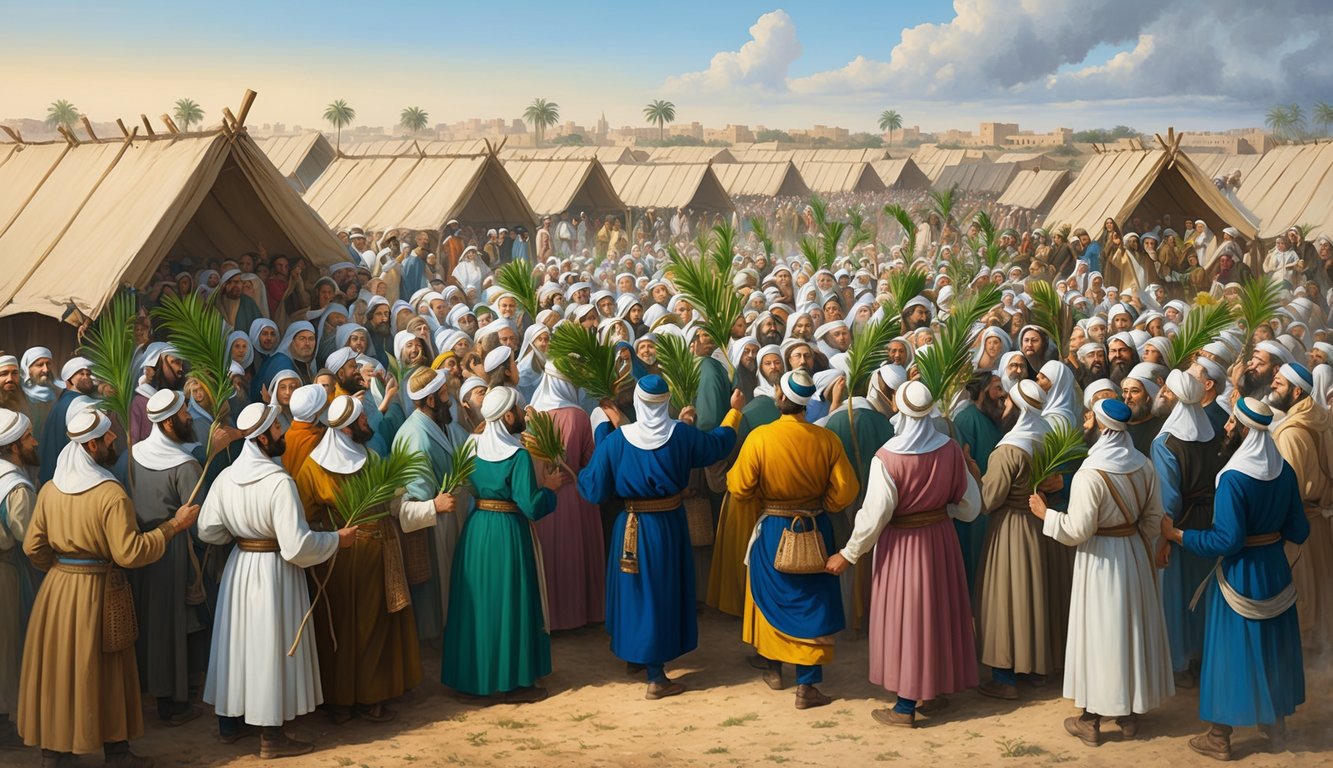
The Feast of Tabernacles, known as Sukkot in Hebrew, encapsulates a rich tapestry of meaning and tradition that reverberates throughout the biblical narrative. This vivid celebration, deeply rooted in the agricultural calendar, invites participants into a profound reflection on the themes of dwelling, divine provision, and communal joy. For the faithful, it is not merely a holiday; it serves as a vivid reminder of the transient nature of life and the enduring presence of the divine.
At its core, the Feast of Tabernacles commemorates the Israelites’ sojourn in the wilderness, a pilgrimage where they lived in temporary shelters—or ‘sukkot’—as they traversed the arid expanse towards the Promised Land. Each year, from the 15th to the 22nd day of the month of Tishrei, this festival evokes a sense of nostalgia, guiding participants back to a time when dependence on God was palpable. The act of living in makeshift booths is not merely a reenactment; it is a tactile experience, one that beckons the faithful to remember the frailty of human existence against the grandeur of divine providence.
The physical manifestations of Sukkot add layers of sensory richness to the celebration. Each booth is adorned with lush boughs and fruits, creating a verdant microcosm of the outdoors. The open roof allows the ethereal night sky to cast its luminescence upon the celebrants, creating a celestial tapestry against which the stories of yore are recounted. It transforms the mundane into the miraculous, as families gather under these leafy canopies, sharing meals and stories that intertwine their individual identities with their collective heritage.
In a world increasingly dominated by impermanence, the Feast of Tabernacles stands as a potent metaphor for human existence. Just as the sukkah is temporary, so too are the stages of life we navigate. Yet nestled within this transience is an invitation: to recognize the enduring constancy of divine care that permeates every moment, illuminating even the darkest paths with hope and assurance. The act of stepping into a sukkah culminates in the acknowledgment of God’s ongoing faithfulness in our own deserts of life.
Moreover, the Feast of Tabernacles nourishes not only the spiritual realm but also the communal fabric of society. It fosters unity, as diverse communities come together to celebrate an ethos of hospitality. As the faithful share their joy, meals, and festivities, the boundaries that often segregate people dissolve, allowing for the emergence of a shared experience. This communal aspect is particularly highlighted by the practice of waving the Lulav and Etrog—four species representing various elements of creation—in a ritual that symbolizes harmony and interdependence.
Additionally, Sukkot heralds the conclusion of the high holy days, a time of reflection and atonement. It embodies the culmination of spiritual introspection, urging the faithful to embrace the joyous aftermath of reconciliation with both the divine and the community. Each day of the feast is punctuated with prayers, songs, and readings that reflect gratitude, echoing the age-old wisdom that joy must be shared. Through this lens, the Feast of Tabernacles transcends mere celebration; it becomes an invitation to deepen one’s relationship with the earth, oneself, and the divine.
In essence, the Feast of Tabernacles is a multifaceted celebration that reinforces the interplay between joy and remembrance, faith and fragility. It is a poignant reminder that amid life’s vicissitudes lies a divine certainty—a promise of shelter, provision, and joy that endures beyond the fleeting nature of our days. As the cycle of the seasons turns, may the essence of Sukkot linger in our hearts, inviting us to dwell in gratitude and harmony.

